
Wikimedia Commons / CC BY-SA 3.0, via Wikimedia Commons
Aesculus chinensis: complete guide
Aesculus chinensis
Want to see Aesculus chinensis: complete guide in your garden?
1 minute, no credit card
Overview
The Chinese horse chestnut (Aesculus chinensis) is an impressive deciduous tree from the genus Aesculus, native to central and eastern China. Belonging to the family Sapindaceae, this tree is renowned as an outstanding choice for larger gardens and landscape settings. With its substantial growth and spectacular spring flowering, Aesculus chinensis brings timeless elegance to any outdoor space.
Appearance and bloom
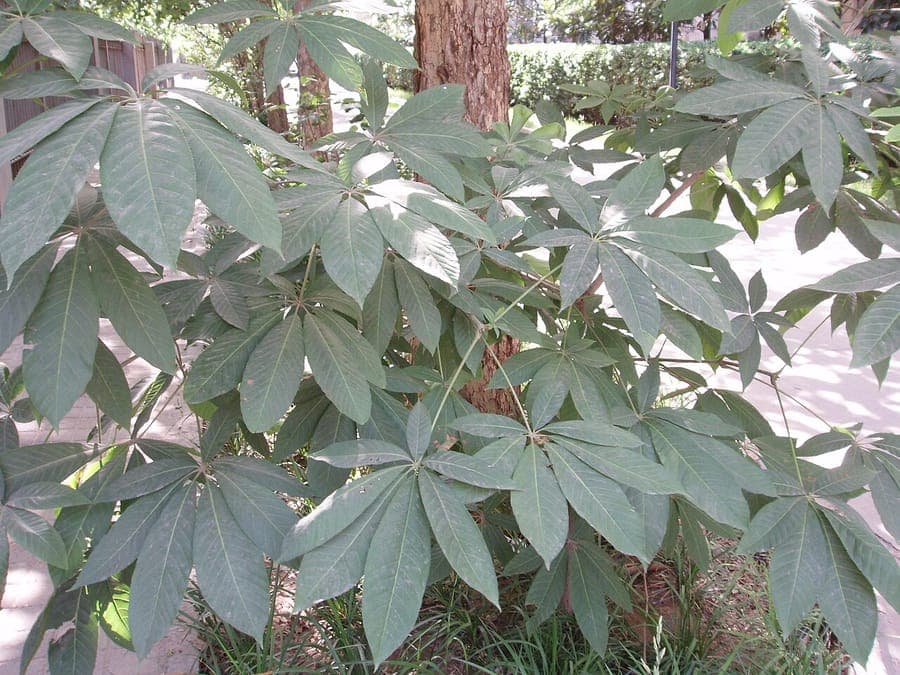
The Chinese horse chestnut develops into a fully mature tree with a broad, densely foliaged crown. The bark is characteristically grey to dark brown, with deep furrows that become more prominent with age. The leaves are palmate compound, typically consisting of five to seven large leaflets per leaf, with finely serrated margins. From May to June, flowers appear in long, densely packed panicles at the branch tips, colored in pure white with sometimes a yellow or pink tint at the base. These blooms attract numerous insects and provide valuable food for bees and bumblebees.
Ideal location
Select a spot where the Chinese horse chestnut has ample space to develop fully. The tree thrives best in a sunny to partially shaded location. It can also tolerate somewhat shadier positions but will flower most profusely with sufficient light. Ensure the tree is protected from strong winds, which can cause branch damage. In larger gardens, this tree works best as a solitary specimen, where it can spread generously and display its full splendor.
Soil
Aesculus chinensis is not particularly fussy about soil type but grows best in moderately fertile, well-draining soil. The tree tolerates both loamy and sandy soils. Ensure the soil does not remain too wet, especially in winter, as waterlogging can lead to root rot. When planting, dig a large hole filled with quality planting soil and organic matter mixed together.
Watering
As with most trees, regular watering is crucial immediately after planting. During the first growing season, water the tree regularly, especially during dry periods. Mature trees are more drought-resistant thanks to their deep root system. However, provide supplemental water during extremely dry summers, particularly if the tree grows in a container. In winter, rainwater is usually sufficient.
Free design
Want to see Aesculus chinensis: complete guide in your garden? Make a free design now.
Pruning
The Chinese horse chestnut requires relatively little pruning work. The tree naturally forms an attractive shape, so structural pruning is rarely necessary. Remove dead or damaged branches in late winter or early spring (February to March). Heavy pruning wounds may remain open and be susceptible to disease, so work carefully and minimize removed wood. Even branch spread can be gradually encouraged through young tree pruning.
Maintenance calendar
January-February: Inspect for dead branches; light formative pruning. April-May: Flowering period; observe for pest infestation. June-July: Seed collection; special moisture requirement in dry periods. August-September: Further watering if needed. October-November: Leaf fall; prepare for winter. December: Check for winter damage. For more plant care information, visit gardenworld.app.
Winter hardiness
The Chinese horse chestnut is fully winter-hardy in Europe. This tree can withstand temperatures down to at least -15°C, meaning it can safely grow outdoors in virtually all regions of the Netherlands, Belgium, and France. In very severe winters (below -20°C), some twigs may die back, but the tree will fully recover. The foliage drops in autumn and returns in spring.
Companion planting
Due to its dense leaf canopy, the Chinese horse chestnut creates considerable shade, making it challenging to grow underplanting species. Choose shade-loving plants such as ferns, helleborus, vinca, and ivy. Avoid plants that require direct competition with the tree for moisture and nutrients. A bed of natural humus and leaf litter beneath the tree creates an attractive finish and supports the tree's health.
Closing
The Chinese horse chestnut is an excellent choice for large gardens where there is room for growth. With its impressive appearance, overwhelming spring flowering, and relatively low-maintenance nature, this tree forms a valuable element of permanent garden beauty. Provide good growing conditions after the initial planting phase, and the tree will offer pleasure for years. For more garden planning inspiration with trees, visit gardenworld.app.
Want to see Aesculus chinensis: complete guide in your garden? Make a free design now.
Upload a photo, pick a style, and get a photorealistic design with plant list in under a minute.
No credit card required


Similar plants
Acer pycnanthum: complete guide
Acer pycnanthum
Acer pycnanthum, the Japanese swamp maple, is a fast-growing tree with early red flowers and brilliant autumn color, ideal for damp garden settings.
Freeman maple: complete guide
Acer × freemanii
Everything about the Freeman maple (Acer x freemanii): a fast-growing shade tree with spectacular autumn colour for large gardens.
Wild ackee: complete guide
Cupania americana
A comprehensive guide to Cupania americana, a tropical tree from the Sapindaceae family with conspicuous white flowers and brown fruits, native to tropical America.