
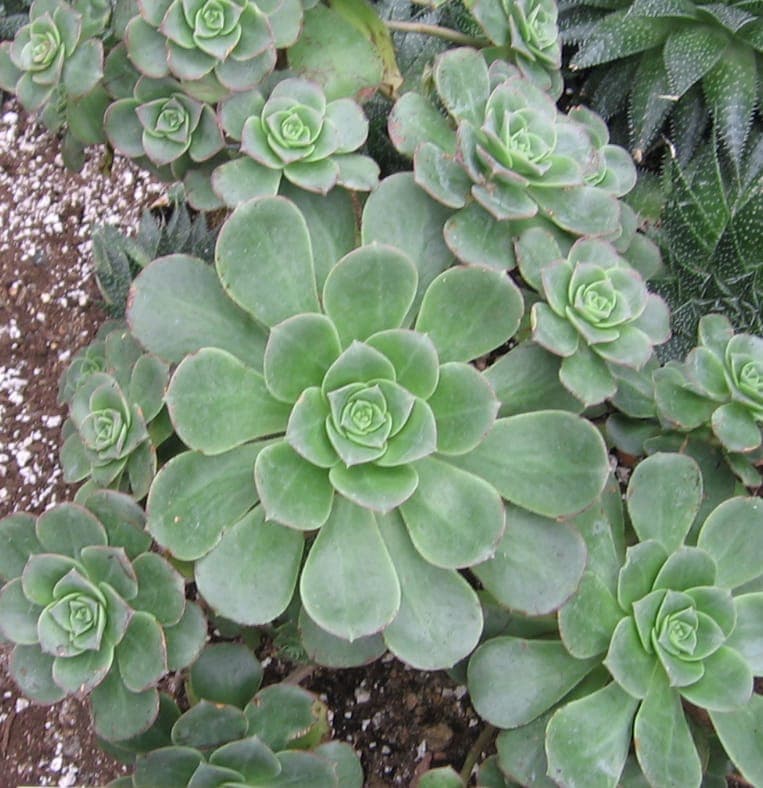
Montrealais / CC BY 3.0, via Wikimedia Commons
Aeonium Haworthii: complete guide
Aeonium haworthii
Want to see Aeonium Haworthii: complete guide in your garden?
1 minute, no credit card
Aeonium haworthii, commonly called Haworth's aeonium or pinwheel, is a remarkable succulent that stands out for its perfect rosette shape and compact growth habit. Native to the Canary Islands, this cactus thrives in any garden, balcony, or indoor space. With its interesting leaf cross-section and color shifts from green to red, this plant offers year-round visual interest and becomes a focal point in any succulent collection. The plant has a preference for sunny locations and tolerates both dry and wet conditions remarkably well. For beginners, this is an ideal plant due to its tolerance and minimal maintenance requirements, making it perfect for those just starting their succulent journey.
Appearance and Bloom
The Haworth's aeonium forms dense rosettes about 5 to 10 centimeters across, though under optimal conditions they can reach 15 centimeters. The leaves are small, spoon-shaped, and green with red tips, especially in sunny periods. They grow in compact spirals reminiscent of pure geometric art in nature. This succulent displays no spectacular flowers, but the subtle yellow star blooms in summer are a pleasant surprise for observers. The flowers appear in July and August and attract bees and other small pollinators. The plant stays compact and rarely exceeds 30 centimeters in height, making it ideal for windowsills, small gardens, and balconies. After blooming, the plant may die back or branch to form new rosettes, depending on the cultivar and growing conditions. The geometric perfection of each rosette makes it an excellent subject for photography and display.
Ideal Location
Place your aeonium in a sunny spot with at least 4-6 hours of direct sunlight daily. This ensures the beautiful red pigmentation you desire and promotes compact, healthy growth patterns. The plant also grows in partial shade, but the coloring remains greener and growth becomes more elongated. In the United Kingdom, you can place it outside during summer on a balcony or terrace, provided it is protected from continuous rain and full wind. Ensure your plant tolerates wind and is not in a drafty location, as this can cause desiccation and leaf damage. Indoor plants should be placed near a south-facing window for maximum light availability. Artificial grow lights can supplement natural light in darker locations.
Soil
Succulents are not demanding regarding soil type, but drainage is crucial for preventing root rot. Use cactus soil or a mixture of standard potting soil with 40 percent sand and perlite. The pH should be between 5.5 and 7.0. Creating your own mix is also possible and often superior: take standard potting soil and add at least 50 percent coarse sand or small gravel. This ensures optimal drainage and air permeability. Ensure no water pools in the pot after watering. Some gardeners add charcoal pieces for extra drainage and air purification. The goal is a porous medium that dries quickly after watering while still retaining minimal moisture.
Free design
Want to see Aeonium Haworthii: complete guide in your garden? Make a free design now.
Watering
Watering aeonium is simple: less is more. During the growing season (April to October), water moderately, approximately every two weeks. Always check that the soil is completely dry before watering again. In winter, water very sparingly, only once every four to six weeks. The plant draws from moisture reserves in its leaves and can endure long dry periods. Use lukewarm water and preferably apply it to the soil, not over the foliage, as this can promote fungal growth and leaf rot. Stagnant water leads to root rot, so ensure proper drainage. In very dry conditions, you can keep things slightly moister during the growing season, but never waterlogged. The soil should feel dry to the touch between waterings.
Pruning
The Haworth's aeonium requires virtually no pruning. Simply remove dead or damaged leaves from the bottom by gently pulling them away. If you want to keep it more compact, you can gently trim young shoots in spring. Dropped leaves and offshoots can be used to propagate new plants by letting them dry for a few days and then inserting them into dry cactus soil. This is an excellent way to create new plants from damaged or overgrown specimens.
Maintenance Calendar
May through September is the growing season. Water every two weeks and add a small amount of cactus fertilizer (diluted to half the recommended concentration). Check regularly for pests such as mealybugs. In October, as days shorten, gradually reduce watering. November to February is the dormant period - provide almost no water unless the plant looks wilted. Replace the potting soil once every two years, preferably in early spring or after blooming. Use this opportunity to check for root rot. In spring, inspect for overwintering pests and treat as needed.
Winter Hardiness
Aeonium haworthii is frost-sensitive. In regions where winters drop below 5 degrees Celsius, bring the plant indoors. In southern gardens, you can keep it outside under shelter, provided it does not experience frost at night. USDA zones 9-10 are optimal. If you keep it outside and frost threatens, move it indoors quickly or cover with burlap. Night temperatures above 10 degrees Celsius are ideal for dormancy. Some growers in zone 8 have success with heavy mulching and winter protection, though this is not guaranteed.
Good Companions
This cactus fits perfectly into succulent arrangements with other species such as Echeveria, Sedum, and Sempervivum. The compact growth poses no competition. Mixed with hanging succulents in balcony boxes creates dynamic planting. Use the same soil mixture so watering needs are equal. Combine with silvery-foliaged plants like Senecio rowleyanus for contrast and visual interest. Create color contrast by pairing with darker-colored succulents or grey-foliaged plants.
Closing Tip
Despite its preference for drought, the Haworth's aeonium is a patient plant that forgives much. Even in full sun, it rarely burns, and after dry periods, it recovers quickly. For ease of care and the beauty of its form, this is a perfect plant for beginners and experienced gardeners alike. Position it where you look regularly - the geometric beauty deserves recognition and appreciation. With minimal care, this remarkable plant will provide years of visual pleasure and become a beloved centerpiece of your succulent collection!
Want to see Aeonium Haworthii: complete guide in your garden? Make a free design now.
Upload a photo, pick a style, and get a photorealistic design with plant list in under a minute.
No credit card required


Similar plants
Sedum nevadense: complete guide
Sedum nevadense
Discover Sedum nevadense, the stunning alpine stonecrop from the Pyrenees. Expert care tips, growing requirements, and design ideas for rock gardens.
Aizoon stonecrop: complete guide
Phedimus aizoon
Everything about Phedimus aizoon - the frost-tolerant aizoon stonecrop from Siberia with bright yellow flowers. Planting, care and garden use.
Roseroot: complete guide
Rhodiola rosea
Everything about roseroot (Rhodiola rosea): a tough hardy succulent ideal for rock gardens, green roofs, and dry sunny positions.