
Javier martin / Public domain, via Wikimedia Commons
Jointed goat grass: complete guide
Aegilops triuncialis
Want to see Jointed goat grass: complete guide in your garden?
1 minute, no credit card
Overview
Jointed goat grass (Aegilops triuncialis) is a slender, wiry grass native to southern Europe, the Mediterranean, and parts of western Asia. It thrives in disturbed, dry soils - think old fields, rocky banks, and roadside edges. Standing between 30 and 60 cm tall, it's not showy in the traditional sense, but its architectural form and textured seed heads add subtle interest to naturalistic planting schemes. While not commonly found in mainstream UK or North American gardens, it's a smart pick for xeriscaping or ecological gardens where resilience and minimal care are priorities.
On gardenworld.app, you can design a planting layout that integrates Jointed goat grass with other drought-tolerant species, ensuring the right spacing and light exposure.
Appearance & bloom cycle
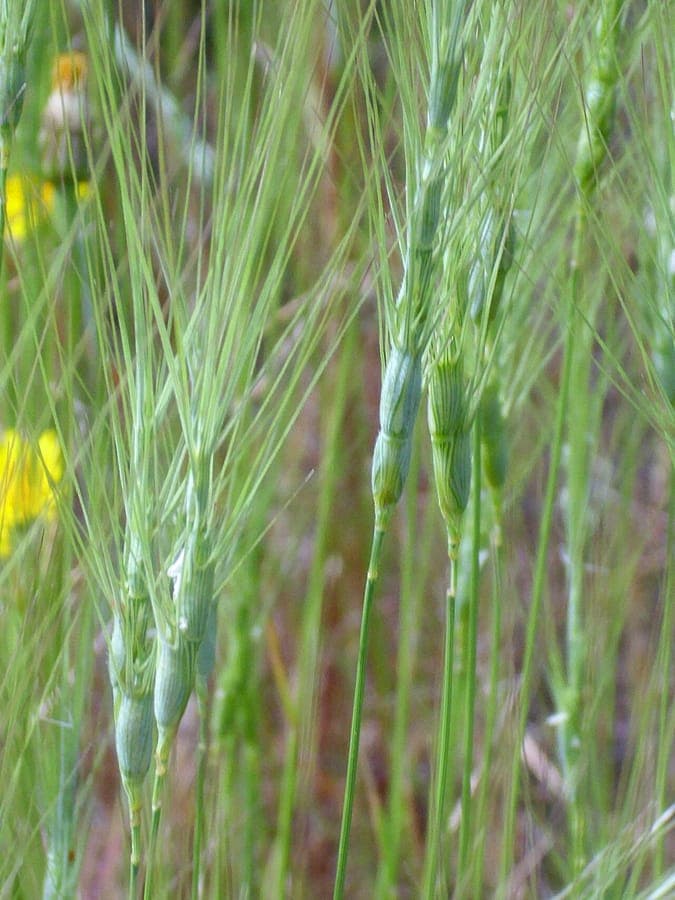
This annual or short-lived perennial grass has narrow, grey-green leaves, 2–5 mm wide, with a slightly rough texture. The stems are upright and often branched, giving the plant an airy, open look. From late spring to midsummer (May to July), it produces distinctive flower spikes - flattened, jointed racemes about 3–6 cm long. The blooms are green, sometimes tinged with purple, and develop into hard, spiky seed segments that easily detach.
These segmented seeds are the plant's signature trait, earning it the name 'jointed.' As they mature, the seed heads turn golden-brown and persist into autumn, adding movement and texture when backlit by low sunlight. Even after the plant dies back, the dried stems provide winter interest and shelter for beneficial insects.
Ideal location
Jointed goat grass needs full sun - aim for at least 8 hours of direct light daily. It performs best in south- or southwest-facing spots with good air circulation. Rocky slopes, gravel gardens, or dry borders are ideal. Avoid shaded or damp corners; this grass won't tolerate poor drainage or competition from vigorous perennials.
It's perfect for wildlife gardens, meadow-style plantings, or modern, minimalist designs where texture matters more than colour. Pair it with plants that enjoy similar conditions, and you'll create a low-input, high-reward corner of the garden.
Soil requirements
The soil must be well-drained. Heavy clay soils will suffocate the roots, especially in winter. A pH between 7.0 and 7.5 is ideal - neutral to slightly alkaline. The plant prefers poor to moderately fertile soils; rich, compost-heavy mixes encourage weak growth and lodging.
To improve drainage in heavier soils, mix in sharp sand, grit, or crushed limestone. For container growing, use a 50/50 mix of loam-based compost and perlite. Avoid high-nutrient potting soils unless you're treating it as a seasonal feature.
Free design
Want to see Jointed goat grass: complete guide in your garden? Make a free design now.
Watering
Once established, Jointed goat grass is extremely drought-tolerant. It rarely needs supplemental watering, even during prolonged dry spells. Water only during the first few weeks after sowing or transplanting to help roots establish.
For container plants, check the top 5 cm of soil - water only when dry. Overwatering is the fastest way to kill this plant. Root rot from soggy soil is far more dangerous than heat or wind exposure.
Pruning
Pruning isn't necessary. In fact, it's best to leave the dead stems intact over winter. They provide habitat for overwintering insects and add visual structure to the dormant garden.
If you want to limit self-seeding, cut back the spent flower spikes in late summer or early autumn, before the seeds fully disperse. Use clean, sharp shears and avoid cutting into new basal growth.
Maintenance calendar
- January: No action needed. Leave old growth standing.
- February: Remove any collapsed material if conditions are dry.
- March: Clear debris to make space for new shoots.
- April: Sow seeds directly outdoors or in pots. Keep soil lightly moist.
- May: Active growth begins. Watch for overcrowding.
- June: Blooming starts. No feeding required.
- July: Peak bloom. Monitor seed development if collecting.
- August: Seed heads mature and turn brown. Leave for wildlife or harvest.
- September: Collect seeds if desired. No pruning.
- October: No maintenance.
- November: Let plants stand for winter texture.
- December: Dormant period. No care needed.
Winter hardiness
Jointed goat grass is hardy in USDA zones 7 to 10 (down to -15°C). In cooler zones, it often behaves as a self-seeding annual. The seeds overwinter in the soil and germinate in spring when temperatures rise above 10°C. In exposed areas, a light mulch of gravel or leaf litter can protect early seedlings from frost heave.
Companion plants
Pair Jointed goat grass with drought-tolerant perennials like Sedum 'Autumn Joy', Eryngium planum, or Nepeta racemosa. Low-growers like Thymus polytrichus or Campanula poscharskyana add ground-level contrast.
Other grasses - such as Schizachyrium scoparium or Koeleria glauca - enhance movement and rhythm. Avoid moisture-loving plants like Astilbe or Ligularia, which create conflicting cultural needs.
Closing
Jointed goat grass won't win awards for flamboyance, but it earns respect for its resilience, texture, and ecological value. It's not for gardeners who crave tidy borders or constant bloom - it's for those who appreciate subtle change, seasonal rhythm, and plants that thrive with little fuss.
Use gardenworld.app to preview how Jointed goat grass fits into gravel gardens, wildlife meadows, or modern urban courtyards. It's occasionally available through specialist seed suppliers and sometimes found in wildflower mixes at garden centres like those stocked by Thompson & Morgan or Sarah Raven, though not typically at big-box retailers.
Want to see Jointed goat grass: complete guide in your garden? Make a free design now.
Upload a photo, pick a style, and get a photorealistic design with plant list in under a minute.
No credit card required


Similar plants
Sporobolus pungens: complete guide
Sporobolus pungens
Sporobolus pungens is a stoloniferous Mediterranean coastal grass with outstanding salt and drought tolerance, perfect for seaside and dry gardens.
Mediterranean aegilops: complete guide
Aegilops biuncialis
Everything about Aegilops biuncialis, a Mediterranean annual grass with ornamental spikes and outstanding drought tolerance for dry gardens.
Silver bluestem: complete guide
Bothriochloa saccharoides
Full guide to Bothriochloa saccharoides (silver bluestem): site, soil, watering, winter hardiness, pruning, and garden companions.