
Jose Hernandez / Public domain, via Wikimedia Commons
Spelt goatgrass: complete guide
Aegilops speltoides
Want to see Spelt goatgrass: complete guide in your garden?
1 minute, no credit card
Overview
Aegilops speltoides, commonly known as spelt goatgrass or dinkel-like wallch, is an interesting grass species originating from the southeastern Balkans to Iran. This ornamental grass naturally grows in dry mountain areas and steppes.
This plant is recognized for its characteristic toothed, ear-like inflorescences and is a fascinating addition to wild gardens, ecological borders, and naturalistic planting schemes. It is perfect for gardeners seeking authentic, ecologically responsible plants.
Appearance and Bloom
Aegilops speltoides is a graminoid (grass) plant that grows in loose tufts approximately 30-50 cm tall. The plant produces narrow, linear leaves that are typically green in color.
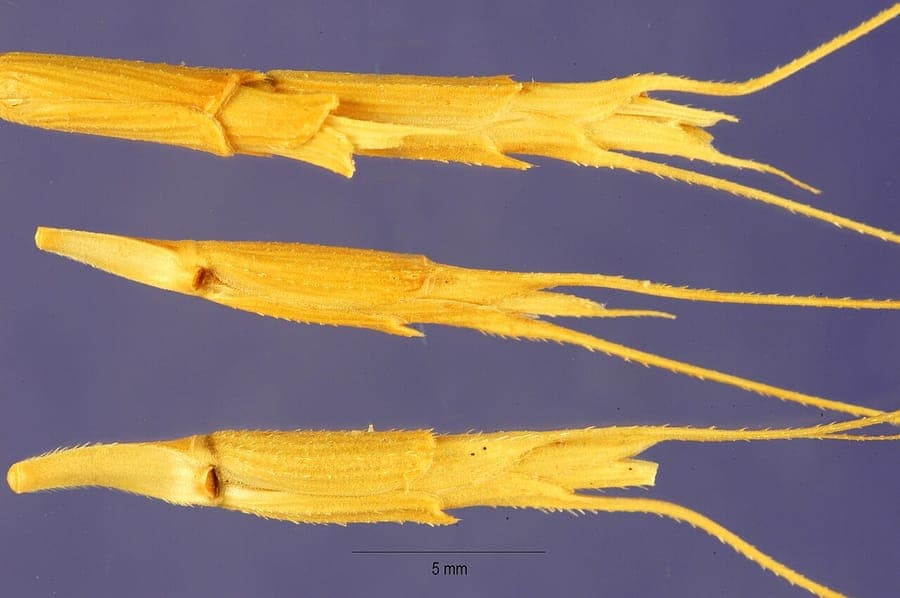
The most characteristic feature is the inflorescence or spike - where the spikelets have fine teeth or ridges along the edges, giving it its distinctive appearance. Blooming occurs in May-June with green flowerheads that later turn yellow-brown when mature.
Ideal Location
This plant prefers sunny, dry locations where it receives at least 6 hours of direct sunlight. It thrives in open, exposed positions and is quite tolerant of windy conditions.
Perfect for wild gardens, Mediterranean borders, gravel gardens, and ecological planting schemes. It can also be used along pathways or in so-called "meadow gardens."
Soil
Aegilops speltoides prefers dry, well-draining soils. It thrives in poor, acidic to neutral soils and has no preference for nutrient-rich earth.
The plant is extremely drought-tolerant and prefers soils with good gravel, sand, or lean soil. Heavy, waterlogged clay soils should be avoided.
Free design
Want to see Spelt goatgrass: complete guide in your garden? Make a free design now.
Watering
Once established, this grass requires minimal watering. In very dry periods, supplemental water can be given, but it is generally drought-tolerant.
During the first growing year, water regularly to encourage established roots, but once growing, it needs little additional watering.
Pruning
Minimal pruning needed. Remove only dead or damaged material. You can cut the plant back in late winter or early spring for a neater appearance.
Allow the grass to grow naturally for a wild, natural look that is most suitable for its intended environment.
Maintenance Calendar
Spring: Beginning of growth period. Careful removal of dead material. Summer: Bloom period. Minimal maintenance. Fall: Seed ripening. No fertilization needed. Winter: Dormant period. Minimize activities.
Winter Hardiness
Aegilops speltoides is extremely hardy and easily tolerates temperatures down to approximately -20°C. It originates from Balkan regions where cold winters are normal.
Companion Plants
This plant combines well with other Mediterranean plants, wildflowers, and rare herbs. Perfect for ecological borders with lavender, salvias, and other drought-tolerant species.
In gravel gardens, group with sedums, steppe plants, and other ornamental grasses.
Closing Thoughts
Aegilops speltoides is a fascinating plant for gardeners wanting to create authentic, ecologically responsible planting schemes. With minimal maintenance and a fascinating form, it adds value to wild and natural gardens.
Discover today how to integrate this interesting grass into your front garden to add more natural beauty and ecological resilience on gardenworld.app.
Want to see Spelt goatgrass: complete guide in your garden? Make a free design now.
Upload a photo, pick a style, and get a photorealistic design with plant list in under a minute.
No credit card required


Similar plants
Sporobolus pungens: complete guide
Sporobolus pungens
Sporobolus pungens is a stoloniferous Mediterranean coastal grass with outstanding salt and drought tolerance, perfect for seaside and dry gardens.
Mediterranean aegilops: complete guide
Aegilops biuncialis
Everything about Aegilops biuncialis, a Mediterranean annual grass with ornamental spikes and outstanding drought tolerance for dry gardens.
Silver bluestem: complete guide
Bothriochloa saccharoides
Full guide to Bothriochloa saccharoides (silver bluestem): site, soil, watering, winter hardiness, pruning, and garden companions.