
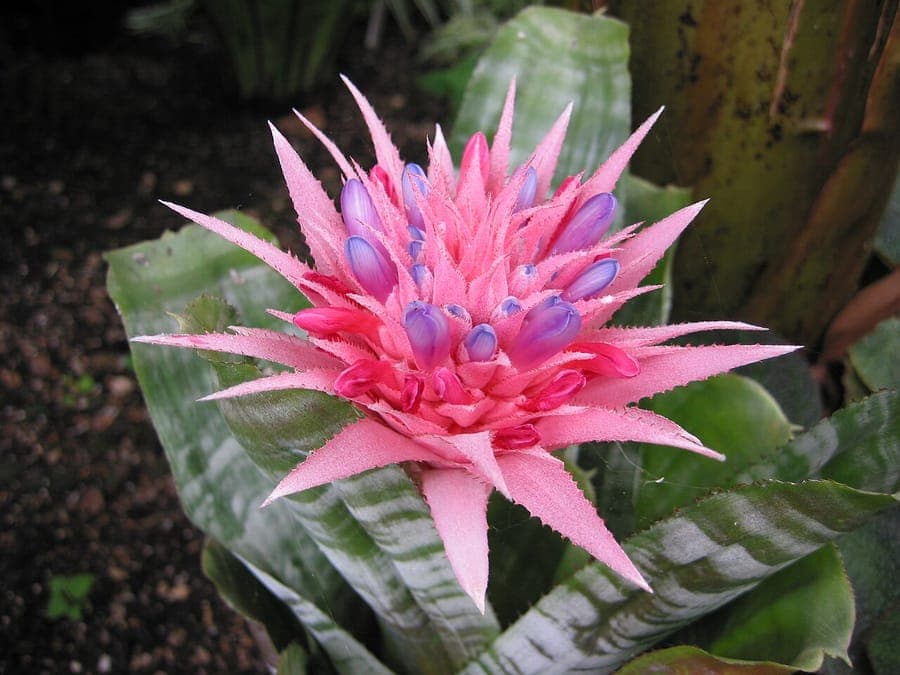
Paul & Aline Burland / CC BY-SA 2.0, via Wikimedia Commons
Urnplant: complete guide
Aechmea fasciata
Want to see Urnplant: complete guide in your garden?
1 minute, no credit card
Overview
The Urnplant (Aechmea fasciata), commonly called Lanzenrosette or Urn plant, is a stunning tropical bromeliad from the family Bromeliaceae. Originating from the rainforests of Brazil, this exotic houseplant has become beloved for its striking silver-banded foliage and spectacular red-pink inflorescences. With minimal care, this architectural plant thrives indoors for years, producing stunning blooms repeatedly.
Appearance and Bloom
The Urnplant forms a compact rosette of stiff, lance-shaped leaves banded with striking silvery stripes, creating a bold visual pattern. Leaves can reach 40-50 cm in length and form a central cup or vase where water naturally collects.
The inflorescence is truly spectacular: a dense spike of brilliant red, orange, and pink bracts (modified leaves) concealing tiny yellow flowers beneath. This showy display can last for several months, creating an exotic, tropical centerpiece. After flowering, the original rosette will produce young offsets at its base, which can be propagated for new plants.
Ideal Location
The Urnplant thrives in bright, indirect sunlight. Position it near a window receiving dappled or filtered light where intense afternoon sun is blocked. Direct hot sun can scorch foliage, while insufficient light reduces the silvery banding prominence. Optimal conditions feature 2-4 hours of indirect light daily.
Indoors, bathrooms with good ventilation, living rooms, and bedroom windowsills all work well. The plant also tolerates fluorescent lighting at approximately 12 inches distance.
Soil
The Urnplant, being an epiphytic bromeliad that naturally grows on tree branches, requires special growing media rather than standard potting soil. Use a very loose, well-draining mix combining orchid bark, sphagnum moss, and perlite in roughly equal proportions.
Containers must have excellent drainage holes. Commercial bromeliad potting mixes are ideal and readily available.
Free design
Want to see Urnplant: complete guide in your garden? Make a free design now.
Watering
Unlike typical houseplants, the Urnplant's central cup (vase) must be kept filled with water. Change this water every 1-2 weeks to prevent stagnation and bacterial growth. Use rainwater or distilled water when possible, as these plants are sensitive to dissolved minerals in tap water.
Keep the potting medium lightly moist but never soggy. When refilling the central cup, pour water slowly to fill it completely, not around the foliage.
Pruning
The Urnplant requires minimal pruning. Remove dead or damaged leaves carefully at their base. After the inflorescence fades, cut away spent bracts if desired. The plant naturally produces offsets (young plants) at its base following blooming. Once these offsets develop 2-3 small leaves and begin forming roots, carefully separate and pot them for propagation.
Maintenance Calendar
January-February: Change central cup water; maintain stable indoor temps March-April: Growth resumes; monitor watering May-June: Blooming period may start; increase water frequency July-August: Full bloom possible; appreciate humidity September-October: Blooming continues; consistent care November-December: Rest period; reduce watering slightly
Winter Hardiness
The Urnplant is decidedly tropical and cannot tolerate temperatures below 55°F (13°C). Keep this plant away from cold drafts and chilly windowsills. Ideal temperatures range from 60-75°F (16-24°C). Warmer, humid environments around 75-80°F (24-27°C) are ideal for flowering.
Companion Plants
The Urnplant shares well in interior plant collections with other tropical houseplants:
- Other bromeliads (Vriesea, Billbergia)
- Orchids
- Aroids (Monstera, Philodendron)
- Ficus varieties
- Peperomias
- Small-leafed tropical vines
Closing Remarks
The Urnplant brings glamorous tropical presence to any interior. With its striking silver-striped foliage and spectacular red inflorescence, it commands attention and admiration. Provided regular water cup changes, bright indirect light, and consistent warmth, this exotic bromeliad rewards you with years of stunning blooms and architectural foliage.
Available at garden centers, plant nurseries, and specialty growers. For more detailed care guidance and plant recommendations, visit GardenWorld.app.
Want to see Urnplant: complete guide in your garden? Make a free design now.
Upload a photo, pick a style, and get a photorealistic design with plant list in under a minute.
No credit card required


Similar plants
Puya raimondii: complete guide
Puya raimondii
Discover the Queen of the Andes: care, cultivation, origin from Peru and Bolivia, and how this remarkable flower can thrive in your garden.
Spanish Moss (Tillandsia usneoides): complete guide
Tillandsia usneoides
Tillandsia usneoides, known as Spanish moss, is an epiphytic bromeliad without roots. Perfect for indoors or protected outdoor spots, this unusual plant offers magical, airy appeal.
Pineapple: complete guide
Ananas comosus
Learn how to grow pineapple at home. From planting slips to harvest: watering, light, and nutrition for sweet fruit production.