
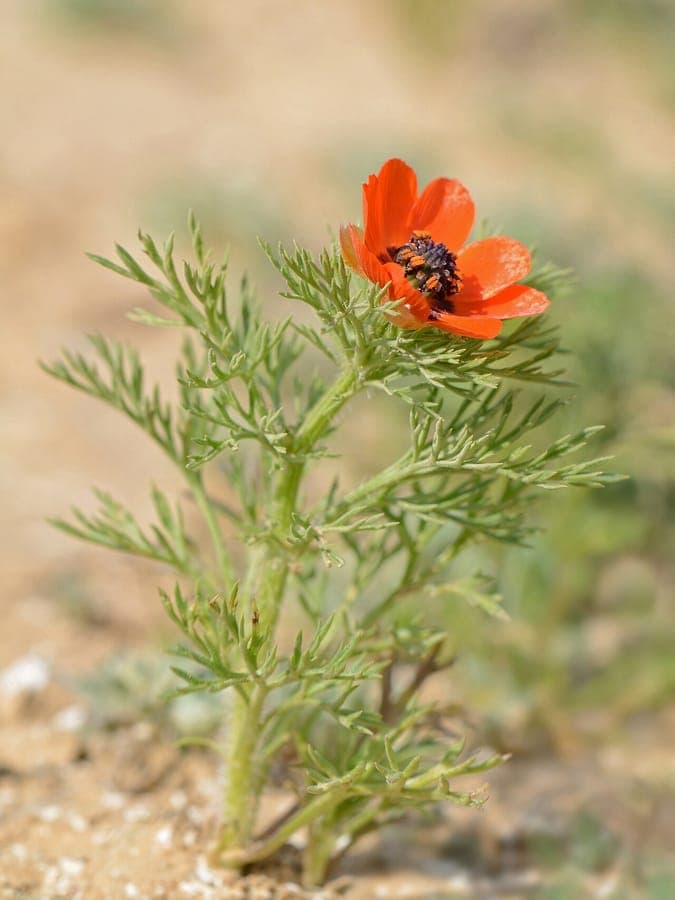
Gideon Pisanty (Gidip) / CC BY-SA 3.0, via Wikimedia Commons
Summer pheasant's-eye: complete guide
Adonis aestivalis
Want to see Summer pheasant's-eye: complete guide in your garden?
1 minute, no credit card
Overview
Summer pheasant's-eye (Adonis aestivalis) is a graceful annual that brings vibrant red blossoms and fine, feathery foliage to summer gardens. Native to southern Europe and parts of western Asia - from the Balearic Islands to Afghanistan - it thrives in open, dry habitats with minimal competition. In temperate climates like the UK and northern Europe, it's grown as a half-hardy annual, best sown under cover in spring. It's not commonly seen in mainstream gardens, but its striking appearance and low care needs make it a hidden gem for gardeners who value bold color with little fuss.
On gardenworld.app you can design a garden layout where Summer pheasant's-eye stands out in airy clusters, complemented by drought-tolerant companions and warm-toned accents.
Appearance & bloom cycle
This plant reaches 30–50 cm in height, with slender, upright stems bearing deeply divided, fern-like leaves. The foliage is a soft, pale green, forming a lacy backdrop for the vivid flowers. Each bloom is 3–5 cm wide, with narrow, silky red petals that sometimes carry hints of yellow or orange at the base. The center features a cluster of golden stamens, adding contrast and attracting pollinators.
Bloom time runs from June to August. If sown early (March–April under cover), flowers may appear as early as late May. The flowers open fully in bright sunlight and may close during overcast or wet weather. After flowering, the plant produces small, round seed capsules that split open to disperse seeds - a natural mechanism for self-sowing in suitable dry conditions.
Ideal location
Choose a spot with full sun - at least 6–8 hours of direct light daily. Summer pheasant's-eye needs heat and light to thrive. It performs best in open, airy locations like gravel beds, rock gardens, or the front of sunny borders. Avoid shaded areas or spots with heavy competition from larger perennials, as this reduces flowering and weakens stems.
Note: all parts of the plant are toxic if ingested. Keep it away from pets and small children, especially in family gardens or near patios.
Soil requirements
This species prefers light, well-drained soils - sandy or gravelly types work best. Heavy clay soils retain too much moisture, especially in spring, increasing the risk of root rot. Amend dense soils with coarse sand or pumice to improve drainage.
The ideal pH range is slightly acidic to neutral (6.0–7.5). Avoid rich soils or added compost. Adonis aestivalis is adapted to poor, low-fertility conditions; too many nutrients lead to leggy growth and fewer blooms. No fertilizer is needed.
Free design
Want to see Summer pheasant's-eye: complete guide in your garden? Make a free design now.
Watering
Water moderately. Once established, this plant is drought-tolerant and survives on rainfall in most summers. During the first 2–3 weeks after sowing or transplanting, keep the soil lightly moist to support germination and early growth.
After that, only water during prolonged dry spells (over 14 days without rain). Use drip irrigation or water at the base to prevent wet foliage, which can encourage fungal diseases. Never let the plant sit in soggy soil.
Pruning
No pruning required. As an annual, Summer pheasant's-eye completes its life cycle in one season. Deadheading can slightly prolong blooming, but the effect is minimal. Let the final flowers set seed if you want natural reseeding - though success depends on dry summer soil and a mild winter.
Maintenance calendar
- March–April: Sow seeds indoors or in a greenhouse at 15°C. Use a light seed compost.
- May: Harden off and plant out after last frost. Space plants 20–25 cm apart.
- June–August: Peak bloom. Monitor for aphids and slugs. Avoid overhead watering.
- September: Plants die back. Allow seed heads to mature for self-sowing.
- October–February: No action. Seeds overwinter in the soil.
Use gardenworld.app to track your maintenance schedule for Summer pheasant's-eye, including automated reminders for sowing, planting, and soil prep.
Winter hardiness
Summer pheasant's-eye is not reliably hardy in USDA zones below 8. Mature plants die in autumn. Seeds may survive mild, dry winters in well-drained soil, leading to volunteer seedlings in spring. In wet or cold climates (like UK zone 7 or lower), resow annually for consistent results.
Companion plants
Pair with other drought-tolerant species such as Lavender (Lavandula angustifolia), Yarrow (Achillea millefolium), or Helenium. The fine texture of Adonis contrasts beautifully with the bold forms of Echinacea or the spiky blooms of Allium. For a warm, fiery palette, combine with orange California poppies (Eschscholzia californica) or red cornflowers (Centaurea cyanus).
Avoid planting near moisture-loving perennials or dense ground covers that shade the soil or compete for water.
Closing
Summer pheasant's-eye isn't a garden staple - but it should be. Its bold red flowers and delicate foliage add drama to sunny borders without demanding constant care. Easy from seed, it's ideal for cottage gardens, gravel schemes, or wildflower meadows. Sow fresh each year for best results, or encourage self-seeding in dry, open spots. Find seeds at garden centres across the UK, or order online for heirloom varieties. With the right conditions and a little planning, this fiery little bloom can become a seasonal highlight - a fleeting but unforgettable spark in your summer garden.
Want to see Summer pheasant's-eye: complete guide in your garden? Make a free design now.
Upload a photo, pick a style, and get a photorealistic design with plant list in under a minute.
No credit card required


Similar plants
Drummond's anemone: complete guide
Anemone drummondii
Discover Drummond's anemone (Anemone drummondii): a silvery-grey mountain plant for cool rock gardens and alpine troughs.
Korean clematis: complete guide
Clematis serratifolia
Clematis serratifolia is a hardy climber with fragrant yellow bell flowers in August-September. Pruning group 3, location and care tips.
Aquilegia brevistyla: complete guide
Aquilegia brevistyla
Discover Aquilegia brevistyla, the elegant North American columbine. Growing tips, shade tolerance, and design ideas for woodland and shadowed gardens.