
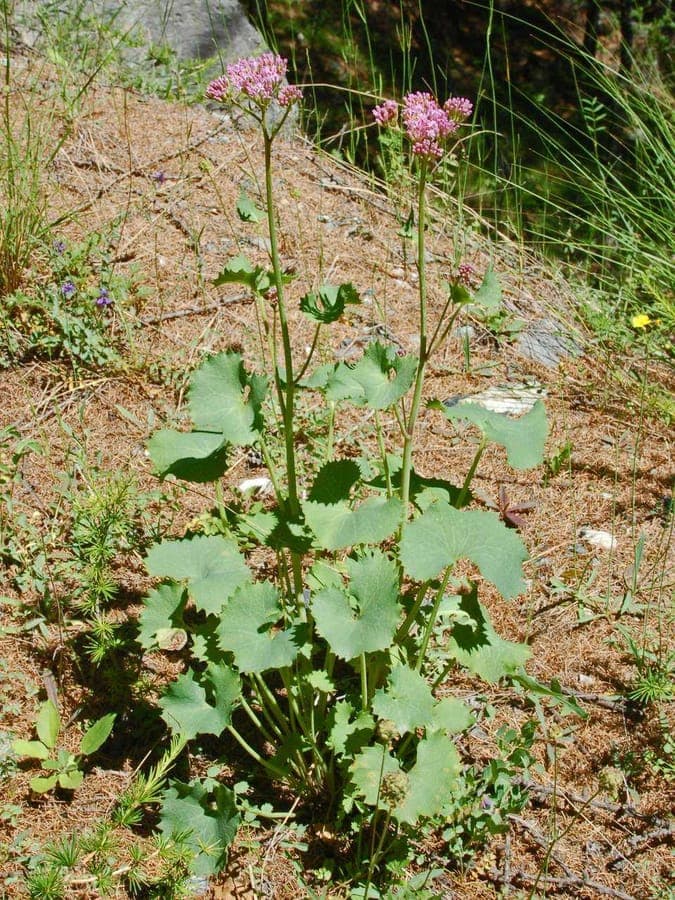
Hectonichus / CC BY-SA 3.0, via Wikimedia Commons
Adenostyles alpina: complete guide
Adenostyles alpina
Want to see Adenostyles alpina: complete guide in your garden?
1 minute, no credit card
Overview
Adenostyles alpina, better known as Alpine Adenostyle, is a graceful mountain plant from the mountainous regions of Europe, from France and Switzerland to Spain and Italy. This robust, tall-growing plant offers gardeners fine, pink flowers in dark mountain forest settings. With its large, heart-shaped leaves and elegant flowers, this is a perfect choice for shaded, moist corners of your garden.
Adenostyles alpina is a preferred choice for gardeners seeking something special for difficult mountain woodland gardens. This plant adds structure, size, and color to shadowy spots where little else grows.
Appearance and Bloom
Adenostyles alpina distinguishes itself through its remarkably large, heart-shaped leaves with distinct veins, very characteristic of the plant. The foliage is dark green and coarsely textured. From July to September, clusters of small, pink to red flowers appear in vertical, candelabra-like plumes above the foliage.
The flower color ranges from pale pink to deeper red, very attractive to bee activity. The flower clusters are dense and voluminous, adding much interest to mountain gardens. After blooming, characteristic, fluffy seed heads form that enable wind dispersal.
Ideal Location
Adenostyles alpina thrives perfectly in partial shade to half-shade environments. This plant grows naturally in mountain forests with filtered light. A location under larger trees or on the north side of walls works excellently. Avoid direct midday sun, especially in warm climates.
The plant appreciates cooler mountain conditions. Plantings on slopes or in valley areas where cool air collects are ideal. In lowland areas, protect against hot midday exposure with shade crops or structures.
Soil
Adenostyles alpina requires moisture-retaining soil with good drainage and high organic material content. Rich, humus-rich mountain soils are perfect. Add generous leaf mold, compost, and organic material when planting. A neutral to slightly acidic pH (6.5-7.5) is preferred.
Conditions of excessive dryness and excessive wetness should be avoided. A mulch layer of 5-10 cm helps moisture retention without stagnation. In dry gardens, add extra compost for water-holding capacity. Soil quality is crucial for full blooming potential.
Free design
Want to see Adenostyles alpina: complete guide in your garden? Make a free design now.
Watering
Adenostyles alpina requires regular watering, especially during growth and blooming. Keep the soil consistently moist but not waterlogged. In natural habitats, this plant grows near mountain streams - so moisture preference is evident.
Young plants should be well watered in their first season until strong roots develop. Regular watering during dry periods helps support flowers. Mulching helps moisture retention. In winter, water less but keep soil from being excessively dry.
Pruning
Adenostyles alpina requires light maintenance pruning. Remove dead or damaged foliage in early spring. After blooming, you can remove faded flower stems for neater appearance, though seeds are interesting for birds.
The plant itself maintains a natural, attractive form. Heavy pruning is not needed and could damage the plant. Gradual removal of old stems helps natural renewal. Sterilize pruning tools to prevent disease.
Maintenance Calendar
March-April: Remove dead winter foliage. Add compost as soil amendment. Young growth beginning.
May-June: Plant actively growing. Regular watering is critical. Add balanced fertilizer once in May.
July-September: Bloom peak reached; very impressive appearance. Maintain regular watering. Enjoy flowers.
October-November: Blooming decreases. Seed dispersal occurs. Remove dead plant material carefully.
December-February: Plant is dormant. Minimal care. Add mulch for frost protection.
Winter Hardiness
Adenostyles alpina is very winter hardy to -20degC or deeper in protected mountain habitats. This plant is an Alps inhabitant and tolerates extreme cold well. Protect only young plants with extra mulching in their first winter.
The plant grows successfully in European zones 3-8. No special frost protection needed in most alpine and subalpine gardens.
Companion Plants
Adenostyles alpina works beautifully in combination with other mountain plants. Hostas, hellebores, brunnera, and heuchera create beautiful foliage contrast. White-flowering plants like astilbes or polygonatum add color contrast.
In mountain woodland settings, combine with dwarf conifers, ferns, and mountain bamboo. Shade-tolerant impatiens can add color. Blue delphiniums in the background create spectacular contrast.
Closing Thoughts
Adenostyles alpina is an exceptional mountain plant that transforms difficult shade spots into interesting garden corners. This European mountain plant adds size, structure, and elegance. Find plants at specialized mountain plant nurseries and garden centers like Intratuin and Gamma. With regular watering and rich soils, this mountain beauty will deliver years of blooming beauty.
Visit gardenworld.app for more inspiration around shade gardens and mountain plant combinations.
Want to see Adenostyles alpina: complete guide in your garden? Make a free design now.
Upload a photo, pick a style, and get a photorealistic design with plant list in under a minute.
No credit card required

