
Dinesh Valke / CC BY-SA 4.0, via Wikimedia Commons
Coralwood: complete guide
Adenanthera pavonina
Want to see Coralwood: complete guide in your garden?
1 minute, no credit card
Overview
Coralwood, also called red sandalwood tree, is an impressive tropical tree from Asian and Australian regions. This tree is renowned for rapid growth and can reach impressive heights in favorable conditions. The tree is valuable for landscape design, timber production, and estate development in warm regions. The striking red seeds have traditionally been used as ornaments and beads. Today, coralwood is widely cultivated in tropical gardens for its elegant form and graceful appearance.
Appearance and bloom
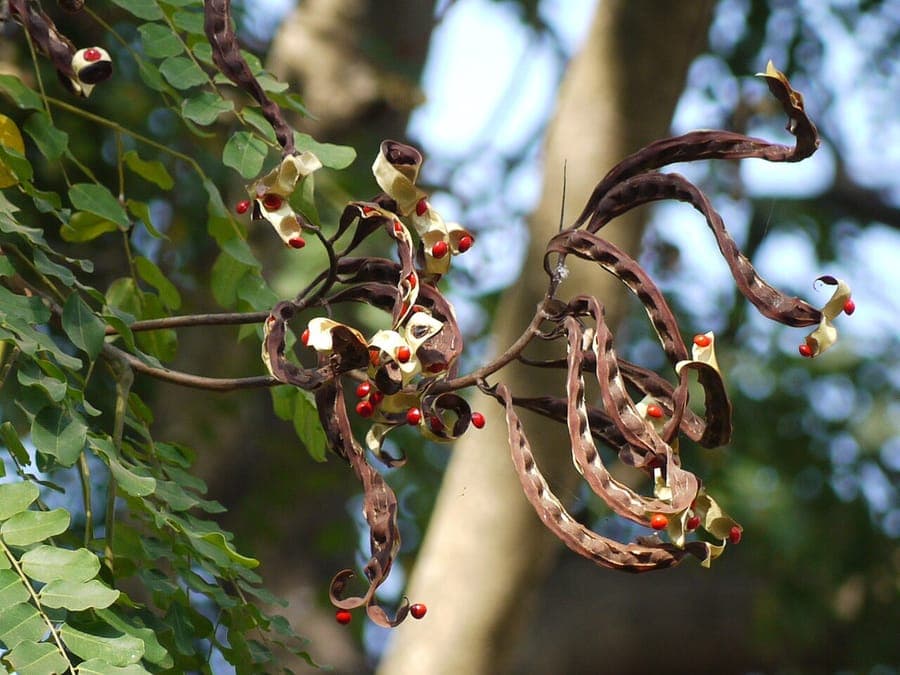
Coralwood develops into a spreading, open-crowned tree with natural form. The leaves are doubly compound and very fine, feathery, giving the tree an airy, graceful appearance. Foliage is bright green and reflects light beautifully. In spring and summer, small pale-yellow flowers appear in dense, upright clusters. These flowers are not particularly showy but add pleasant visual interest. Following bloom, long brown seed pods develop containing striking red-black seeds traditionally used as ornaments. Mature specimens can exceed 20 meters in height.
Ideal location
Coralwood thrives in full sun. The tree requires at least 6 to 8 hours of direct sunlight daily for optimal growth. In shadier locations, growth slows and density decreases. Protection from strong winds in young years promotes straight growth. Mature trees are quite wind-resistant. Provide ample space due to this tree's large growth potential. Do not plant near buildings or infrastructure.
Soil
Coralwood is not fussy about soil type. The tree grows well on poor to rich soils, acidic to alkaline conditions. Well-draining soil is however beneficial to prevent waterlogging. Heavy clay can be improved with sand and organic matter. A mulch layer of 5 to 7 centimeters helps retain soil moisture. The tree tolerates considerable drying once established, though faster growth occurs with regular watering.
Watering
Young trees require regular watering, especially during the first 1 to 2 growing seasons. Water 2 to 3 times weekly during the first year, adjusting for rainfall and temperature. Once established, mature trees tolerate considerable drought. In climates with normal rainfall, supplemental watering is often unnecessary. Avoid waterlogging. In very dry seasons, supplemental irrigation may benefit mature trees.
Free design
Want to see Coralwood: complete guide in your garden? Make a free design now.
Pruning
Regular pruning helps coralwood maintain neat form and can improve crown shape. Prune in early spring. Remove dead or damaged branches. Thin overcrowded branches for better air circulation. Young trees can be shaped. Mature trees tolerate pruning well. For very large trees, professional arboricultural pruning should be considered.
Maintenance calendar
January to March: prune as needed, inspect for pests. April to June: main growth phase, water regularly. July to September: continued growth, water as needed. October to December: dormant phase, minimal watering. Annual spring feeding (April) provides nutrition.
Winter hardiness
Coralwood is suitable for USDA hardiness zones 10 to 11, with annual minima not below -1 to 4 degrees Celsius. The tree will not grow in temperate climates without greenhouse protection. In very cold years, even zone 10 locations may suffer damage. This is purely a tropical tree. For colder regions, container culture and indoor overwintering are the only options.
Companion plants
Coralwood combines well with other tropical trees and shrubs preferring full sun and dry conditions. Suitable companions include mango trees, coconut palms, various acacia varieties, and acacia shrubs. Underplanting can be done with low-growing succulents or grasses. In more protected gardens, other tropical fruit trees combine nicely. Avoid pairing with aggressive root competitors.
Closing thoughts
Coralwood is a beautiful, versatile tree for tropical and subtropical gardens. With regular watering during growth, well-drained soil, and minimal pruning, you'll create an impressive specimen. Whether you plant it for landscape, shade, or pure aesthetics, coralwood delivers years of enjoyment. Seek it from tropical plant specialists.
gardenworld.app: Discover more tropical tree combinations on gardenworld.app for your garden.
gardenworld.app: Make your tropical garden fuller and more interesting with gardenworld.app!
Want to see Coralwood: complete guide in your garden? Make a free design now.
Upload a photo, pick a style, and get a photorealistic design with plant list in under a minute.
No credit card required


Similar plants
Tall Silky Lupine: complete guide
Lupinus elatus
Tall silky lupine is a fast-growing Californian perennial with silvery foliage and blue-purple flower spikes, ideal for a prairie-style garden.
Garfield Lupine: complete guide
Lupinus garfieldensis
The Garfield lupine is a rare, fast-growing American perennial for alkaline, dry grassland gardens, with striking blue flower spikes.
Lupinus elegans: complete guide
Lupinus elegans
Lupinus elegans, the elegant lupine, is a spectacular blooming plant from Mexico with blue flower spikes. Care, cultivation and garden use.