
Wikimedia Commons / Public domain, via Wikimedia Commons
Baneberry: complete guide
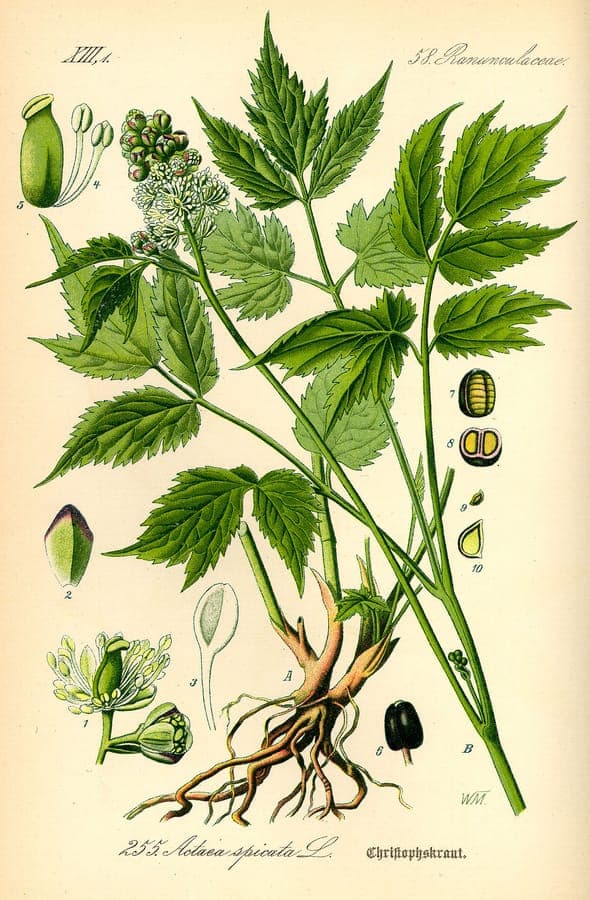
Actaea spicata
Want to see Baneberry: complete guide in your garden?
1 minute, no credit card
Overview
Baneberry (Actaea spicata) is a graceful herbaceous perennial that thrives in cool, shaded corners of the garden. Native to woodlands across Europe and parts of Asia, it's a natural fit for cottage gardens, forest edges, or any spot that mimics dappled tree cover. Belonging to the Ranunculaceae family, it shares traits with anemones and bugbanes but stands out with its tall, airy flower spikes and glossy foliage. It's not a flashy plant, but one that brings quiet elegance to shaded borders.
All parts of Baneberry are highly toxic if ingested, so keep it away from children and pets. That said, it's a magnet for beneficial insects-hoverflies, small bees, and beetles frequent the blooms. On gardenworld.app, you can design a planting scheme that positions Baneberry just right, blending it with other shade lovers while keeping safety in mind.
Appearance & bloom cycle
Baneberry grows 40–80 cm tall with a slow-spreading rhizomatous root system. Its leaves are deeply divided, ternately compound, and rich green, creating a lush backdrop. From May through July, upright white flower spikes (10–15 cm long) rise above the foliage, delicate and fragrant enough to attract pollinators but discreet in overall impact.
After flowering, the plant develops jet-black, shiny berries-hence the common name Black Baneberry. These berries are toxic to humans and dogs but are eaten by birds like thrushes, which help disperse the seeds. If safety is a concern, remove the fruit stalks after blooming. The plant dies back completely in winter, re-emerging in April.
Ideal location
Baneberry prefers partial to full shade (light level 4/10). A spot under deciduous trees, along a north-facing wall, or beneath shrubs like hazel or dogwood works best. Too much sun scorches the leaves; too deep shade leads to leggy growth and poor flowering.
Avoid dry, exposed locations. The ideal microclimate is cool, moist, and sheltered. Think woodland edges or beneath a light canopy. On gardenworld.app, you can use the seasonal shade analyzer to pinpoint the perfect spot in your garden where Baneberry will thrive without stress.
Soil requirements
This plant thrives in humus-rich, well-drained soil with a neutral to slightly alkaline pH (7.0–7.5). Avoid acidic soils-Baneberry struggles in peaty or pine needle-heavy conditions. Before planting, amend the soil with compost or leaf mould to boost organic content.
If you have heavy clay, mix in grit or broken bark to improve drainage. For sandy soils, add well-rotted manure or compost to retain moisture. A soil test kit is a smart investment before planting to confirm pH and nutrient levels.
Free design
Want to see Baneberry: complete guide in your garden? Make a free design now.
Watering
Baneberry needs consistent moisture during its growing season (April–September). Water deeply once a week during dry spells, focusing on the base to avoid wetting foliage, which can encourage fungal issues. Mulching with leaf litter or wood chips helps retain moisture and keeps roots cool.
In winter, watering is rarely needed unless the ground is unusually dry. The plant is dormant and relies on stored energy in its rhizomes.
Pruning
No formal pruning is required. However, cut back old foliage and spent flower stems in early spring (February–March) to make way for fresh growth and reduce disease risk. Wear gloves when handling plant material-sap can irritate sensitive skin.
If you want to prevent berry formation, snip off flower spikes after blooming. This is especially wise in gardens with curious kids or pets.
Maintenance calendar
- Jan: Check for frost heave, apply light mulch if needed
- Feb: Remove old growth, inspect soil pH
- Mar: Prepare for new growth, divide if overcrowded
- Apr: Begin regular watering, watch for slugs
- May: Flowers emerge, apply organic feed
- Jun: Peak bloom, monitor for mildew
- Jul: Berries form, remove if desired
- Aug: Reduce watering, avoid fertiliser
- Sep: Let plant wind down, no pruning
- Oct: Leave some foliage for overwintering insects
- Nov: Add 5–8 cm mulch for root protection
- Dec: Minimal care, check mulch layer
Winter hardiness
Baneberry is hardy in USDA zones 4–8. It dies back to the ground in winter and re-sprouts in spring. The rhizomes tolerate freezing, but a thick mulch layer (5–8 cm of leaves or compost) prevents repeated freeze-thaw cycles that can damage roots.
In harsh winters, add spruce boughs for extra insulation. Avoid heavy foot traffic over the dormant crown.
Companion plants
Pair Baneberry with other shade-tolerant perennials like Hellebores, Ferns, Pulmonaria, and Epimedium. These share similar soil and moisture needs and provide visual contrast in texture and bloom time.
Avoid invasive groundcovers like goutweed. Instead, use Hostas, Heucheras, or Tiarella to create layered interest. Baneberry also works well in mixed borders under understory trees.
Closing
Baneberry isn't for every garden-its toxicity demands caution-but for the right setting, it's a striking, low-effort perennial. It asks for shade, rich soil, and consistent moisture, and in return, it delivers architectural foliage and subtle blooms. It's not sold everywhere, but you can find it at UK garden centres in spring, especially those specialising in woodland plants. Plan your layout on gardenworld.app to ensure Baneberry fits seamlessly into your shade garden with the right companions and spacing.
Want to see Baneberry: complete guide in your garden? Make a free design now.
Upload a photo, pick a style, and get a photorealistic design with plant list in under a minute.
No credit card required


Similar plants
Drummond's anemone: complete guide
Anemone drummondii
Discover Drummond's anemone (Anemone drummondii): a silvery-grey mountain plant for cool rock gardens and alpine troughs.
Korean clematis: complete guide
Clematis serratifolia
Clematis serratifolia is a hardy climber with fragrant yellow bell flowers in August-September. Pruning group 3, location and care tips.
Aquilegia brevistyla: complete guide
Aquilegia brevistyla
Discover Aquilegia brevistyla, the elegant North American columbine. Growing tips, shade tolerance, and design ideas for woodland and shadowed gardens.