
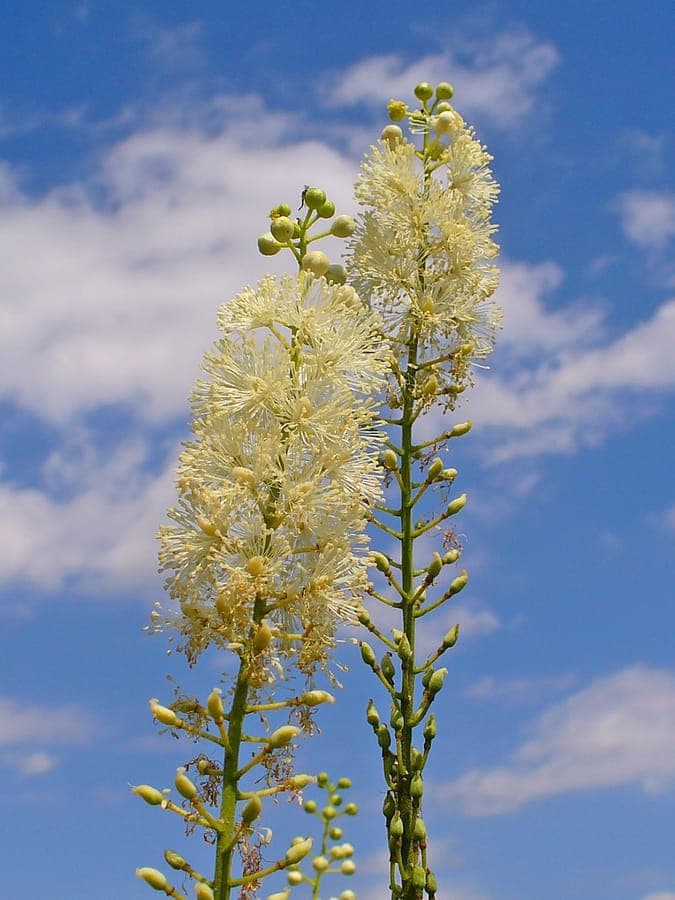
H. Zell / CC BY-SA 3.0, via Wikimedia Commons
Black cohosh: complete guide
Actaea racemosa
Want to see Black cohosh: complete guide in your garden?
1 minute, no credit card
Overview
Black cohosh, also called black snakeroot, is a remarkable shade plant from eastern North America. This stately perennial is renowned for impressive growth reaching up to 150 centimeters tall and spectacular cream-colored flower spikes appearing in summer. The plant is especially valuable for shaded garden corners where many plants struggle. In traditional medicine, black cohosh was used for centuries by Native American peoples. Today it remains a popular garden plant worldwide.
Appearance and bloom
Black cohosh develops into a stately plant with deeply cut, compound foliage appearing finely feathery. The foliage is dark green with fine texture. In early summer, flowers appear on long, thin spikes rising above the foliage. The individual flowers are tiny, white to cream-colored, and extremely numerous, forming elegant spires. These flowers emit a pleasant scent. Following bloom, small black fruits develop and remain decorative for months. The entire bloom period typically extends from June through August, depending on climate and planting conditions.
Ideal location
Black cohosh thrives in partial to full shade, making it exceptional among flowering plants. While it accepts full sun, it blooms more profusely in shaded conditions. The ideal location receives morning sun with afternoon shade. Protection from harsh midday rays prevents leaf scorch. In very cold regions, more sunlight may be beneficial. Provide protection from strong winds that could damage the slender flower spikes.
Soil
Black cohosh performs best in well-draining soil rich in organic matter with high humus content. The plant demands well-amended, nutrient-rich earth. Incorporation of compost, leaf mold, or aged wood chips works excellently. The plant prefers slightly acidic to neutral soil reaction. Heavy clay must be improved with substantial organic additions. Mulching with leaf litter maintains soil temperature and moisture. Ensure good drainage, though black cohosh tolerates some moisture retention.
Watering
Black cohosh requires consistent moisture, especially during growth and blooming. Regular watering produces best flowering results. During dry spells, water daily. Once established, the plant tolerates some drought, though dry stress reduces flowering. Keep soil moist but never waterlogged. Mulching helps retain moisture. In fall and winter, reduce watering slightly, though complete drying must be avoided.
Free design
Want to see Black cohosh: complete guide in your garden? Make a free design now.
Pruning
Black cohosh requires minimal pruning. Remove spent flower spikes to encourage neatness and occasionally stimulate reblooming. Leave fruits for autumn interest. Remove dead foliage in early spring. Old, wilted plant parts can be removed in late fall. The plant grows naturally and does not tolerate aggressive pruning. Keep its natural form intact.
Maintenance calendar
April to May: initial growth, water regularly, augment compost. June to August: blooming period, water, remove spent flowers. September to October: fruiting and autumn interest, continue watering. November to March: dormancy, minimal watering, remove dead parts in early spring. Feed once yearly in spring (April) for vitality.
Winter hardiness
Black cohosh is very hardy and suitable for USDA zones 3 through 8, tolerating winters down to -35 degrees Celsius. The plant grows in very cold climates without protection. In warmer zones (9 to 10), the plant can thrive but needs more shade and may die back from the base. The plant handles snow and ice without problem. This is an ideal choice for cold regions.
Companion plants
Black cohosh combines beautifully with other shade plants like hosta, brown-leaved liriope, tiarella, and Heuchera varieties. Pair with early bloomers like trillium and helleborus. The white cohosh flowers contrast nicely with dark green foliage. Layered height combinations provide dimension. Avoid pairing with aggressive root competitors.
Closing thoughts
Black cohosh is an exceptionally valuable shade plant filling a unique garden niche. With consistent moisture, organic-rich soil, and minimal pruning, you'll create an impressive specimen lasting many years. Whether planting at woodland edges, in dark corners, or as a green accent, black cohosh always delivers visual interest. Seek it from specialized plant nurseries.
gardenworld.app: Discover more shade plant combinations on gardenworld.app for your challenging areas.
gardenworld.app: Make your garden shade interesting with the right plants on gardenworld.app!
Want to see Black cohosh: complete guide in your garden? Make a free design now.
Upload a photo, pick a style, and get a photorealistic design with plant list in under a minute.
No credit card required


Similar plants
Drummond's anemone: complete guide
Anemone drummondii
Discover Drummond's anemone (Anemone drummondii): a silvery-grey mountain plant for cool rock gardens and alpine troughs.
Korean clematis: complete guide
Clematis serratifolia
Clematis serratifolia is a hardy climber with fragrant yellow bell flowers in August-September. Pruning group 3, location and care tips.
Aquilegia brevistyla: complete guide
Aquilegia brevistyla
Discover Aquilegia brevistyla, the elegant North American columbine. Growing tips, shade tolerance, and design ideas for woodland and shadowed gardens.