
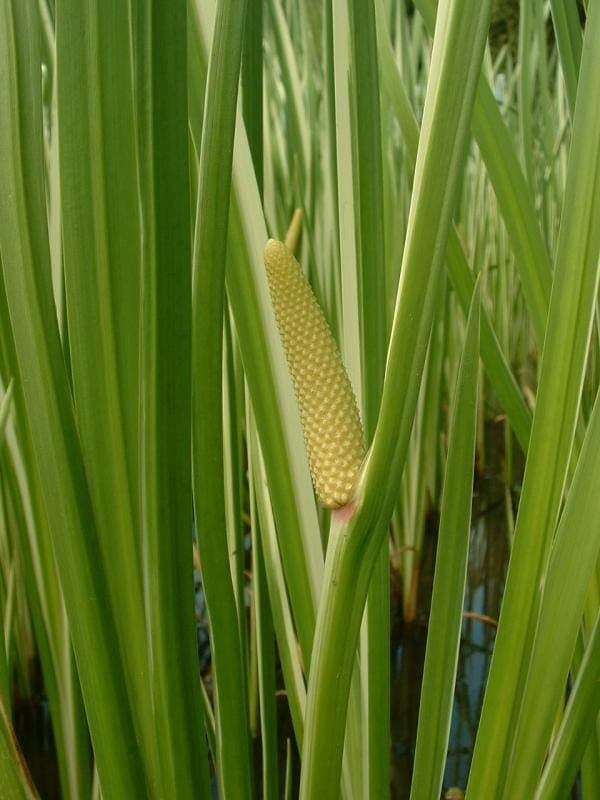
J.F. Gaffard, Autoreille, France / CC BY-SA 3.0, via Wikimedia Commons
Calamus: complete guide
Acorus calamus
Want to see Calamus: complete guide in your garden?
1 minute, no credit card
Overview
Acorus calamus, commonly known as Calamus, is a bold and resilient plant that thrives where many others fail - in consistently wet or boggy conditions. Native to regions stretching from Alaska to Bangladesh, it's a natural fit for pond margins, rain gardens, and damp borders. In the UK and North America, it's gaining popularity not just for its hardiness, but for its architectural form and subtle fragrance. When you crush the leaves, they release a spicy, camphor-like scent that's surprisingly pleasant. On gardenworld.app, you can design a garden layout that integrates Calamus seamlessly into wet zones, ensuring visual balance and ecological function.
This perennial grass-like plant reaches up to 120 cm in height and forms dense, spreading clumps. It's fully winter hardy in USDA zones 5 to 9, making it a reliable choice across most temperate climates. While it spreads slowly via rhizomes, it's not invasive if managed properly. Plant it in a submerged pot or use a root barrier to keep growth in check. Its evergreen nature in milder zones adds year-round interest.
Appearance & bloom cycle
Calamus features long, sword-shaped leaves that stand upright with a glossy, fresh green finish. Some cultivars, like 'Variegatus', have striking white margins that add contrast to shady or damp areas. The foliage grows in dense fans, creating a lush, tropical effect even in cooler gardens. From May through August, small, pale yellow spadices emerge - not flashy, but they attract hoverflies and other beneficial insects.
The bloom is subtle and blends into the foliage, but the real value lies in texture and form. The leaves rustle softly in the breeze, adding movement and sound to the garden. Each plant spreads about 60 cm wide over several years, so space them 50–60 cm apart when planting in groups. The flowering period lasts around five weeks, depending on local conditions.
Ideal location
Calamus needs plenty of light - an 8 out of 10 - so aim for full sun to partial shade. It performs best in full sun, where the leaves stay upright and vibrant. In deep shade, it becomes floppy and loses density. Ideal spots include pond edges, bog gardens, or low-lying areas that collect water after rain. The plant can tolerate up to 5 cm of standing water over the crown, but it doesn't need to be fully submerged.
If you're designing a wetland-style garden, gardenworld.app offers visual planning tools to position Calamus at the right depth and in harmony with other moisture-loving plants.
Soil requirements
The soil must stay wet at all times. Calamus prefers heavy, clay-rich, or humus-filled soils that retain moisture. The ideal pH is neutral to slightly alkaline, between 7.0 and 7.5. Avoid sandy or fast-draining soils unless you can irrigate daily. When planting, enrich the soil with compost or well-rotted manure to boost water retention. In containers, use a mix of aquatic compost and loam-based soil.
Never let the roots dry out - this is the number one cause of failure. If planting in a pond, use a water-tolerant basket with mesh to prevent soil washout.
Free design
Want to see Calamus: complete guide in your garden? Make a free design now.
Watering
Consistent moisture is non-negotiable. During dry spells, water daily, especially in the first growing season. Plants in bog gardens may need supplemental watering if rainfall drops below 25 mm per week. Rainwater is preferred, as Calamus can react poorly to hard tap water. If grown in a pond, ensure the water level doesn't drop too low in summer.
Pruning
No pruning is needed for flowering, but a tidy-up in late winter helps. In February or early March, cut back old, damaged, or brown leaves to about 10 cm above the ground. This encourages fresh, upright growth in spring. Wear gloves - the leaf edges can be sharp and may irritate sensitive skin.
Avoid cutting healthy green leaves in autumn. Leaving them in place provides insulation for the rhizomes during winter. Only remove dead material if it looks unsightly or becomes a hiding spot for slugs.
Maintenance calendar
- Jan: minimal care, check for frost damage
- Feb: trim old foliage
- Mar: apply compost around the base
- Apr: monitor for spreading, divide if needed
- May: flowering begins, ensure consistent moisture
- Jun: watch for heat stress, mist leaves in hot weather
- Jul: peak bloom, inspect for overcrowding
- Aug: flowering ends, maintain water levels
- Sep: no pruning, leave foliage intact
- Oct: let leaf litter accumulate for natural mulch
- Nov: protect young plants with straw or reed
- Dec: winter observation, no watering required
Winter hardiness
Calamus is hardy in USDA zones 5–9. In zone 5, mulch the base with straw or leaves to protect the rhizomes from freeze-thaw cycles. Established plants usually survive temperatures down to -20°C. Foliage may turn brown but will regrow in spring. Container-grown plants are more vulnerable - move them to a sheltered spot or insulate the pot.
Companion plants
Pair Calamus with Iris versicolor, Carex vulpinoidea, Ligularia, or Eutrochium maculatum. These share similar moisture needs and create a naturalistic look. Place Calamus at the front of a bog garden or use it as a vertical accent in a container. Avoid pairing it with drought-tolerant species. For a dynamic edge, plant in groups of three or five with space for air circulation.
Closing
Calamus is a low-maintenance, high-impact plant for wet areas. It brings structure, scent, and wildlife value with minimal effort. The only real issue is its tendency to spread - manage it with barriers or containers. You'll find Acorus calamus at garden centres across the UK and US, often near water plants or in the marginal section.
Look for healthy, compact clumps without signs of rot. And remember: on gardenworld.app, you can simulate how Calamus fits into your garden's moisture zones before you buy a single plant.
Want to see Calamus: complete guide in your garden? Make a free design now.
Upload a photo, pick a style, and get a photorealistic design with plant list in under a minute.
No credit card required


Similar plants
Acer pycnanthum: complete guide
Acer pycnanthum
Acer pycnanthum, the Japanese swamp maple, is a fast-growing tree with early red flowers and brilliant autumn color, ideal for damp garden settings.
Freeman maple: complete guide
Acer × freemanii
Everything about the Freeman maple (Acer x freemanii): a fast-growing shade tree with spectacular autumn colour for large gardens.
Silver vine: complete guide
Actinidia polygama
Discover silver vine (Actinidia polygama): a hardy climbing plant with silvery foliage, loved by gardeners and cats alike.