
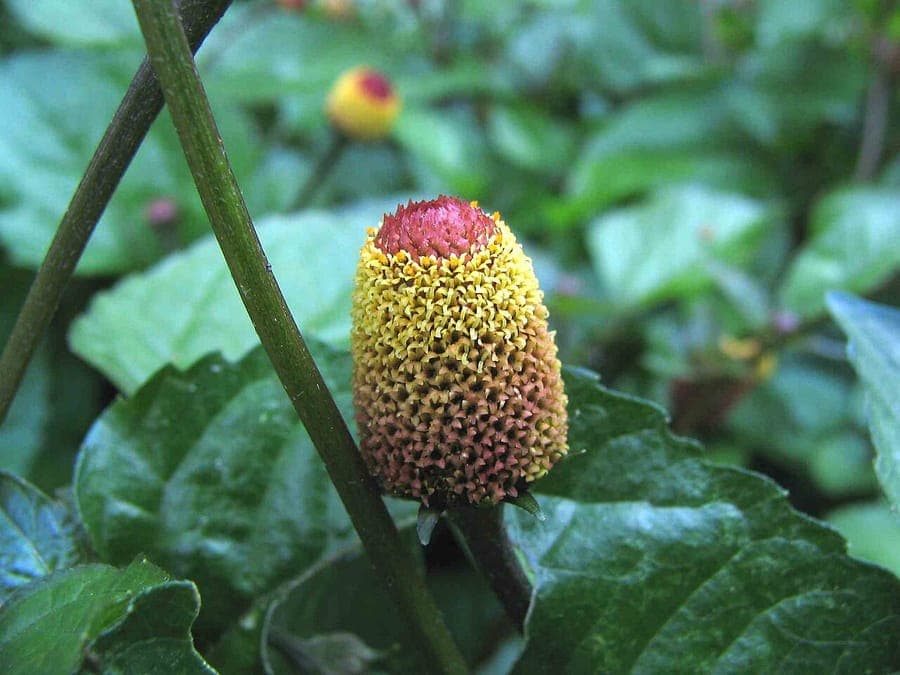
Wikimedia Commons / CC BY-SA 3.0, via Wikimedia Commons
Acmella oleracea: complete guide
Acmella oleracea
Want to see Acmella oleracea: complete guide in your garden?
1 minute, no credit card
Overview
Acmella oleracea, also known as Jambu, Para Cress, Toothacheplant, or Brazilian Cress, is a fascinating edible plant in the Asteraceae family. This unique herb is native to southeastern Brazil and is now cultivated in tropical and subtropical regions worldwide. The plant is renowned for its distinctive numbing sensations and medicinal properties.
Appearance and Bloom
Acmella oleracea grows as a low, spreading plant, typically 30-45 centimeters tall. The leaves are green, lanceolate structures with textured surfaces. The most distinctive feature is the flowers: small yellow pea-sized globular inflorescences with red stamens in the center. When eaten, these flowers and leaves produce a remarkable tingling sensation on the tongue and lips lasting several minutes. This unique effect is caused by alkamides, the same compounds responsible for chili pepper heat.
Ideal Location
Acmella oleracea thrives in full sun to partial shade. The plant grows optimally with at least four to six hours of direct sunlight daily. In hot climates, partial shade can be beneficial, especially afternoon sun protection. The plant is compact enough to grow easily in containers on patios or balconies. Ensure good air circulation around the plant to prevent disease.
Soil
Acmella oleracea prefers well-draining soil rich in organic matter. Add compost or leaf mold before planting to promote optimal growth. The plant also grows acceptably in standard garden soil if not waterlogged. A slightly acidic to neutral pH of 6.0 to 7.0 is ideal. For container growing, use potting mix with extra perlite for improved drainage.
Free design
Want to see Acmella oleracea: complete guide in your garden? Make a free design now.
Watering
Acmella oleracea loves consistently moist but not waterlogged soil. Water when the top inch of soil feels dry. During growth and blooming periods, water more frequently. In warm periods, daily watering may be necessary. Avoid wetting foliage as this can cause fungal issues. Container-grown plants require more frequent watering than in-ground specimens.
Pruning
Acmella oleracea responds well to pinching and pruning. When young, pinch the top off when the plant reaches about 15 centimeters tall to encourage bushier growth. Remove spent flowers regularly to stimulate more blooms. You can also harvest leaves and flowers for culinary use, which simultaneously prunes the plant. Avoid aggressive pruning as this can reduce vigor.
Maintenance Calendar
Spring: Sow seeds indoors or plant seedlings outdoors. Add mulch. Summer: Water regularly and harvest flowers and leaves. Fall: Reduce watering in preparation for winter. Winter: Bring containers indoors in cold climates.
Winter Hardiness
Acmella oleracea is not frost-tolerant and is typically grown as an annual in temperate climates. It grows as a perennial in USDA zones 10-12. In zone 9 and cooler, sow in spring and enjoy throughout summer. Before first frost, bring containers indoors for extended harvest.
Companion Plants
Acmella oleracea works well in herb gardens with other edible and medicinal plants. Combine with basil and oregano. Its compact growth makes it suitable for grouping with other low-growing herbs. In containers, pair with other edible flowers like violas and nasturtiums.
Conclusion
Acmella oleracea is a truly unique plant combining nutrition, healing, and entertainment. Its remarkable flavor and numbing effects make it a favorite among adventurous gardeners. Whether grown for medicinal properties or simply because it's a conversation starter, this herb adds something genuinely special to any garden.
Want to see Acmella oleracea: complete guide in your garden? Make a free design now.
Upload a photo, pick a style, and get a photorealistic design with plant list in under a minute.
No credit card required


Similar plants
Calendula stellata: complete guide
Calendula stellata
Complete guide to Calendula stellata, the star-flowered marigold from Sicily: location, soil, watering and companion planting tips.
Korean chrysanthemum: complete guide
Chrysanthemum x rubellum
Chrysanthemum x rubellum is a hardy autumn perennial with single pink to copper flowers from August to November. Care and combinations.
Helianthus divaricatus: complete guide
Helianthus divaricatus
Helianthus divaricatus is a North American woodland sunflower with yellow summer blooms, ideal for naturalistic borders and shady edges.