
Ivar Leidus / CC BY-SA 3.0, via Wikimedia Commons
Sneezeweed: complete guide
Achillea ptarmica
Want to see Sneezeweed: complete guide in your garden?
1 minute, no credit card
Overview
Achillea ptarmica, commonly known as Sneezeweed, is a clump-forming perennial that thrives in moist to wet conditions. Don't let the name fool you – it won't make you sneeze unless you're grinding the dried leaves (historically used in snuff). This member of the Asteraceae family is native to damp meadows and marshes across central and northern Europe, including parts of France, Germany, and Scandinavia.
In the garden, it's prized for its clean, white flowers that bloom in late summer when many other perennials are fading. It's a reliable plant for rain gardens, damp borders, or the edges of ponds. If you're designing a wet-area planting scheme, gardenworld.app can help you visualise where to place Achillea ptarmica for maximum impact.
Appearance & bloom cycle
Sneezeweed grows to a height of 60–90 cm with a spread of about 40 cm. The upright stems are slender and carry narrow, lance-shaped leaves that are finely divided and medium green. The foliage has a soft, feathery texture that adds lightness to planting beds.
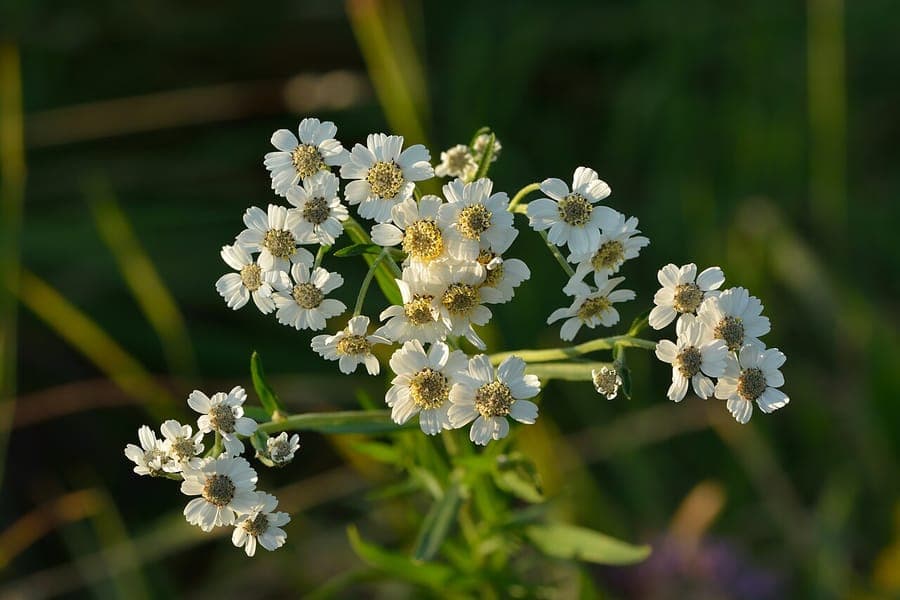
From July to September, it produces dense, white flower heads, either single or double, measuring 2–3 cm across. The flowers resemble small daisies, with tightly packed ray florets surrounding a central disc. They hold up well in rain and attract hoverflies, bees, and small butterflies.
Ideal location
Achillea ptarmica needs full sun – a solid 8 out of 10 on the light scale. This means at least 6 hours of direct sunlight daily. In too much shade, the stems become leggy and flop over, reducing flowering.
The best spot is a moist, open area such as a bog garden, damp border, or the shallow edge of a pond. It tolerates occasional flooding but not prolonged standing water. Avoid hot, dry spots – this isn't a drought-tolerant plant.
Use gardenworld.app to assess your garden's sun exposure. The platform helps you map light patterns across your yard, ensuring you place moisture-loving plants like Sneezeweed where they'll thrive.
Soil requirements
It prefers moist, well-drained soil with a slightly acidic to neutral pH between 5.0 and 5.5. Alkaline soils (above pH 6.5) can cause chlorosis, where leaves turn yellow between the veins.
The soil should be rich in organic matter. Mix in compost or well-rotted manure when planting. Heavy clay can work if amended with grit or leaf mould to improve drainage. Avoid dry, sandy soils unless you commit to regular watering.
Free design
Want to see Sneezeweed: complete guide in your garden? Make a free design now.
Watering
Keep the soil consistently moist, especially during the first growing season. Water deeply when the top 3 cm of soil feels dry. Use rainwater when possible, as it's gentler on acidity-sensitive plants.
While it appreciates damp conditions, never let it sit in stagnant water. Root rot is a real risk in poorly drained areas. Mulch with leaf mould in spring to help retain moisture and suppress weeds.
Pruning
To encourage bushier growth and more flowers, cut back the stems by half in late spring, around May or early June. This prevents flopping and promotes stronger flowering stems.
Deadhead spent blooms regularly from July onward to prolong flowering. In late autumn or early spring, cut the entire plant back to 5–10 cm above ground level. Leaving some stems over winter adds visual interest and shelter for beneficial insects.
Maintenance calendar
- January: No action needed. Old stems provide winter structure.
- February: Same as January.
- March: Cut back old growth if not done in autumn.
- April: Apply compost around the base. Watch for new shoots.
- May: Shear plants by half to promote bushiness.
- June: Monitor moisture. Water during dry spells.
- July: Blooms begin. Start deadheading.
- August: Continue deadheading. Check for pests like aphids.
- September: Bloom period ends. Reduce watering gradually.
- October: Leave seed heads for wildlife.
- November: No action.
- December: No action.
Winter hardiness
Sneezeweed is hardy in USDA zones 4 to 8. In the UK and most of Europe, it survives winter without protection. The crown remains dormant underground, and top growth dies back naturally.
No winter mulch is needed in most climates, though a light layer of straw or leaf litter can help in areas with wet winters to prevent crown rot.
Companion plants
Pair Achillea ptarmica with other moisture-loving perennials like Persicaria bistorta, Eutrochium maculatum, or Iris sibirica. It contrasts beautifully with purple or yellow blooms.
Grasses such as Molinia caerulea or Carex elata 'Aurea' add movement and texture. Avoid pairing with drought-tolerant plants like Lavender or Sedum, which prefer dry, gritty soil.
Closing
Achillea ptarmica is a dependable, low-maintenance plant for wet spots where few others succeed. With its long bloom time and insect-friendly flowers, it's a valuable addition to any ecological garden.
You can find Sneezeweed at garden centres across the UK and Europe. Look for healthy young plants in spring at trusted retailers. With proper care, it will return year after year, filling your damp corners with bright, white charm.
Want to see Sneezeweed: complete guide in your garden? Make a free design now.
Upload a photo, pick a style, and get a photorealistic design with plant list in under a minute.
No credit card required


Similar plants
Calendula stellata: complete guide
Calendula stellata
Complete guide to Calendula stellata, the star-flowered marigold from Sicily: location, soil, watering and companion planting tips.
Korean chrysanthemum: complete guide
Chrysanthemum x rubellum
Chrysanthemum x rubellum is a hardy autumn perennial with single pink to copper flowers from August to November. Care and combinations.
Helianthus divaricatus: complete guide
Helianthus divaricatus
Helianthus divaricatus is a North American woodland sunflower with yellow summer blooms, ideal for naturalistic borders and shady edges.