
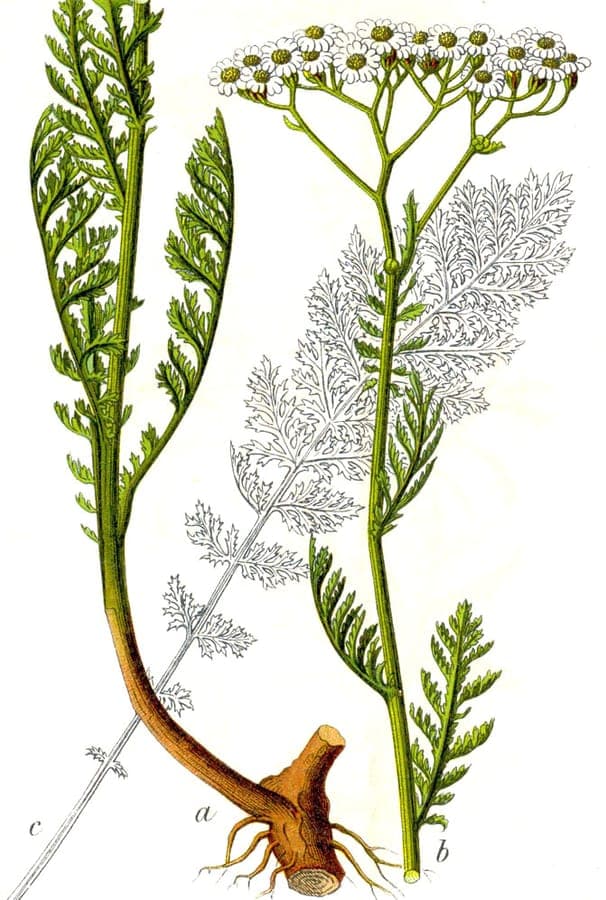
Johann Georg Sturm. Painted by Jacob Sturm / Public domain, via Wikimedia Commons
Noble yarrow: complete guide
Achillea nobilis
Want to see Noble yarrow: complete guide in your garden?
1 minute, no credit card
Overview
Noble yarrow, or Achillea nobilis, is a resilient perennial that brings subtle elegance to the garden. Native to regions across Central and Eastern Europe-including Austria, Bulgaria, and the Baltic States-it thrives in open, sunny environments with minimal water. As a member of the Asteraceae family, it shares traits with echinacea, rudbeckia, and coreopsis, but stands out with its delicate, fern-like foliage and creamy-yellow blooms.
Unlike flashier garden perennials, Noble yarrow doesn't shout for attention. Instead, it offers quiet structure and long-lasting presence. It's ideal for naturalistic plantings, gravel gardens, or sunny slopes where soil is thin and water scarce. Because of its adaptability and low care needs, it's a favorite among gardeners designing sustainable spaces. On gardenworld.app, you can create a garden layout that features Noble yarrow alongside other drought-tolerant species for a cohesive, low-input design.
Appearance & bloom cycle
Noble yarrow typically reaches 40–60 cm in height with a spread of about 45 cm. The leaves are finely dissected, grayish-green, and softly aromatic when brushed or crushed. They form a dense, bushy mound that stays attractive even when not in bloom.
Flowering begins in June and continues through August. The flat-topped clusters of tiny yellow flowers hover just above the foliage, creating a soft, airy effect. The color is more subdued than common yarrow (Achillea millefolium), leaning toward pale gold rather than bright yellow. With deadheading after the first flush, you can encourage a second, lighter bloom in early September.
Ideal location
Full sun is essential. Noble yarrow needs at least 6–8 hours of direct sunlight daily to grow compact and bloom well. In partial shade, it becomes leggy and flops over. Avoid planting it under trees or in areas shaded by buildings.
This plant excels in hot, exposed spots-ideal for rock gardens, dry borders, or between paving stones. It's also effective at the front of a mixed border or as edging along pathways. If you're planning a sun-drenched garden scheme, check gardenworld.app for design ideas that integrate Noble yarrow with ornamental grasses and flowering perennials.
Soil requirements
Noble yarrow isn't fussy about fertility, but it demands excellent drainage. Sandy or loamy soils work best. Heavy clay soils retain too much moisture, especially in winter, and can lead to root rot.
It tolerates a wide pH range from 6.0 to 7.5 and grows well in slightly alkaline conditions. If your soil is dense, amend it with coarse sand, gravel, and a modest amount of compost. Avoid rich, heavily amended beds-this plant prefers lean conditions.
Free design
Want to see Noble yarrow: complete guide in your garden? Make a free design now.
Watering
Once established, Noble yarrow is highly drought-tolerant. During the first growing season, water weekly to help roots settle. After that, it rarely needs supplemental watering, even during dry spells.
When you do water, apply it at the base to prevent fungal issues on the foliage. Overhead watering should be avoided, especially in humid climates. This plant thrives on neglect-too much care, particularly too much water, will do more harm than good.
Pruning
Minimal pruning is required. In early spring, around March or April, cut back old stems to about 10 cm above ground level. This encourages fresh growth and keeps the plant tidy.
After the main bloom period, deadhead spent flowers to promote a second flush. If you'd rather let the plant self-seed slightly or provide winter interest, leave the stems intact until spring.
Maintenance calendar
- January: Dormant. Check for damage.
- February: Prepare for spring cutback.
- March: Cut back to 10 cm. Add light compost if desired.
- April: New shoots emerge. Water lightly if dry.
- May: Monitor for aphids. No feeding needed.
- June: Bloom begins. Ensure good air circulation.
- July: Peak bloom. Avoid wetting foliage.
- August: Bloom tapers off. Deadhead for rebloom.
- September: Possible late flowers. Reduce watering.
- October: Leave stems for insects and winter texture.
- November: Optional cleanup if desired.
- December: Fully dormant.
Winter hardiness
Noble yarrow is hardy in USDA zones 4 to 8. In most of the UK and US, it survives winter without protection. The dried stems provide habitat for beneficial insects and help snow shed evenly.
In areas with heavy winter wetness, consider a light mulch of gravel or straw, but avoid covering the crown, which can trap moisture.
Companion plants
Pair Noble yarrow with plants that share its preferences: sun, lean soil, and good drainage. Excellent companions include Sedum 'Autumn Joy', Nepeta racemosa, Salvia 'Caradonna', and Stachys byzantina. Its airy texture contrasts beautifully with upright grasses like Deschampsia or Molinia.
Avoid overly vigorous spreaders like mint or buttercup, which can overwhelm it. Also, steer clear of moisture-loving plants such as hostas or astilbes.
Closing
Noble yarrow is a quiet achiever in the garden-tough, attractive to pollinators, and nearly carefree. It handles heat, drought, and poor soil with ease, making it a backbone plant in sustainable landscapes. Its soft blooms add gentle color without dominating, and its foliage remains tidy all season.
You'll find Noble yarrow at garden centres in spring, particularly at trusted suppliers like those found locally or through major retailers. Always inspect plants for signs of mildew or root rot before buying. Once planted in the right spot, it will return year after year with minimal intervention. For layout inspiration and plant pairings, visit gardenworld.app.
Want to see Noble yarrow: complete guide in your garden? Make a free design now.
Upload a photo, pick a style, and get a photorealistic design with plant list in under a minute.
No credit card required


Similar plants
Calendula stellata: complete guide
Calendula stellata
Complete guide to Calendula stellata, the star-flowered marigold from Sicily: location, soil, watering and companion planting tips.
Korean chrysanthemum: complete guide
Chrysanthemum x rubellum
Chrysanthemum x rubellum is a hardy autumn perennial with single pink to copper flowers from August to November. Care and combinations.
Helianthus divaricatus: complete guide
Helianthus divaricatus
Helianthus divaricatus is a North American woodland sunflower with yellow summer blooms, ideal for naturalistic borders and shady edges.