
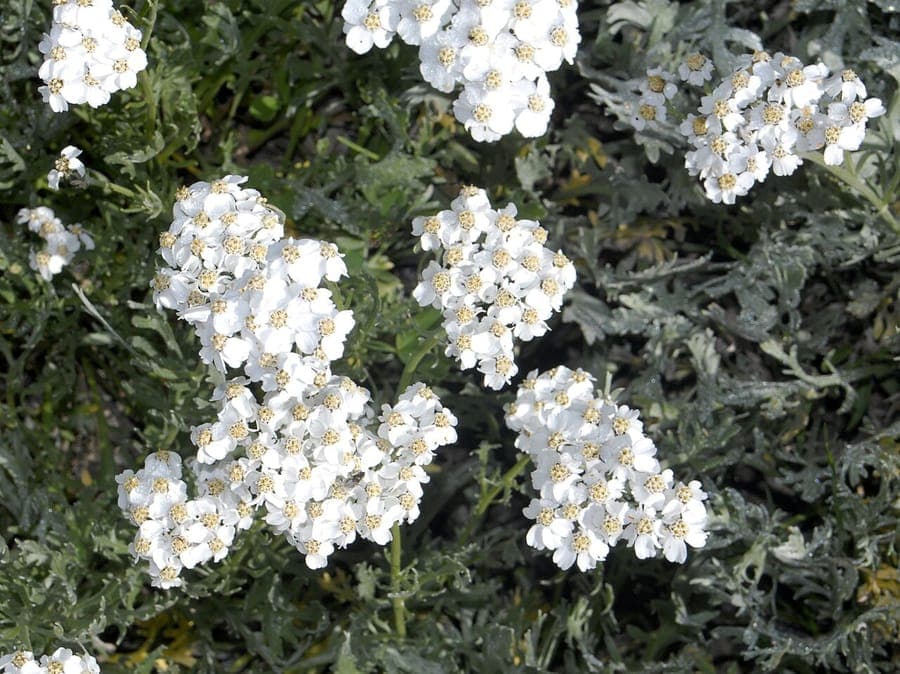
Hectonichus / CC BY-SA 3.0, via Wikimedia Commons
Silvery yarrow: complete guide
Achillea clavennae
Want to see Silvery yarrow: complete guide in your garden?
1 minute, no credit card
Overview
Achillea clavennae, commonly known as silvery yarrow, is a resilient perennial that brings elegance and structure to any garden. Native to alpine regions of Austria, Germany, and the Balkans, this plant thrives in well-drained, sunny spots and is perfectly suited for gardeners in USDA hardiness zones 4 through 8. With its silvery foliage and soft yellow blooms, it adds a touch of grace to borders, rock gardens, and gravel schemes.
What makes silvery yarrow stand out is its ability to flourish in poor soil with minimal care. It's a favourite among gardeners who value both beauty and practicality. Whether you're designing a cottage-style border or a modern xeriscape, this plant holds its own. On gardenworld.app, you can build a custom garden layout that integrates silvery yarrow with complementary textures and blooming cycles for year-round appeal.
Appearance & bloom cycle
Silvery yarrow typically grows 40 to 60 cm tall, with a spread of 30 to 40 cm. It forms dense, low mounds of finely divided, aromatic foliage that ranges from grey-green to silvery-white, creating a soft, feathery backdrop in the garden.
From June through August, flat clusters of pale yellow flowers rise on sturdy, upright stems. Each flower head is made up of numerous tiny florets, typical of the Asteraceae family, and is highly attractive to pollinators such as hoverflies, bees, and butterflies. The blooming period can be extended by deadheading spent flowers, and a light trim after the first flush often encourages a second bloom in late summer.
Even after flowering, the plant retains visual interest through winter if left standing, offering structure and shelter for overwintering insects.
Ideal location
Full sun is essential for silvery yarrow to thrive. Aim for at least 6 to 8 hours of direct sunlight daily. In partial shade, the plant becomes leggy and more prone to flopping. Choose locations such as hot, dry borders, gravel gardens, or the top of retaining walls where heat and drainage are optimal.
This plant is ideal for low-water landscapes and performs exceptionally well in urban gardens with reflected heat from paving or walls. In the UK and US, it's a go-to for drought-prone areas where other perennials struggle. Garden centres often carry it in spring, usually as 1-litre pots, ready for planting.
Soil requirements
Silvery yarrow prefers lean, alkaline to neutral soils with excellent drainage. A pH between 6.5 and 8.0 is ideal. Avoid heavy clay unless amended with grit or sharp sand to improve aeration. Poor, stony soils are actually beneficial - rich compost or manure can lead to floppy growth and reduced flowering.
Raised beds, rock gardens, or sloped areas are perfect for mimicking its native habitat. If planting in containers, use a gritty mix with at least 30% perlite or horticultural sand to prevent water retention.
Free design
Want to see Silvery yarrow: complete guide in your garden? Make a free design now.
Watering
Once established, Achillea clavennae is highly drought-tolerant. Young plants need regular watering in their first growing season to develop strong roots. Water deeply but infrequently - about once a week during dry spells.
After the first year, supplemental watering is rarely needed, even in hot summers. Overwatering is a common mistake and can lead to root rot or fungal issues. Always water at the base and avoid wetting the foliage to reduce the risk of mildew.
Pruning
Pruning helps maintain shape and prolong blooming. After the first flush of flowers fades in mid-July, cut back the stems by about one-third. This encourages bushier growth and a second bloom in late summer.
In late autumn or early spring, remove any dead or damaged foliage. Some gardeners leave the stems standing through winter for visual texture and to provide habitat for beneficial insects. Cut back fully by early March to make way for new growth.
Maintenance calendar
- January–February: Check for winter damage; leave standing if possible
- March: Cut back old growth; lightly fork soil around base
- April–May: Monitor for new shoots; no feeding required
- June–August: Peak bloom; deadhead and trim for rebloom
- September–October: Allow seed heads to dry; prepare for dormancy
- November–December: Leave for winter interest or cut back to 5 cm
Winter hardiness
Silvery yarrow is reliably hardy in USDA zones 4 to 8, surviving temperatures down to -30°C. In milder UK zones (7–8), it remains semi-evergreen. The key to winter survival is dry soil - wet, cold conditions are more dangerous than frost.
If your garden has heavy winter rainfall, consider planting on a slope or raised bed. Mulching is not recommended, as it can trap moisture against the crown. Instead, rely on good air circulation and natural winter dieback.
Companion plants
Pair silvery yarrow with other sun-loving, drought-tolerant plants. Excellent companions include Echinacea purpurea, Salvia x sylvestris, Nepeta racemosa, and Sedum spectabile. The soft yellow blooms contrast beautifully with deep purples and blues.
It also works well in gravel gardens with low thymes, dwarf grasses like Festuca glauca, or with structural plants like Eryngium. For a cottage garden feel, mix it with dark-leaved Heuchera or upright Verbena bonariensis.
Closing
Silvery yarrow is a quiet achiever - understated yet impactful. It demands little but delivers consistent beauty and ecological value. Its long blooming season, pollinator appeal, and winter structure make it a top choice for thoughtful gardeners.
Available at most garden centres in spring, it's worth planting in groups of three or more for the best visual effect. Combine with plants of varying height and texture for depth.
On gardenworld.app, you can explore curated planting schemes that feature silvery yarrow as a key element. Whether you're revamping a front yard or designing a backyard retreat, the platform helps you visualise seasonal flow and plant synergy with precision.
Want to see Silvery yarrow: complete guide in your garden? Make a free design now.
Upload a photo, pick a style, and get a photorealistic design with plant list in under a minute.
No credit card required


Similar plants
Calendula stellata: complete guide
Calendula stellata
Complete guide to Calendula stellata, the star-flowered marigold from Sicily: location, soil, watering and companion planting tips.
Korean chrysanthemum: complete guide
Chrysanthemum x rubellum
Chrysanthemum x rubellum is a hardy autumn perennial with single pink to copper flowers from August to November. Care and combinations.
Helianthus divaricatus: complete guide
Helianthus divaricatus
Helianthus divaricatus is a North American woodland sunflower with yellow summer blooms, ideal for naturalistic borders and shady edges.