
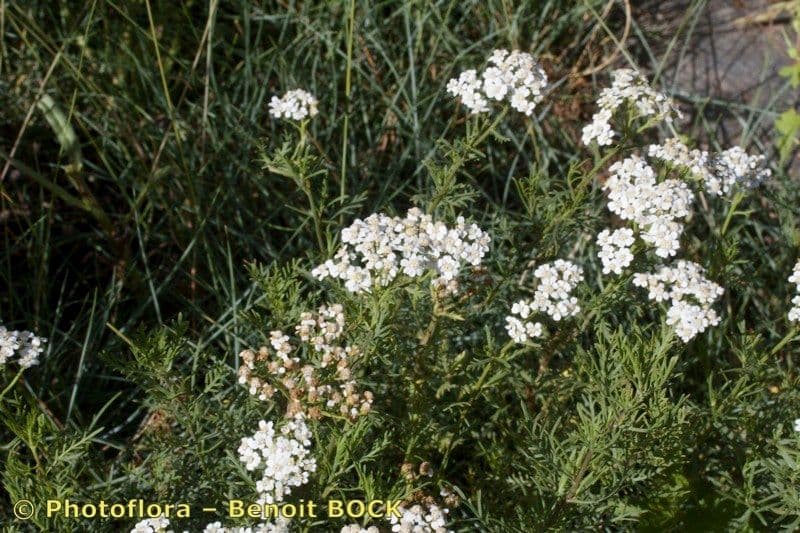
Chamomile-leaved yarrow (Achillea chamaemelifolia): complete guide
Achillea chamaemelifolia
Want to see Chamomile-leaved yarrow (Achillea chamaemelifolia): complete guide in your garden?
1 minute, no credit card
Achillea chamaemelifolia is a distinguished alpine plant from the eastern Pyrenees, on the border between France and Spain. This delicate species thrives in rocky mountain terrain with minimal nutrients and excellent drainage. For gardeners, it represents a compelling choice for lean, rocky soils and sun-baked locations. Despite its fragile appearance, it is remarkably robust and long-lived.
Overview
Achillea chamaemelifolia grows as a compact, low-spreading perennial, typically 15-30 centimetres tall with equivalent spread. The plant forms a silken, silvery-green mat of finely divided foliage that is ornamental in its own right. From June to July, tiny yellow-orange flowers appear in dense, flattened clusters. This is not a lush grower; it is a garden plant requiring precise placement and respect.
Appearance & bloom
Foliage is extremely fine, hair-like, and imparts a silken, silvery-green texture to the plant. This is the primary ornamental feature, even without flowers. Flower clusters are yellow, low-growing and compact, lacking the coarse brilliance of heavier yarrow species. After blooming, the flower stems dry beautifully and remain ornamental into late autumn.
Ideal location
Full sun is essential. Place this plant where at least 6 hours of direct sun is guaranteed. In half-shade, growth becomes weak and flowering poor. Wind exposure is beneficial; this plant thrives in it.
Free design
Want to see Chamomile-leaved yarrow (Achillea chamaemelifolia): complete guide in your garden? Make a free design now.
Soil
Achillea chamaemelifolia demands excellent drainage, almost extreme. Heavy clay soils are unsuitable without major amendment. Ideal is gritty, stony, sandy soil with pH 6-8. Alpine plant composts suit it well. Fertility plays little role; poor soils are actually preferred.
Watering
After planting, water minimally; once established, supplemental watering is rarely needed. Excess moisture invites rot. Winter wetness is tolerated if drainage is impeccable. In extreme drought, light irrigation helps, but prevention is preferable to cure.
Pruning
No regular pruning needed. Remove spent flower stems in October. In very wet regions, protect against moss creep in winter.
Maintenance calendar
- Spring: Check for winter damage, remove dead material.
- Summer: Minimal intervention, observe flowering.
- Autumn: Leave seed-bearing stems for winter interest.
- Winter: No intervention; plant dormant.
Winter hardiness
Achillea chamaemelifolia is hardy in USDA zones 4-8, withstanding approximately -30 degrees Celsius. Winter hardiness is not the issue; winter wetness is. Perfect drainage is crucial.
Companion plants
Other alpine plants pair well: Silene acaulis, Saxifraga arendsii, Sempervivum tectorum, Festuca ovina. Also: low-growing junipers, Thymus praecox, Sedum spathulifolium.
Closing
Achillea chamaemelifolia is a relatively unknown gem for rock garden enthusiasts. It demands careful water management but offers decades of silken beauty. For experimenters, this is a worthwhile-risk plant. GardenWorld recommends it for sunny, well-drained rocky slopes and alpine beds.
Want to see Chamomile-leaved yarrow (Achillea chamaemelifolia): complete guide in your garden? Make a free design now.
Upload a photo, pick a style, and get a photorealistic design with plant list in under a minute.
No credit card required


Similar plants
Calendula stellata: complete guide
Calendula stellata
Complete guide to Calendula stellata, the star-flowered marigold from Sicily: location, soil, watering and companion planting tips.
Korean chrysanthemum: complete guide
Chrysanthemum x rubellum
Chrysanthemum x rubellum is a hardy autumn perennial with single pink to copper flowers from August to November. Care and combinations.
Helianthus divaricatus: complete guide
Helianthus divaricatus
Helianthus divaricatus is a North American woodland sunflower with yellow summer blooms, ideal for naturalistic borders and shady edges.