
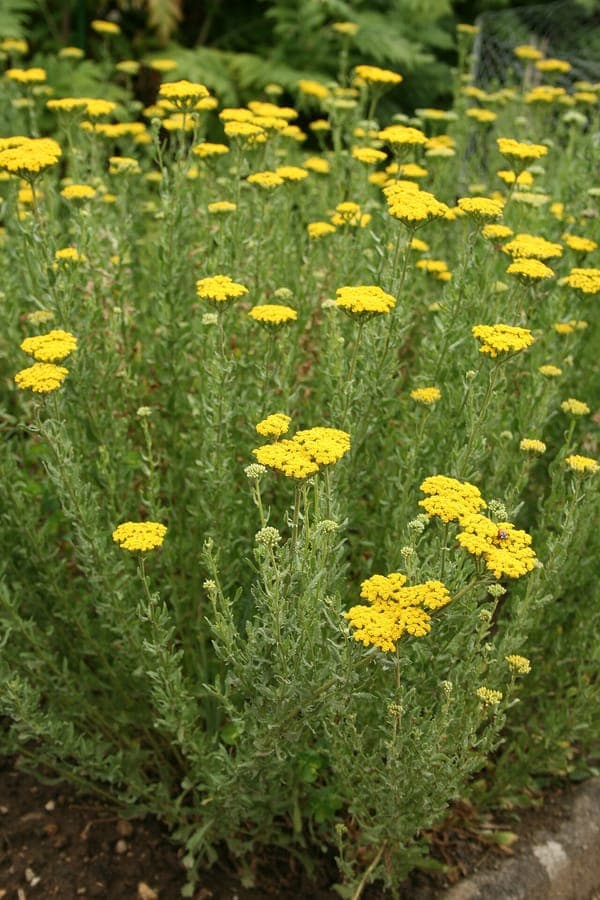
Oceancetaceen - Alice Chodura / CC BY-SA 3.0, via Wikimedia Commons
Sweet yarrow: complete guide
Achillea ageratum
Want to see Sweet yarrow: complete guide in your garden?
1 minute, no credit card
Overview
Sweet yarrow, or Achillea ageratum, is a resilient, creeping perennial that's gaining traction among UK and US gardeners for its charm and ease of care. Despite the name, it's not a true ageratum but belongs to the Asteraceae family. Native to southern Europe and North Africa, it thrives in temperate climates and adapts well to garden conditions across USDA zones 5 to 8. Its compact size and long bloom period make it ideal for rock gardens, alpine beds, or as a soft-edged ground cover. On gardenworld.app, you can design a garden layout that highlights Sweet yarrow's strengths, especially in sunny, dry areas where other plants struggle.
Appearance & bloom cycle
Growing to about 30 cm in height and spreading up to 40 cm wide, Sweet yarrow forms a neat mat of grey-green, finely dissected leaves with a soft, velvety texture. From June through September, it produces flat-topped clusters of soft purple to pale pink flowers. The blooms have a subtle sweet fragrance, which sets it apart from other yarrows. Each flower head is made up of dozens of tiny florets, attracting bees, hoverflies, and butterflies. The plant maintains a tidy appearance throughout the season, with minimal self-seeding compared to more vigorous perennials.
Ideal location
Plant Sweet yarrow in full sun. It needs at least 6 hours of direct sunlight daily to flower well. While it can tolerate light shade, flowering will be sparse and stems may become leggy. It excels in rock gardens, gravel beds, or between paving stones. It also does well in containers on patios or balconies, provided there's good drainage. South- or west-facing spots, where heat is retained, are ideal. Avoid damp, shaded corners where air circulation is poor.
Soil requirements
This plant isn't fussy about soil as long as it's well-drained. It tolerates poor to moderately fertile soils and prefers a slightly alkaline to neutral pH (6.0–7.5). Heavy clay soils should be amended with grit or sand to improve drainage. Avoid overly rich compost, as this encourages leafy growth at the expense of flowers. Raised beds or sloped areas help prevent waterlogging, especially in regions with wet winters. If you're unsure about your soil, gardenworld.app offers a simple soil testing guide to help you adjust conditions.
Watering
Once established, Sweet yarrow is drought-tolerant and rarely needs supplemental watering. Water young plants weekly during their first growing season. After that, only water during prolonged dry spells. Overwatering is a common mistake and can lead to root rot. When watering, aim at the base to keep foliage dry and reduce fungal risk. Rainwater is preferable-gentler on the plant and better for the environment.
Free design
Want to see Sweet yarrow: complete guide in your garden? Make a free design now.
Pruning
Deadhead spent flowers regularly to prolong blooming. Use clean shears to cut just above a leaf node. This encourages bushier growth and more flower production. In late autumn, cut back the entire plant to about 5 cm above ground level. Alternatively, leave stems intact over winter for visual interest and to shelter beneficial insects. Cut them back in early spring before new growth emerges.
Maintenance calendar
- January: Check for frost damage, minimal care needed
- February: Prepare tools, clear debris if ground isn't frozen
- March: Loosen soil around base, avoid fertilizing
- April: Watch for new shoots, protect from slugs
- May: Water young plants weekly, ensure good air flow
- June: Start of bloom, begin deadheading
- July: Peak flowering, continue deadheading, avoid overwatering
- August: Maintain bloom, check for pests like aphids
- September: Allow some flowers to set seed for natural spread
- October: Cut back or leave for winter structure
- November: Mulch lightly if soil is exposed, protect young plants
- December: Monitor for wet conditions, ensure drainage
Winter hardiness
Sweet yarrow is hardy in USDA zones 5–8. It withstands winter cold well, especially when roots stay dry. Wet, cold winters pose the biggest threat-root rot is more likely than frost damage. Avoid heavy mulches that trap moisture. Mature plants typically survive without protection, but young ones may benefit from a light covering of straw or dry leaves.
Companion plants
Pair Sweet yarrow with drought-tolerant companions like Sedum 'Autumn Joy', Nepeta 'Six Hills Giant', or Thymus serpyllum. The soft purple blooms contrast beautifully with yellow Echinacea or golden Oregano. It also works well with fine-textured grasses such as Stipa tenuissima. Avoid invasive spreaders like mint or ground elder, which can overwhelm it. Use gardenworld.app's companion planting tool to create balanced, visually appealing schemes.
Closing
Sweet yarrow is a quiet achiever in the garden-low maintenance, long-blooming, and wildlife-friendly. Whether you're designing a cottage border or a modern gravel garden, it adds subtle colour and texture. Find it at garden centres in late spring or early summer, often potted and in bloom. Plant it in a sunny spot with good drainage, and it'll reward you with months of soft flowers and happy pollinators.
Want to see Sweet yarrow: complete guide in your garden? Make a free design now.
Upload a photo, pick a style, and get a photorealistic design with plant list in under a minute.
No credit card required


Similar plants
Calendula stellata: complete guide
Calendula stellata
Complete guide to Calendula stellata, the star-flowered marigold from Sicily: location, soil, watering and companion planting tips.
Korean chrysanthemum: complete guide
Chrysanthemum x rubellum
Chrysanthemum x rubellum is a hardy autumn perennial with single pink to copper flowers from August to November. Care and combinations.
Helianthus divaricatus: complete guide
Helianthus divaricatus
Helianthus divaricatus is a North American woodland sunflower with yellow summer blooms, ideal for naturalistic borders and shady edges.