
Abrahami / CC BY-SA 3.0, via Wikimedia Commons
Three-flower maple: complete guide
Acer triflorum
Want to see Three-flower maple: complete guide in your garden?
1 minute, no credit card
Overview
The three-flower maple, Acer triflorum, is a striking small deciduous tree native to Korea and Manchuria. Unlike many maples, it naturally develops three main trunks from a single base, giving it a sculptural presence in the garden. It reaches 6–8 meters in height and spreads 4–5 meters wide, making it ideal for small urban gardens or as a specimen in woodland settings. You'll find it at garden centres across the UK and US, especially those specialising in ornamental trees.
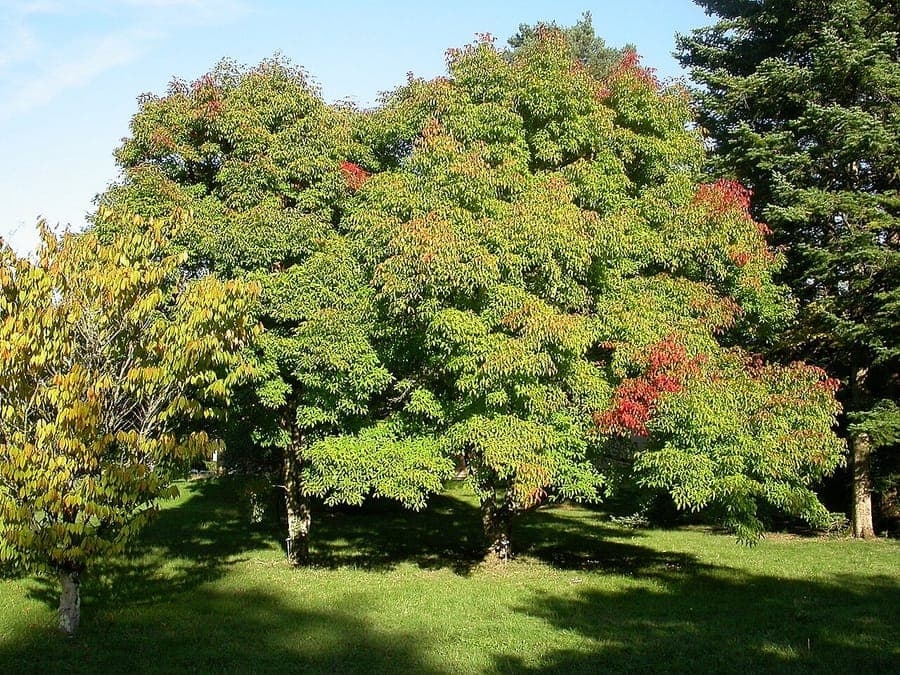
What sets this maple apart is its year-round interest. In spring, fresh green leaves emerge in threes, followed by subtle maroon flowers in April. Summer brings dense foliage, but the real show starts in autumn, when the leaves turn brilliant shades of copper, rust, and deep burgundy. Winter reveals its best feature: cinnamon-coloured bark that peels in long, vertical strips, adding texture to the dormant garden.
Appearance & bloom cycle
The leaves are trifoliate - three leaflets per stem, each 8–12 cm long, with fine serrations. They open bright green in April, mature to deep green in summer, and ignite in late October, holding colour well into December in milder zones. The bloom appears before or with leaf emergence: small, petal-less flowers in clusters of three, greenish to maroon, lasting about two weeks. While not showy, they attract early pollinators like hoverflies and bees.
Seed samaras form by late summer and disperse in autumn. The tree's structure becomes more pronounced with age - by year 10–12, the three main stems are fully defined, giving it a bold, almost architectural form.
Ideal location
This maple thrives in partial shade, especially with protection from hot afternoon sun. Full sun is acceptable in cooler zones (5–6), but in zones 7–8, dappled shade prevents leaf scorch. A north- or east-facing spot works best. Give it at least 3 meters of clearance from buildings or other trees to allow for horizontal spread.
It fits well in cottage gardens, modern courtyards, or underplanting beneath taller canopy trees. On gardenworld.app, you can design a layout that highlights its triple-trunk form while ensuring proper airflow and root space.
Soil requirements
Acer triflorum prefers moist, well-drained, humus-rich soil. It struggles in heavy clay or waterlogged conditions. Amend heavy soils with compost and coarse sand to improve drainage. Ideal pH is 5.5–6.8 - slightly acidic to neutral. Avoid highly alkaline soils, as they can induce chlorosis.
When planting, dig a hole twice as wide as the root ball but no deeper. Backfill with a mix of native soil, compost, and leaf mould. Mulch with pine bark or wood chips to retain moisture and suppress weeds.
Free design
Want to see Three-flower maple: complete guide in your garden? Make a free design now.
Watering
Water deeply once a week during the first two growing seasons, providing 20–30 litres per session. After establishment, it's moderately drought-tolerant but benefits from supplemental watering during prolonged dry spells (3+ weeks without rain). Use rainwater when possible - maples dislike high-calcium tap water.
Avoid overhead watering to reduce the risk of fungal diseases like anthracnose. Water at the base, ideally in the morning.
Pruning
Pruning is minimal. Remove dead, damaged, or crossing branches in late winter or early spring, before sap rise. Never prune in early spring - maples bleed heavily when cut during sap flow. Focus on preserving the three-stem structure by removing any competing central leaders early on.
Use sharp, sterilised tools. Clean blades with rubbing alcohol between cuts if you suspect disease.
Maintenance calendar
- January: Inspect structure; remove dead wood
- February: Plant if ground isn't frozen; check for rodent damage
- March: Apply compost mulch around base
- April: Flowers appear; monitor for aphids
- May: Water during dry spells
- June: No action needed
- July: Monitor for leaf scorch in heatwaves
- August: Avoid fertilising; check for pests
- September: Stop feeding; prepare for autumn
- October: Peak fall colour; keep roots moist
- November: Replenish mulch; protect young trunks from rabbits
- December: Enjoy bark texture; minimal care
On gardenworld.app, you can set up a custom care reminder system synced to this calendar.
Winter hardiness
Hardy in USDA zones 5–8 (–29°C to –12°C). In zone 5, provide winter protection for young trees - wrap trunks with burlap or tree wrap for the first 2–3 years. Avoid exposed, windy sites.
In containers, wrap pots with bubble wrap and elevate them to prevent root freeze. Use a sheltered location near the house.
Companion plants
Pair with shade-tolerant perennials like Helleborus orientalis, Carex elata 'Aurea', or Heuchera cultivars. These contrast well with the maple's upright form and don't compete heavily for moisture.
For layered interest, plant beneath with Epimedium or Tellima grandiflora. Combine with other fall-colour trees like Fothergilla or Nyssa sylvatica for a dynamic seasonal display. Explore planting schemes on gardenworld.app to visualise combinations before planting.
Closing
The three-flower maple is a quiet standout - not flashy, but deeply satisfying for gardeners who appreciate structure, texture, and seasonal shifts. With minimal pruning and no major pests, it's a low-maintenance choice that delivers year-round impact. Choose it for its peeling bark, triple trunks, and long-lasting autumn hues. It's a worthy alternative to Acer palmatum, especially in cooler, moister climates.
Want to see Three-flower maple: complete guide in your garden? Make a free design now.
Upload a photo, pick a style, and get a photorealistic design with plant list in under a minute.
No credit card required


Similar plants
Acer pycnanthum: complete guide
Acer pycnanthum
Acer pycnanthum, the Japanese swamp maple, is a fast-growing tree with early red flowers and brilliant autumn color, ideal for damp garden settings.
Freeman maple: complete guide
Acer × freemanii
Everything about the Freeman maple (Acer x freemanii): a fast-growing shade tree with spectacular autumn colour for large gardens.
Wild ackee: complete guide
Cupania americana
A comprehensive guide to Cupania americana, a tropical tree from the Sapindaceae family with conspicuous white flowers and brown fruits, native to tropical America.