
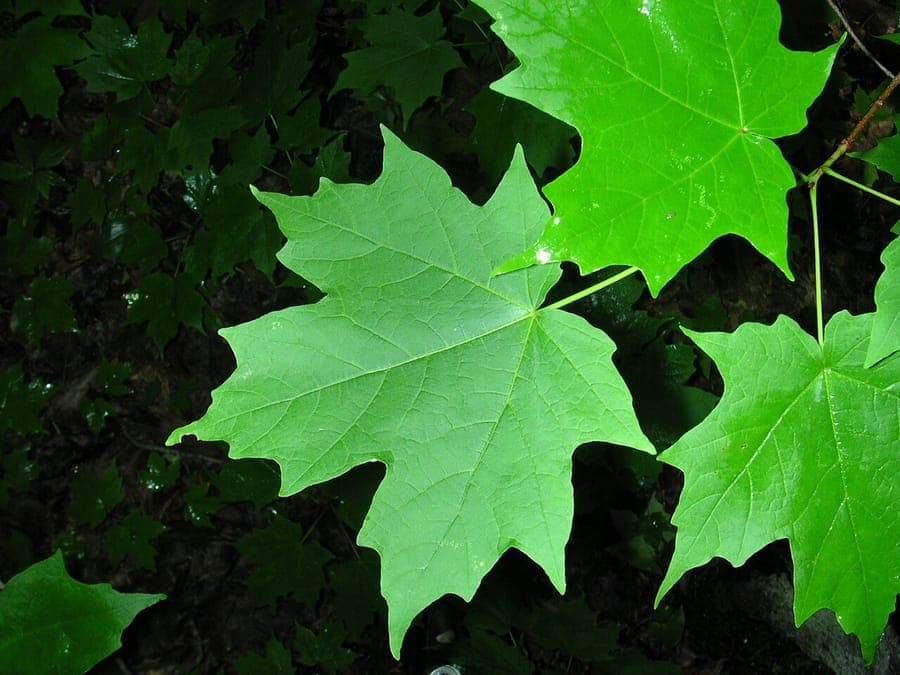
Superior National Forest / CC BY 2.0, via Wikimedia Commons
Sugar maple: complete guide
Acer saccharum
Want to see Sugar maple: complete guide in your garden?
1 minute, no credit card
Overview
Acer saccharum, commonly known as sugar maple, is a stately deciduous tree native to eastern North America, including regions from Alabama to Louisiana. Revered for its brilliant fall foliage and role in maple syrup production, it's a prized addition to large gardens and landscapes. Mature trees reach 60–90 feet (20–30 m) tall with a spread of 40–50 feet (12–15 m), forming a dense, oval to rounded crown. Its growth rate is moderate to slow-expect 12–24 inches (30–60 cm) per year-making it a long-term investment rather than a quick shade solution.
On gardenworld.app, you can design a garden layout that accounts for the sugar maple's mature size and root spread, ensuring it won't interfere with structures or utilities later on.
Appearance & bloom cycle
The sugar maple's leaves are palmate with five distinct lobes, 3–6 inches (8–15 cm) across, dark green above and paler beneath. In autumn, they transform into vibrant shades of gold, orange, red, and sometimes deep burgundy-a display that can last up to five weeks under ideal conditions. This extended colour show makes it one of the most sought-after trees for seasonal interest.
It blooms in early spring, typically March to April, just before or as new leaves emerge. The flowers are small, yellow-green, and hang in clusters. Though not showy, they provide early nectar for pollinators. The fruit, known as samaras, appear in pairs with a distinctive winged shape that spins as it falls. These can germinate readily, so keep an eye out for seedlings in spring.
Ideal location
Sugar maples thrive in full sun to light shade. For the best fall color, aim for at least 6 hours of direct sunlight daily. In dense shade, foliage stays green longer but lacks intensity, and the canopy becomes sparse.
Plant at least 20 feet (6 m) from buildings, driveways, or underground utilities. The root system is shallow and spreading, which can heave pavement or compete aggressively with lawn grass. Choose a site with good air circulation to reduce fungal disease risk, such as anthracnose or powdery mildew.
Use gardenworld.app to visualise spacing and shadow patterns over time, helping you place your sugar maple where it won't overcrowd other plants.
Soil requirements
This tree tolerates a wide pH range-3.7 to 7.9-but grows best in moist, well-drained, loamy or clay-loam soils rich in organic matter. It struggles in compacted, sandy, or poorly drained soils. If your soil is sandy, amend it with compost or aged manure to improve water retention.
Avoid areas with standing water. Prolonged saturation leads to root rot, especially in young trees. Apply a 2–3 inch (5–8 cm) layer of organic mulch around the base to conserve moisture and regulate soil temperature, but keep it 4–6 inches (10–15 cm) away from the trunk to prevent rot and rodent damage.
Free design
Want to see Sugar maple: complete guide in your garden? Make a free design now.
Watering
Young sugar maples need consistent moisture for the first 2–3 years. During dry spells, provide 20–30 liters of water weekly, applied slowly to soak the root zone. Deep watering encourages roots to grow downward, increasing drought resilience.
Mature trees are moderately drought-tolerant but perform best with even moisture. During extended droughts (3+ weeks without rain), deep watering once every 10–14 days is beneficial. Use soaker hoses or drip irrigation under the canopy for best results.
Pruning
Prune in late winter or early spring before bud break. Avoid pruning in spring when sap is flowing heavily-the tree will 'bleed' sap, which isn't harmful but can stress the tree. Focus on removing dead, damaged, or crossing branches. Establish a single central leader when young to prevent weak crotches.
Limit pruning to structural needs. Over-pruning can ruin the tree's natural symmetry. Always use clean, sharp tools and sterilize between cuts if disease is suspected.
Maintenance calendar
- January: Inspect for winter damage, plan pruning
- February: Complete structural pruning, check soil
- March: Final pruning, monitor bud swelling
- April: Observe new growth, light fertilization if needed
- May: Replenish mulch, water young trees
- June: Monitor for leaf scorch or pests
- July: Deep water during heatwaves, no fertilizing
- August: Avoid pruning, watch for seedlings
- September: Stop fertilizing, track fall color onset
- October: Rake leaves, compost if disease-free
- November: Add winter mulch, protect young trunks
- December: Check for animal damage, inspect structure
Winter hardiness
Sugar maple is hardy in USDA zones 3–8. It handles cold winters well, but young trees may suffer from sunscald or frost cracks on thin bark. Wrap trunks with tree guards in winter, especially in open, windy areas. Snow cover helps insulate roots-avoid removing it entirely from the base.
Companion plants
Underplant with shade-tolerant species that don't compete heavily for moisture. Good options include: Epimedium, Hosta, Foamflower (Tiarella), Ferns, and Wild ginger (Asarum). Avoid invasive groundcovers like Vinca minor, which can choke out seedlings.
Pairing with the right companions enhances your garden's texture and biodiversity. Use gardenworld.app to explore plant combinations that thrive under a sugar maple's canopy.
Closing
The sugar maple is not a fast-growing tree, but its longevity, beauty, and ecological value make it worth the wait. With proper placement and care, it can live for centuries, becoming a landmark in your garden. Its stunning autumn display, wildlife appeal, and clean summer foliage make it a top-tier choice for any spacious landscape. Buy container-grown or balled-and-burlapped specimens from reputable garden centres, and give it room to grow. On gardenworld.app, you can simulate its growth over decades, helping you make smarter planting decisions today.
Want to see Sugar maple: complete guide in your garden? Make a free design now.
Upload a photo, pick a style, and get a photorealistic design with plant list in under a minute.
No credit card required


Similar plants
Acer pycnanthum: complete guide
Acer pycnanthum
Acer pycnanthum, the Japanese swamp maple, is a fast-growing tree with early red flowers and brilliant autumn color, ideal for damp garden settings.
Freeman maple: complete guide
Acer × freemanii
Everything about the Freeman maple (Acer x freemanii): a fast-growing shade tree with spectacular autumn colour for large gardens.
Wild ackee: complete guide
Cupania americana
A comprehensive guide to Cupania americana, a tropical tree from the Sapindaceae family with conspicuous white flowers and brown fruits, native to tropical America.