
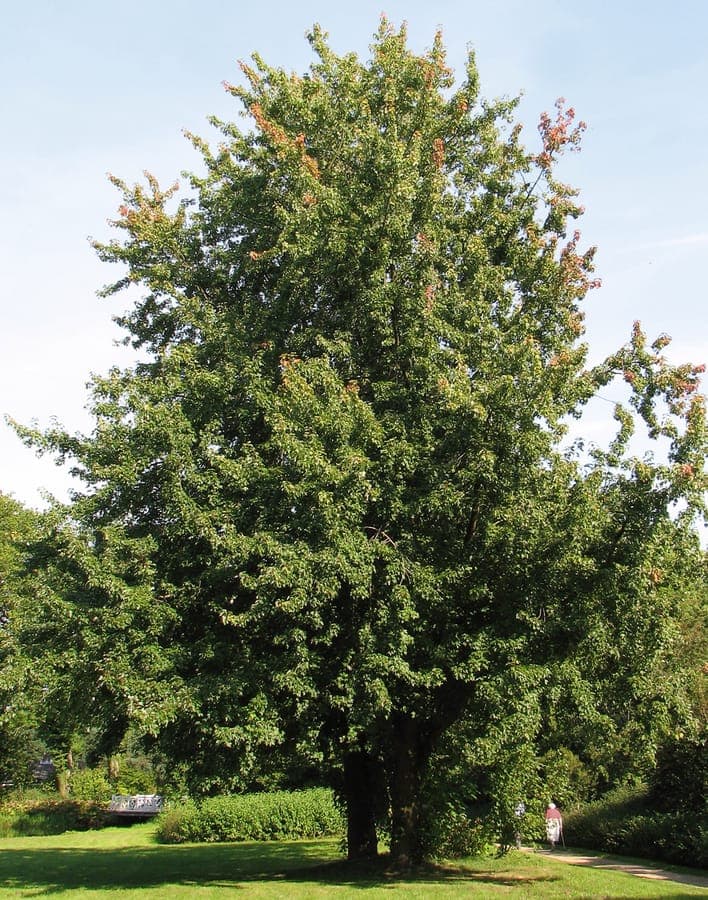
Darkone (talk · contribs) / CC BY-SA 2.5, via Wikimedia Commons
Soft maple: complete guide
Acer saccharinum
Want to see Soft maple: complete guide in your garden?
1 minute, no credit card
Overview
Soft maple, or Acer saccharinum, is a tall, fast-growing deciduous tree known for its silvery undersides of leaves and rapid growth. Native to central and eastern North America - from Alabama to Ontario - it thrives in moist lowlands and riverbanks. Reaching heights of up to 30 meters with a spread of 12 to 15 meters, it's best suited for large gardens, parks, or open landscapes. Its growth habit is upright when young, becoming broadly rounded with age.
Despite its quick stature, soft maple has relatively brittle wood, making it prone to branch breakage in storms or ice. It also has a shorter lifespan compared to other maples, often living 60–75 years. Still, its ability to provide quick shade and movement in the wind makes it a common sight in urban plantings. On gardenworld.app you can simulate how this tree will look in your yard over time, helping you avoid future conflicts with structures or utilities.
Appearance & bloom cycle
The leaves are deeply lobed with five narrow, pointed segments. The upper surface is dark green, while the underside is pale silvery-white - giving the tree a shimmering effect when the wind moves the canopy. This is most noticeable in summer when breezes flip the leaves.
Flowers appear in late winter to early spring (February–March), before leaf-out. They're small, reddish-green, and hang in clusters. While not showy, they support early pollinators. By April, samaras (winged seeds) develop, maturing into long, paired 'helicopters' that disperse widely by late spring. Fall color is typically golden yellow, occasionally with orange or red hints, but less vibrant than red or sugar maple.
The bark on young trees is smooth and gray, but matures into long, thin, flaky plates that peel vertically. This adds winter texture, though not as striking as paperbark maple.
Ideal location
Full sun is ideal - at least 6 hours of direct light daily. Soft maple tolerates partial shade, but growth slows and the crown becomes sparse. Because of its mature size, plant it at least 6 meters from buildings, driveways, or underground utilities. Its shallow, aggressive root system can lift sidewalks or invade septic lines.
Avoid planting under power lines or near swimming pools. The tree drops twigs, seeds, and leaves frequently, which can clog gutters and filters. On gardenworld.app you can map out a planting zone that accounts for root spread and seasonal litter, so you're not surprised later.
Soil requirements
This species is adaptable to many soil types: clay, loam, and sand. It prefers moist, well-drained soils but tolerates occasional flooding - a trait from its riparian origins. The pH range is broad: 4.0 to 7.3, meaning it grows in acidic to slightly alkaline conditions.
However, it struggles in dry, compacted soils. In sandy gardens, growth will be stunted without regular watering. For best results, amend poor soils with organic matter at planting. A 5 cm mulch ring helps retain moisture and reduces competition from grass.
Free design
Want to see Soft maple: complete guide in your garden? Make a free design now.
Watering
Young trees need consistent moisture. Water weekly with 20–30 liters per tree during the first two growing seasons, especially in droughts from May to September. Established trees are moderately drought-tolerant but perform better with supplemental watering during prolonged dry spells.
Avoid overwatering - standing water leads to root rot. If your soil drains poorly, consider planting on a berm or improving drainage with gravel trenches.
Pruning
Minimal pruning is needed, but structural training when young improves longevity. Prune in late summer (August–September) to avoid heavy sap flow, which occurs in late winter and early spring.
Remove weak crotches, crossing branches, or upright water sprouts. Keep the central leader dominant for a strong form. Use clean, sharp tools and don't paint cuts - the tree seals itself. Never top the tree; it leads to weak regrowth and decay.
For safety, remove low branches up to 2 meters if near walkways or patios.
Maintenance calendar
- January–February: Inspect for storm damage or fungal cankers. Avoid pruning - sap is rising.
- March: Monitor for early bud break. Protect young trees from late frost.
- April–May: Check for aphids or tar spot. Water if spring is dry.
- June–July: Observe growth. Apply mulch if eroded. Avoid fertilizing.
- August–September: Light pruning window. Remove dead or damaged wood.
- October–November: Rake fallen leaves and seeds. Compost or dispose to reduce disease carryover.
- December: Assess crown structure. Look for weak branch unions.
Winter hardiness
Hardy in USDA zones 4–9 (-34°C to -1°C). In zone 4, young trees may suffer dieback in harsh winters, but mature trees handle cold well. No winter protection is needed in most regions, though wrapping the trunk in open, windy sites can prevent sunscald and rodent damage.
In zone 9, summer heat and drought become limiting factors - supplemental irrigation is essential.
Companion plants
Underplanting is tricky due to dense shade and shallow roots. Choose plants that tolerate dry shade and root competition: Hosta, Carex, Pachysandra, or Alchemilla mollis. Avoid heavy feeders like roses or vegetables.
Around the drip line, try Hydrangea paniculata, Cornus sericea, or Echinacea purpurea - these handle partial shade and moist soil. Plant them at least 1.5 meters from the trunk to reduce root competition.
Closing
Soft maple is a bold choice for quick shade and movement, but not for small yards. It's fast, forgiving of soil, but demands space and attention to branch health. Buy from reputable garden centres - look for a balanced crown and healthy root ball, not circling roots.
You'll find soft maple at garden centres like OBI or Hornbach in Europe, or local nurseries in North America. When in doubt about placement, use gardenworld.app to model your space. It shows how the tree will grow, cast shade, and interact with existing plants - helping you make smarter long-term decisions.
Want to see Soft maple: complete guide in your garden? Make a free design now.
Upload a photo, pick a style, and get a photorealistic design with plant list in under a minute.
No credit card required


Similar plants
Acer pycnanthum: complete guide
Acer pycnanthum
Acer pycnanthum, the Japanese swamp maple, is a fast-growing tree with early red flowers and brilliant autumn color, ideal for damp garden settings.
Freeman maple: complete guide
Acer × freemanii
Everything about the Freeman maple (Acer x freemanii): a fast-growing shade tree with spectacular autumn colour for large gardens.
Wild ackee: complete guide
Cupania americana
A comprehensive guide to Cupania americana, a tropical tree from the Sapindaceae family with conspicuous white flowers and brown fruits, native to tropical America.