
Liné1 / CC BY-SA 3.0, via Wikimedia Commons
Grey-bud snakebark maple: complete guide
Acer rufinerve
Want to see Grey-bud snakebark maple: complete guide in your garden?
1 minute, no credit card
Overview
Acer rufinerve, commonly known as the grey-bud snakebark maple, is a graceful deciduous tree native to Japan's mountainous forest understories. It's one of those quiet performers that never shouts for attention but earns your respect over time. Reaching a mature height of 6 to 8 meters with a spread of 4 to 5 meters, it's perfectly sized for medium or small gardens. Unlike flashier maples, this one grows slowly and steadily, forming a loose, upright oval crown that becomes more picturesque with age. It's particularly valued for its smooth, striped bark - pale grey with vertical greenish-white streaks - that looks stunning in winter light.
If you're planning a serene woodland corner, you can use gardenworld.app to visualise how this maple fits into your space, including spacing and seasonal changes.
Appearance & bloom cycle
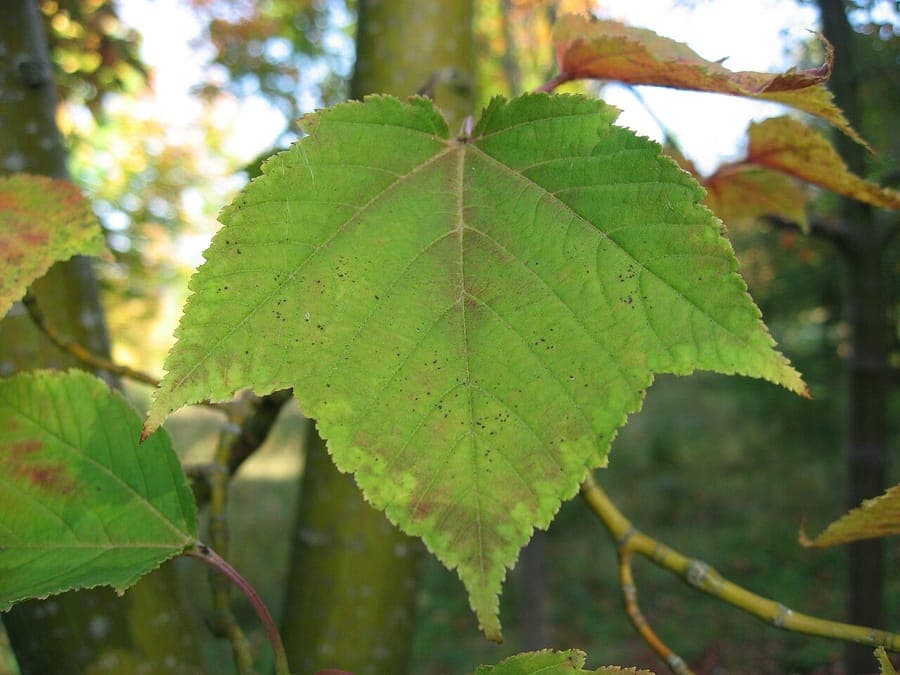
The leaves are palmate with five deeply lobed sections, resembling grape leaves - hence one of its French names, Érable à feuilles de vigne. They emerge in spring with a soft, fresh green hue, slightly downy underneath, and deepen to a rich green by summer. In autumn, they turn vibrant shades of orange, copper, and amber, often holding well into late November. The flowers are inconspicuous, appearing in May as drooping clusters of greenish-yellow, but they attract early pollinators. The samaras (paired winged seeds) develop in late summer, turning from green to grey-brown, and often persist through winter, adding subtle interest.
Ideal location
Plant in partial to full shade, especially in hotter climates. Direct afternoon sun can scorch the leaves, so an east- or north-facing spot is ideal. It thrives under high-canopy trees where it gets dappled light. Avoid exposed, windy sites - its thin bark and young shoots are vulnerable. As a specimen tree, it works beautifully near a patio, pond, or in a woodland garden. Give it at least 3 meters of clearance from buildings or larger trees to allow for air circulation and natural growth.
Soil requirements
This maple prefers moist, humus-rich, well-drained soil with a slightly acidic to neutral pH (5.5–7.0). Heavy clay soils should be amended with grit or perlite to improve drainage, while sandy soils benefit from generous compost to retain moisture. Avoid lime-rich soils - they can cause chlorosis. When planting, dig a hole twice as wide as the root ball, mix in organic matter, and backfill gently. Do not bury the root flare.
Free design
Want to see Grey-bud snakebark maple: complete guide in your garden? Make a free design now.
Watering
Keep the soil consistently moist, especially during the first three years. In dry summers, water deeply once a week with about 20 litres per tree. Mulch with 5–7 cm of leaf mould or bark chips to reduce evaporation and protect shallow roots. Never let the root zone dry out completely - drought stress can lead to leaf scorch and stunted growth.
Pruning
Minimal pruning is required. Only remove dead, damaged, or crossing branches, and do so in late summer (August) to avoid heavy sap bleeding in spring. Use clean, sharp secateurs and make cuts just above a bud or lateral branch. Avoid heavy shaping - this maple's natural form is part of its charm.
Maintenance calendar
- January: Inspect for winter damage; protect young trunks from rodents with wire mesh.
- February: No action needed unless pruning light structural issues.
- March: Apply a thin layer of compost around the base; avoid high-nitrogen fertilisers.
- April: Monitor for emerging leaves; keep soil moist.
- May: Flowers appear; check for aphids or fungal spots.
- June: Water during dry spells; maintain mulch layer.
- July: Watch for signs of heat stress or pests.
- August: Light pruning if necessary; otherwise, observe growth.
- September: Let fallen leaves decompose naturally - they enrich the soil.
- October: Autumn colour peaks; avoid raking too soon.
- November: Reduce watering as growth slows.
- December: Ensure mulch is in place; avoid piling against the trunk.
Winter hardiness
Hardy to USDA zone 5 (–23°C to –29°C). In colder regions, young trees may benefit from a hessian wrap around the trunk during their first few winters. The bark becomes more striking with age and provides visual interest in the dormant season. In exposed gardens, consider planting near a wall or fence for wind protection.
Companion plants
Pair with shade-loving perennials like ferns (Dryopteris erythrosora), hellebores (Helleborus foetidus), or lungworts (Pulmonaria officinalis). Underplant with hostas (Hosta sieboldiana) or epimediums for texture contrast. Avoid invasive groundcovers like ivy, which can compete for moisture. Good shrub companions include Viburnum farreri or Cornus alba 'Sibirica' for winter stem colour.
Closing
The grey-bud snakebark maple is a slow grower, but patience pays off. Its elegant form, seasonal colour, and winter bark make it a year-round asset. Start with a healthy specimen from a reputable garden centre - look for stock at OBI or Hornbach in Germany, or trusted UK suppliers. And if you're unsure how it'll look in your layout, gardenworld.app lets you preview tree placement and scale before you buy.
Want to see Grey-bud snakebark maple: complete guide in your garden? Make a free design now.
Upload a photo, pick a style, and get a photorealistic design with plant list in under a minute.
No credit card required


Similar plants
Acer pycnanthum: complete guide
Acer pycnanthum
Acer pycnanthum, the Japanese swamp maple, is a fast-growing tree with early red flowers and brilliant autumn color, ideal for damp garden settings.
Freeman maple: complete guide
Acer × freemanii
Everything about the Freeman maple (Acer x freemanii): a fast-growing shade tree with spectacular autumn colour for large gardens.
Wild ackee: complete guide
Cupania americana
A comprehensive guide to Cupania americana, a tropical tree from the Sapindaceae family with conspicuous white flowers and brown fruits, native to tropical America.