
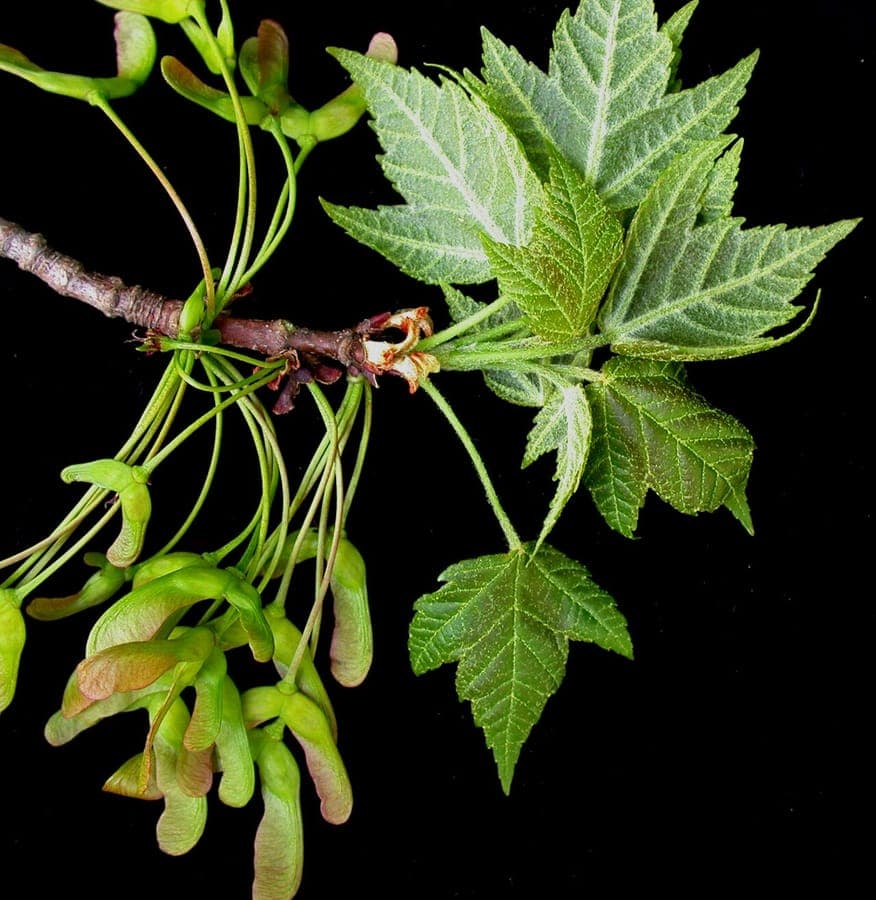
Ayotte, Gilles, 1948- / CC BY-SA 4.0, via Wikimedia Commons
Red maple: complete guide
Acer rubrum
Want to see Red maple: complete guide in your garden?
1 minute, no credit card
Overview
Acer rubrum, commonly known as the red maple, is a standout deciduous tree that brings year-round interest to gardens across temperate climates. Native to eastern North America, it thrives from Alabama up to Minnesota and adapts well to a wide range of conditions. In the UK and US, it's prized for its rapid growth, brilliant autumn color, and resilience. Mature trees typically reach 12–20 meters in height with a spread of 8–12 meters, forming a broad oval to rounded crown. It grows best in USDA hardiness zones 3 to 9, making it suitable for most gardeners. With its red-hued flowers, twigs, and fall foliage, this tree earns its name and delivers consistent visual drama.
Appearance & bloom cycle
The red maple features palmate leaves with five sharply pointed lobes, bright green in spring and summer. In late winter to early spring (February to April), clusters of small red flowers appear before or alongside emerging leaves, attracting early pollinators. These develop into paired samaras that mature by May or June and disperse by wind. The real show begins in autumn, from late September to mid-November, when leaves transform into intense shades of red, orange, and sometimes yellow. Young bark is smooth and silvery-gray; mature bark becomes darker, furrowed, and segmented into vertical plates. This seasonal rhythm makes it a favorite for gardeners who love dynamic landscapes.
Ideal location
Red maples perform best in full sun to partial shade, scoring a 7 on the light scale (1–10). Aim for a spot that receives at least 5–6 hours of direct sunlight daily. Avoid overly exposed, windy areas, especially for young trees, as their branches can be brittle. Allow a minimum of 4 meters from buildings or paved areas to accommodate root spread and canopy development. In urban gardens, consider placement near patios or driveways where fall color can be appreciated up close. On gardenworld.app, you can design a layout that positions your red maple for maximum seasonal impact.
Soil requirements
This tree tolerates a range of soils but prefers moist, well-drained, acidic to neutral conditions with a pH between 4.7 and 7.3. It handles clay soils if they're not waterlogged and sandy soils if irrigated regularly. Avoid highly alkaline soils, which can trigger iron chlorosis-yellowing leaves with green veins. Amend planting holes with compost or leaf mold to improve moisture retention and nutrient content. Mulching annually with organic matter helps maintain soil health and root insulation.
Free design
Want to see Red maple: complete guide in your garden? Make a free design now.
Watering
Young red maples need consistent moisture during the first 2–3 years. Water deeply once a week with 20–30 liters, especially during dry spells. Use drip irrigation or a soaker hose to encourage deep root growth. Mature trees are moderately drought-tolerant but grow best with even soil moisture. Overwatering or poor drainage can lead to root rot, so ensure the site doesn't pool water after rain.
Pruning
Pruning is minimal. Focus on removing dead, damaged, or crossing branches. Avoid pruning in late winter or early spring when sap flow is high, as this causes excessive bleeding. Late summer to early fall (August–September) is the safest window. Use clean, sharp tools and make cuts just outside the branch collar to promote healing. Never top the tree-its natural form is strong and attractive.
Maintenance calendar
- Jan: Inspect for storm or frost damage
- Feb: Check structure, avoid pruning due to sap rise
- Mar: Apply mulch, monitor for early blooms
- Apr: Watch for pests, water if dry
- May: Inspect for aphids or scale
- Jun: Maintain soil moisture during heat
- Jul: Deep water during droughts
- Aug: Begin light pruning, remove dead wood
- Sep: Replenish mulch, assess growth
- Oct: Enjoy fall color, let leaves decompose as natural mulch
- Nov: Clear diseased foliage, avoid composting if infected
- Dec: Minimal care, let tree enter dormancy
Winter hardiness
Hardy to USDA zone 3 (-40°C), red maple withstands severe winters. Young trees benefit from trunk wrapping in the first few years to prevent frost cracking. The tree is fully deciduous, losing all leaves by late autumn, but its branching pattern and bark add structure to winter gardens.
Companion plants
Pair red maple with moisture-loving, shade-tolerant plants. Good choices include Hydrangea arborescens, Carex vulgata, Heuchera, and native ferns like Dryopteris marginalis. These thrive in the dappled shade beneath the canopy and share similar soil needs. For year-round interest, underplant with spring ephemerals like Erythronium or Trillium. On gardenworld.app, generate a planting scheme that complements the red maple's seasonal rhythm and root zone.
Closing
The red maple isn't just a fall spectacle-it's a four-season performer. With its vibrant blooms, clean summer foliage, stunning autumn color, and rugged bark, it anchors any landscape. Low maintenance once established, it's ideal for both beginner and experienced gardeners. Find healthy specimens at garden centres across the UK and US, where knowledgeable staff can help match the tree to your space. Give it room, the right soil, and a little care in its youth, and it will become a legacy tree in your garden for generations.
Want to see Red maple: complete guide in your garden? Make a free design now.
Upload a photo, pick a style, and get a photorealistic design with plant list in under a minute.
No credit card required


Similar plants
Acer pycnanthum: complete guide
Acer pycnanthum
Acer pycnanthum, the Japanese swamp maple, is a fast-growing tree with early red flowers and brilliant autumn color, ideal for damp garden settings.
Freeman maple: complete guide
Acer × freemanii
Everything about the Freeman maple (Acer x freemanii): a fast-growing shade tree with spectacular autumn colour for large gardens.
Wild ackee: complete guide
Cupania americana
A comprehensive guide to Cupania americana, a tropical tree from the Sapindaceae family with conspicuous white flowers and brown fruits, native to tropical America.