
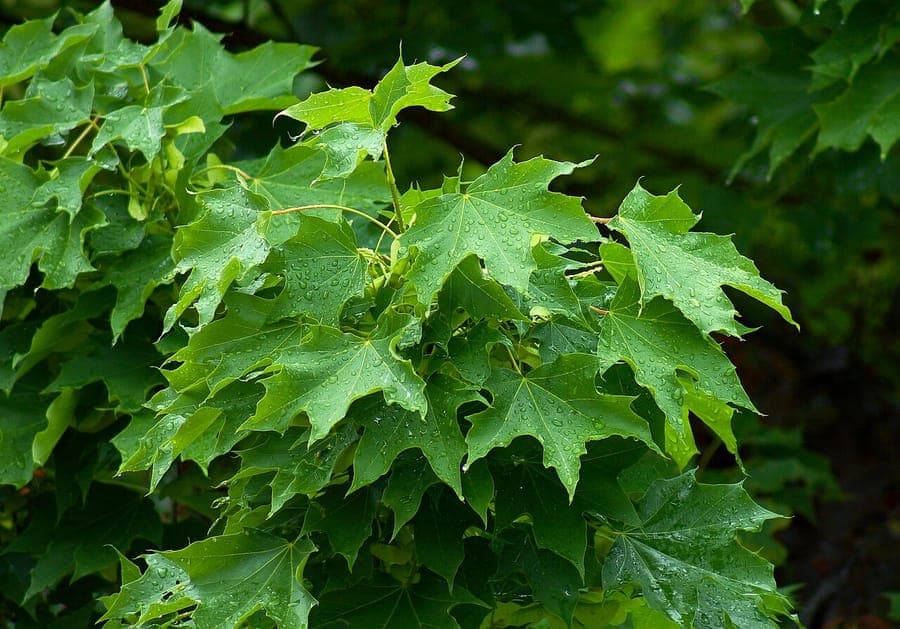
Martin Bobka (= Martin120) / CC BY-SA 2.5, via Wikimedia Commons
Norway maple: complete guide
Acer platanoides
Want to see Norway maple: complete guide in your garden?
1 minute, no credit card
Overview
Acer platanoides, commonly known as Norway maple, is a dependable deciduous tree prized for its dense canopy, rapid growth and reliable autumn color. Native to parts of eastern and central Europe, it thrives in temperate climates and is hardy in USDA zones 4 to 7. In the UK and across much of North America and Western Europe, it's commonly found in parks, along streets and in larger residential gardens. While sometimes criticized for being invasive in certain regions, when planted thoughtfully, it brings decades of shade and seasonal beauty. On gardenworld.app you can design a landscape plan that accounts for its mature spread, ensuring it doesn't overcrowd other plants.
This tree reaches 20 to 25 meters in height with a spread of 10 to 15 meters, forming a broad, rounded crown. Its growth rate is moderate to fast-about 30 to 50 cm per year-making it ideal for quick screening or shade. It's long-lived, often exceeding 100 years with proper care.
Appearance & bloom cycle
In early spring, typically late March to early April, small yellowish-green flowers appear in drooping clusters before the leaves fully emerge. These nectar-rich blooms attract early pollinators like bees and hoverflies. After flowering, the tree produces the classic maple samaras-those winged seeds that spin as they fall. They mature by late summer and disperse widely, so keep this in mind if you're near natural areas.
The leaves are palmate with five sharply pointed lobes, 10 to 15 cm across. They emerge bright green, darken to deep green in summer, and turn a consistent golden-yellow to orange-red in autumn, usually from late September to mid-October. The fall display is one of the most reliable among maples, which is why it's a favorite for seasonal interest.
Ideal location
Norway maple grows well in full sun to partial shade. For the best autumn color, plant in a sunny spot. It needs plenty of space-at least 6 meters from buildings or other large trees-to accommodate its root system and mature canopy. Avoid planting near paved areas, as surface roots can lift sidewalks or driveways over time.
It casts dense shade, so underplanting requires careful selection. On gardenworld.app, you can simulate light patterns under a mature Norway maple to choose compatible ground covers or shade-loving perennials.
Soil requirements
This tree is adaptable but prefers deep, moist, well-drained loam or clay-loam. It tolerates a wide pH range from 4.8 to 6.8 (slightly acidic to slightly alkaline). While it can survive in sandy soils, you'll need to water and fertilize more often due to poor moisture retention. Avoid waterlogged sites-prolonged wet feet lead to root rot.
A 5–8 cm mulch ring around the base (but not touching the trunk) helps retain moisture and suppresses competing weeds. Replenish annually in spring.
Free design
Want to see Norway maple: complete guide in your garden? Make a free design now.
Watering
Young trees need consistent watering during their first two growing seasons. Provide 15–20 liters per week during dry spells from May to September. Use a slow-release watering spike or a bucket with holes to deliver water deep into the root zone.
Established trees are drought-tolerant but benefit from supplemental watering during extended dry periods. Overhead watering isn't necessary-focus on the soil around the drip line.
Pruning
Prune only when necessary-usually to remove dead, damaged or crossing branches. The best time is late winter, February to early March, before sap rise begins. Pruning during active growth can cause excessive bleeding, though it's not usually harmful.
Use clean, sharp tools and never remove more than 20% of the canopy in a single year. Avoid heavy pruning, as it can stimulate weak, vertical water sprouts. For shaping, make selective cuts just above an outward-facing bud.
Maintenance calendar
- January: Inspect for storm damage and structural issues.
- February: Begin light pruning.
- March: Apply compost around the base; check for aphids.
- April: Water young trees if spring is dry.
- May: Monitor for aphids and scale insects.
- June: No major tasks; ensure mulch is intact.
- July: Water during heatwaves.
- August: Continue summer watering if needed.
- September: Autumn color begins; avoid pruning.
- October: Rake fallen leaves to prevent fungal issues.
- November: Check for loose branches; apply potassium-rich fertilizer.
- December: Protect young trunks from rodents with mesh guards; avoid de-icing salts near roots.
Winter hardiness
Norway maple is extremely cold-hardy, surviving temperatures down to -25°C. It's well-suited to USDA zones 4–7, making it a solid choice for gardens across the UK, northern Europe and much of the northern US. In milder zones, it still performs well but may leaf out earlier, risking frost damage to new growth.
Young trees may suffer bark splitting in harsh winters-wrap the trunk with hessian in December for protection.
Companion plants
Due to dense shade and aggressive surface roots, few plants thrive directly beneath. Opt for shade-tolerant, drought-resistant species like Helleborus, Epimedium, or Pachysandra terminalis. Ferns such as Dryopteris filix-mas also do well.
Avoid shallow-rooted perennials or moisture-loving plants. Instead, plant in the outer drip zone where light and soil conditions are less extreme. Carex species and Alchemilla mollis are excellent choices for texture and contrast.
Closing
The Norway maple is a resilient, attractive tree that delivers long-term structure and seasonal drama. With minimal care and impressive autumn color, it's a smart choice for larger gardens. Just be mindful of its size at maturity-plant it where it has room to grow. In the UK and Ireland, you'll find Norway maples at local garden centres, often in containers or root-balled form. For larger specimens, check with specialist nurseries. On gardenworld.app, you can visualize how this tree will fill your space over time, helping you plan a balanced, sustainable garden. Whether for shade, form or fall color, the Norway maple remains a classic.
Want to see Norway maple: complete guide in your garden? Make a free design now.
Upload a photo, pick a style, and get a photorealistic design with plant list in under a minute.
No credit card required


Similar plants
Acer pycnanthum: complete guide
Acer pycnanthum
Acer pycnanthum, the Japanese swamp maple, is a fast-growing tree with early red flowers and brilliant autumn color, ideal for damp garden settings.
Freeman maple: complete guide
Acer × freemanii
Everything about the Freeman maple (Acer x freemanii): a fast-growing shade tree with spectacular autumn colour for large gardens.
Wild ackee: complete guide
Cupania americana
A comprehensive guide to Cupania americana, a tropical tree from the Sapindaceae family with conspicuous white flowers and brown fruits, native to tropical America.