
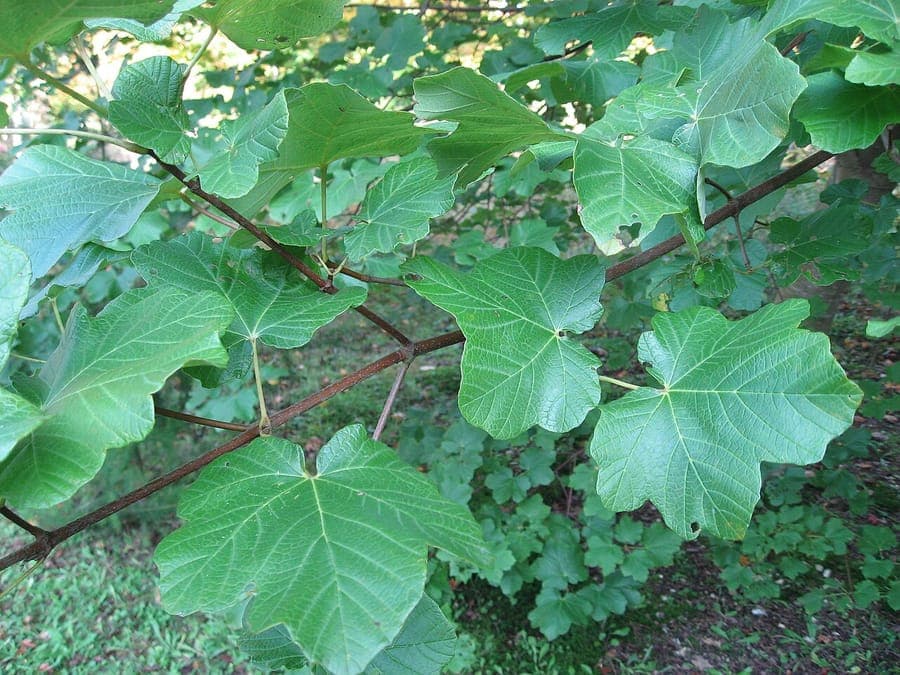
Liné1 / CC BY-SA 3.0, via Wikimedia Commons
Italian maple: complete guide
Acer opalus
Want to see Italian maple: complete guide in your garden?
1 minute, no credit card
Overview
Acer opalus, commonly known as the Italian maple, is a resilient and graceful medium-sized tree native to southern Europe, including regions of Italy, Greece, Spain, and southern France. On gardenworld.app, it's frequently featured in designs for medium to large gardens where it serves as a structural focal point. Reaching a mature height of 8 to 12 meters with a spread of 6 to 8 meters, it's well-suited for residential landscapes that need a touch of shade without overwhelming the space. It thrives in USDA hardiness zones 6 through 9, making it a viable option for many temperate gardens across Europe and North America. The tree grows at a moderate pace, adding about 30–45 cm per year under ideal conditions.
Appearance & bloom cycle
The Italian maple is prized for its deeply lobed, five-pointed leaves that resemble those of other maples but with a slightly leathery texture. In spring, from March to April, it produces clusters of small yellow flowers that hang in delicate panicles. These early blooms are an important nectar source for bees and other pollinators. The foliage emerges fresh green in spring, matures to a rich mid-green in summer, and turns golden-yellow in autumn, occasionally with hints of red or orange. The samaras-winged seeds-develop in pairs and disperse by wind, which means occasional seedlings may sprout nearby if not collected.
Ideal location
This maple prefers partial shade to full sun, scoring a 7 on the light scale (1–10), meaning it performs best in locations with dappled sunlight or morning sun with afternoon shade. It tolerates urban settings well, making it a good choice for courtyards, side borders, or as a standalone specimen in a lawn. Avoid planting in deep shade, as this reduces flowering and causes sparse foliage. If you're planning a mixed border, use gardenworld.app to visualize spacing and ensure adequate air circulation. A distance of 3–4 meters from buildings or other large trees is recommended.
Soil requirements
Acer opalus is adaptable but thrives in well-drained, loamy soil with a pH between 7.0 and 7.5. It can handle slightly alkaline conditions but struggles in highly acidic or waterlogged soils. Heavy clay should be amended with coarse sand and compost to improve drainage. If your soil is too acidic, a light application of garden lime may help, but avoid overcorrection. The root zone should remain moist but never soggy-good aeration is key to preventing root rot.
Free design
Want to see Italian maple: complete guide in your garden? Make a free design now.
Watering
Young trees need consistent watering during the first two growing seasons. Aim for deep, weekly soakings, especially during dry spells in spring and summer. Once established, the Italian maple is fairly drought-tolerant, but prolonged dry periods can cause leaf scorch and premature drop. Drip irrigation or a soaker hose placed around the drip line works best. Avoid overhead watering, which can promote fungal diseases like anthracnose.
Pruning
Pruning is minimal with this species. Remove only dead, damaged, or crossing branches, ideally in late winter when the tree is dormant. Avoid pruning in early spring, as maples can bleed sap excessively. Light shaping to maintain a balanced crown is acceptable, but heavy pruning is unnecessary and may stress the tree. Always use sterilized tools to prevent disease transmission.
Maintenance calendar
- Jan: Inspect for winter damage and secure supports if needed
- Feb: Dormant period-no action required
- Mar: Plant new trees if ground isn't frozen; watch for early blooms
- Apr: Flowers appear; monitor for aphids or fungal spots
- May: Continue deep watering for young trees; check soil moisture
- Jun: Observe for leaf scorch in hot climates
- Jul: Water deeply during heatwaves; mulch to retain moisture
- Aug: Watch for pests like scale insects
- Sep: Reduce watering; avoid fertilizing
- Oct: Collect fallen leaves to prevent fungal buildup
- Nov: Apply organic mulch around base to protect roots
- Dec: Let tree rest; avoid disturbance
Winter hardiness
Hardy in USDA zones 6–9, the Italian maple handles cold down to -23°C, though young trees benefit from wind protection and a thick mulch layer. In regions with heavy snow, avoid piling snow against the trunk, as it can promote rot. Mature trees are generally resilient, but late frosts can damage emerging buds. If planted in open, exposed areas, consider a windbreak during the first few winters.
Companion plants
Underplant with shade-tolerant perennials like Hosta, Heuchera, or Epimedium. For contrast, pair with silver-foliaged plants such as Artemisia or Stachys byzantina. Lavender and catmint thrive at the sunnier edges of its canopy. Avoid aggressive root competitors like Norway maple or bamboo. A naturalistic planting scheme works best-think woodland edge or Mediterranean garden.
Closing
The Italian maple is a low-maintenance, ornamental tree that brings year-round interest. Its modest size, attractive foliage, and seasonal color changes make it a smart choice for thoughtful gardeners. Buy from reputable retailers like garden centres carrying quality stock, such as B&Q or Wyevale if available. Pair it with drought-tolerant companions and you'll create a sustainable landscape. Remember: establishment is key. Once settled, it demands little. For layout ideas, check gardenworld.app to explore combinations that suit your soil and microclimate.
Want to see Italian maple: complete guide in your garden? Make a free design now.
Upload a photo, pick a style, and get a photorealistic design with plant list in under a minute.
No credit card required


Similar plants
Acer pycnanthum: complete guide
Acer pycnanthum
Acer pycnanthum, the Japanese swamp maple, is a fast-growing tree with early red flowers and brilliant autumn color, ideal for damp garden settings.
Freeman maple: complete guide
Acer × freemanii
Everything about the Freeman maple (Acer x freemanii): a fast-growing shade tree with spectacular autumn colour for large gardens.
Wild ackee: complete guide
Cupania americana
A comprehensive guide to Cupania americana, a tropical tree from the Sapindaceae family with conspicuous white flowers and brown fruits, native to tropical America.