
Fritz Geller-Grimm / CC BY-SA 2.5, via Wikimedia Commons
Montpellier maple: complete guide
Acer monspessulanum
Want to see Montpellier maple: complete guide in your garden?
1 minute, no credit card
Overview
The Montpellier maple (Acer monspessulanum) is a quietly impressive small tree that brings year-round structure and seasonal interest to gardens. Native to southern Europe and parts of the Middle East, it grows slowly to a height of 5–8 metres with a spread of 4–6 metres, making it ideal for compact urban gardens or courtyard spaces. Unlike many maples, it's remarkably drought tolerant once established, thriving in dry, rocky soils where other trees might struggle.
Despite its Mediterranean roots, it's hardy down to USDA zone 7 (-15°C), which means it can handle colder winters with some protection. It's not commonly found in standard garden centres, but specialist growers and online nurseries are increasingly stocking it. On gardenworld.app, you can visualise how this tree fits into your garden layout, especially when planning for long-term structure.
Appearance & bloom cycle
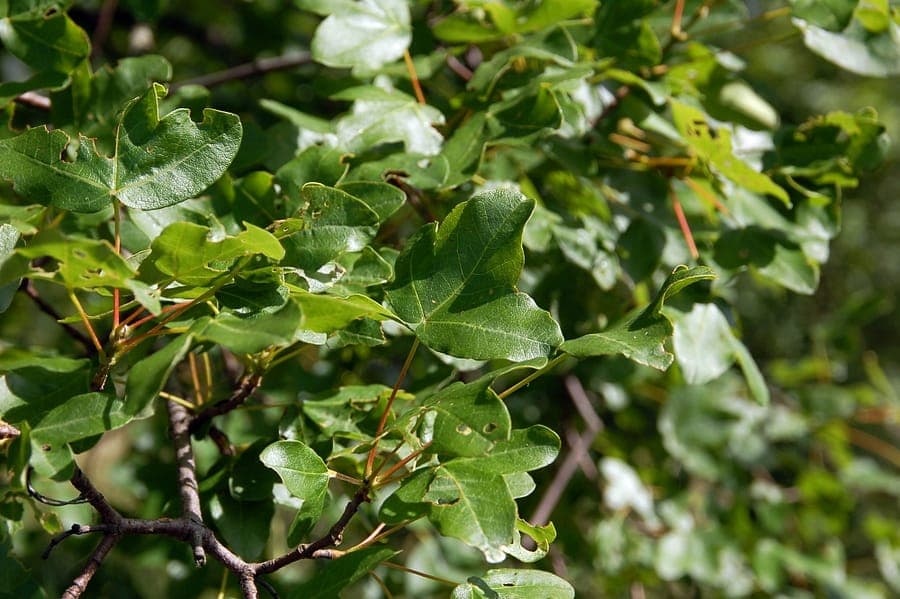
One of the Montpellier maple's most distinctive features is its three-lobed leaves-rare among maples, which usually have five or seven lobes. The leaves are small, about 3–6 cm across, with a leathery texture and deep green colour in summer. From late September, they turn brilliant shades of golden yellow, orange, and russet red-among the first maples to show autumn colour.
In April, before the leaves fully emerge, the tree produces clusters of small, yellow-green flowers. They're not showy from a distance, but up close, they have a subtle charm and are an early nectar source for bees and hoverflies. These develop into small, paired samaras (keys) that disperse in late autumn.
Ideal location
This maple thrives in full sun to light shade, needing at least 6–8 hours of direct sunlight daily (light level 8/10). In cooler climates like the UK or northern Europe, plant it against a south- or southwest-facing wall to maximise warmth and protect it from cold winds. Avoid deep shade, as this leads to sparse foliage and poor flowering.
It's well suited to urban gardens, rooftop terraces, or even large containers-just ensure the root zone doesn't dry out completely in the first year. The tree prefers warm microclimates, so avoid frost pockets or north-facing exposures. On gardenworld.app, you can simulate sun exposure across your garden to find the perfect spot.
Soil requirements
The Montpellier maple prefers well-drained, neutral to slightly alkaline soil with a pH of 7.0–7.5. It tolerates chalky and limestone soils exceptionally well, which makes it a good choice for gardens in southern England or similar regions. Heavy clay soils should be improved with grit, coarse sand, and compost to prevent waterlogging.
When planting, dig a hole 60x60x60 cm and mix in organic matter and drainage material. Do not plant too deep-the root collar should sit level with the soil surface. Mulch lightly with compost or gravel, but keep mulch away from the trunk to prevent rot.
Free design
Want to see Montpellier maple: complete guide in your garden? Make a free design now.
Watering
During the first growing season, water weekly during dry spells-about 20 litres per tree. After that, it becomes highly drought tolerant. Mature trees rarely need supplemental watering, except during prolonged droughts lasting more than four weeks.
Use rainwater when possible, as tap water with high calcium or chlorine content can affect long-term soil health. Water at the base to avoid wetting the foliage, which can encourage fungal diseases like powdery mildew.
Pruning
Pruning is rarely needed. The Montpellier maple has a naturally tidy, upright habit and doesn't sucker heavily. If shaping is desired, do light formative pruning in late winter (February), just before bud break. Remove only dead, damaged, or crossing branches.
Avoid hard pruning into old wood-this species doesn't respond well to severe cutting back. Use sharp, sterilised tools to prevent disease spread. Never prune in autumn, as this can stimulate late growth that won't harden before winter.
Maintenance calendar
- Jan: Inspect for storm damage.
- Feb: Light pruning if needed.
- Mar: Loosen soil around base; add compost if desired.
- Apr: Flowers appear; check for early pollinators.
- May: Monitor for aphids during dry spells.
- Jun: No maintenance required.
- Jul: Check for powdery mildew in humid conditions.
- Aug: Tree enters summer dormancy.
- Sep: Autumn colour begins.
- Oct: Clear fallen leaves or use as mulch.
- Nov: Apply mulch to protect roots.
- Dec: Dormant period; no action needed.
Winter hardiness
Hardy to USDA zone 7, the Montpellier maple can survive winter lows of -15°C. In colder zones (6 or below), young trees may suffer dieback unless sheltered. Mature trees are more resilient but can be damaged by late frosts after warm spells.
In cooler regions, plant in a sheltered spot with good air drainage. Avoid frost pockets. Young trees benefit from a 10 cm layer of mulch around the root zone to insulate roots. Avoid planting in exposed, windy locations.
Companion plants
Pair with drought-tolerant perennials and shrubs that enjoy similar conditions. Lavender (Lavandula angustifolia), sage (Salvia officinalis), and sedum (Hylotelephium spectabile) work well underneath. Low-growing cistus or phlomis add texture and contrast.
For vertical interest, try verbascum or echinacea. Near larger Mediterranean species like olive (Olea europaea) or holm oak (Quercus ilex), it fits naturally into a drought-resistant planting scheme. On gardenworld.app, you can explore planting combinations that suit dry, sunny borders.
Closing
The Montpellier maple is a smart, understated choice for gardeners wanting a small, hardy tree with seasonal drama and minimal upkeep. Its unique foliage, early autumn colour, and tolerance of dry soils set it apart. While not yet mainstream, it's available at specialist nurseries and larger garden centres. Look for it at garden centres across the UK, and plan its placement carefully-it's slow to establish, but worth the wait.
Want to see Montpellier maple: complete guide in your garden? Make a free design now.
Upload a photo, pick a style, and get a photorealistic design with plant list in under a minute.
No credit card required


Similar plants
Acer pycnanthum: complete guide
Acer pycnanthum
Acer pycnanthum, the Japanese swamp maple, is a fast-growing tree with early red flowers and brilliant autumn color, ideal for damp garden settings.
Freeman maple: complete guide
Acer × freemanii
Everything about the Freeman maple (Acer x freemanii): a fast-growing shade tree with spectacular autumn colour for large gardens.
Wild ackee: complete guide
Cupania americana
A comprehensive guide to Cupania americana, a tropical tree from the Sapindaceae family with conspicuous white flowers and brown fruits, native to tropical America.