
Abrahami / CC BY-SA 2.5, via Wikimedia Commons
Father david's maple: complete guide
Acer davidii
Want to see Father david's maple: complete guide in your garden?
1 minute, no credit card
Overview
Acer davidii, commonly known as Father David's maple, is a graceful, medium-sized deciduous tree native to central and southeastern China, with scattered populations in Inner Mongolia and northern Myanmar. Named after Armand David, a French missionary and naturalist who introduced many Chinese species to Europe in the 19th century, this maple stands out in gardens for its striking striped bark, airy structure, and light canopy that casts minimal shade. In cultivation, it typically reaches 6 to 8 meters in height with a spread of 4 to 5 meters, making it suitable for small gardens or as a specimen in larger landscapes. It grows at a slow to moderate rate of 20–30 cm per year, steadily filling space without overwhelming its surroundings. On gardenworld.app, you can create a custom garden design that perfectly accommodates this tree, considering light exposure, root spread, and aesthetic balance with neighboring plants.
Appearance & bloom cycle
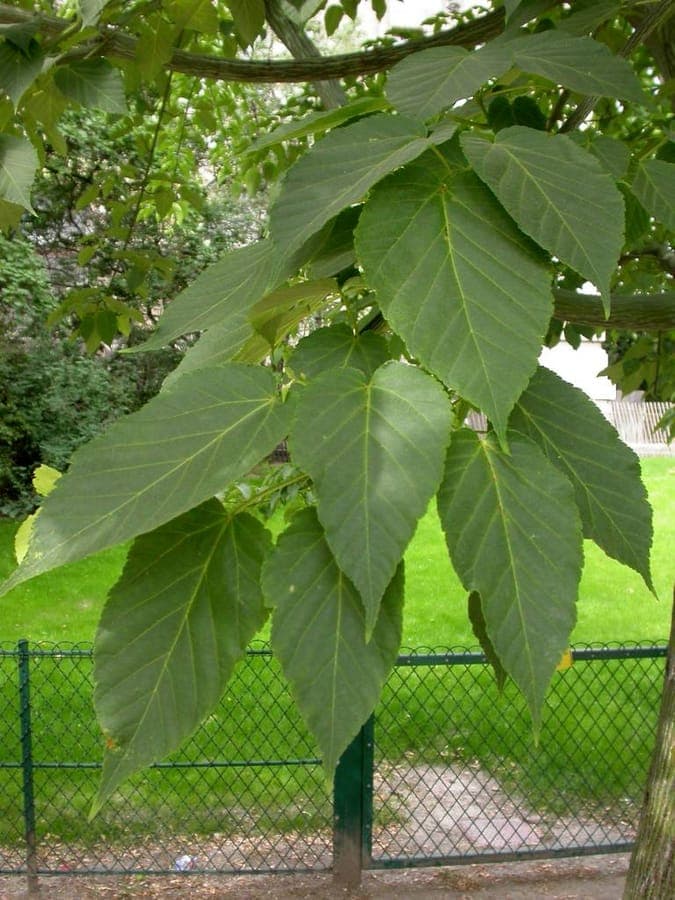
The leaves of Acer davidii are five-lobed, bright green, and 5 to 10 cm wide. They have a slightly glossy surface in summer and turn to soft shades of yellow, orange, and occasionally reddish-brown in autumn. While fall color isn't always intense, it's consistent and warm, adding seasonal interest. The real showstopper is the bark: young stems and trunks display a striking striped pattern in cream and green, maturing to grey-green with white streaks over time. This distinctive bark makes the tree a standout feature in winter, especially when backlit by garden lighting. Flowering occurs from April to early May, producing drooping panicles 10–15 cm long. The flowers are greenish-yellow, not particularly showy, but valuable for early pollinators. The paired samaras (keys) develop in summer and often persist into winter, adding texture.
Ideal location
Plant Acer davidii in partial to dappled shade for best results. While it can tolerate full sun in cooler climates, in hot summers or southern exposures, leaves may scorch. In the UK and similar maritime zones, an east- or north-facing spot is ideal. Allow at least 2 meters of clearance around the crown to let its elegant branching pattern develop and to promote air circulation. Protect from strong, drying winds, which can desiccate foliage. Use gardenworld.app to analyze sunlight patterns in your garden and pinpoint the optimal microclimate for this maple.
Soil requirements
This maple thrives in moist, well-drained soil rich in organic matter. It prefers loam or sandy loam with a pH between 5.5 and 7.0. Heavy clay soils can work if amended with compost or grit for drainage. Sandy soils need regular additions of compost or leaf mould to retain moisture. Avoid dry, compacted, or highly alkaline sites, as the tree is sensitive to drought stress, especially when young.
Free design
Want to see Father david's maple: complete guide in your garden? Make a free design now.
Watering
Consistent moisture is key, especially during the first two growing seasons. Water deeply and regularly during dry spells in summer, keeping the soil moist but not waterlogged. Drip irrigation or soaker hoses work well for even distribution. In winter, little to no supplemental watering is needed unless the ground is frozen during a prolonged dry period. Young trees require extra attention during droughts up to their fifth year.
Pruning
Pruning is rarely necessary. The tree's natural form is elegant and balanced. Any structural pruning should be done in late autumn or early winter when the tree is dormant and the branch framework is visible. Remove only dead, crossing, or damaged wood. Avoid summer pruning to prevent bleeding. Always use clean, sharp tools to minimize disease risk.
Maintenance calendar
- January: Inspect trunk for damage, remove loose bark
- February: Prepare soil amendments if needed
- March: Apply a thin layer of compost around the base
- April: Begin regular watering during dry spells
- May: Watch for aphids or fungal issues in wet conditions
- June: Maintain soil moisture, mulch if needed
- July: Check for drought stress, especially in young trees
- August: Avoid pruning; monitor for leaf scorch
- September: Top up mulch layer
- October: Rake fallen leaves, but leave some under the canopy as natural mulch
- November: Check for winter damage
- December: Protect young trunks from rodents with wire mesh
Winter hardiness
Acer davidii is hardy in USDA zones 6 (down to -23°C), and sometimes zone 5b with protection. In colder areas, shield young trees with a trunk guard and apply a 10 cm mulch layer of wood chips around the base. Branches can suffer frost damage during sudden cold snaps in late winter.
Companion plants
This maple pairs well with shade-tolerant perennials. Try Helleborus orientalis, Heuchera, Hosta, and Erythronium. Low-growing ferns like Polystichum setiferum or Dryopteris filix-mas add texture. Include late-blooming asters for seasonal depth. Combine with other maples like Acer japonicum or Acer palmatum for an Asian-inspired woodland corner.
Closing
Acer davidii is a subtle yet reliable addition to any garden seeking elegance and seasonal change. Its striped bark, delicate foliage, and modest size suit both traditional and modern landscapes. Browse gardenworld.app for design ideas and see how others in your climate zone have successfully integrated this tree. You can find it at reputable garden centres across the UK, often available in various sizes. With the right spot and minimal care, this maple will reward you for years to come.
Want to see Father david's maple: complete guide in your garden? Make a free design now.
Upload a photo, pick a style, and get a photorealistic design with plant list in under a minute.
No credit card required


Similar plants
Acer pycnanthum: complete guide
Acer pycnanthum
Acer pycnanthum, the Japanese swamp maple, is a fast-growing tree with early red flowers and brilliant autumn color, ideal for damp garden settings.
Freeman maple: complete guide
Acer × freemanii
Everything about the Freeman maple (Acer x freemanii): a fast-growing shade tree with spectacular autumn colour for large gardens.
Wild ackee: complete guide
Cupania americana
A comprehensive guide to Cupania americana, a tropical tree from the Sapindaceae family with conspicuous white flowers and brown fruits, native to tropical America.