
MPF / CC BY-SA 4.0, via Wikimedia Commons
Cappadocian maple: complete guide
Acer cappadocicum
Want to see Cappadocian maple: complete guide in your garden?
1 minute, no credit card
Overview
The Cappadocian maple (Acer cappadocicum) is a graceful, medium to large deciduous tree perfect for spacious gardens and landscape designs. Native to regions from the Himalayas to Iran, it thrives in temperate climates and adapts well to UK and North American gardens within USDA zones 6b to 8. Reaching 10–15 meters in height and spreading 8–10 meters wide, it offers a balanced, upright-rounded form that makes an excellent focal point without overwhelming a space. On gardenworld.app, you can simulate how this tree will grow over time, helping you place it correctly among structures and other plants.
This maple is valued for its resilience, tolerance to urban conditions, and minimal pest issues. It's not as commonly planted as the Norway or Japanese maple, but it holds its own with elegant foliage and reliable performance. A solid choice for gardeners who want a stately tree that doesn't demand constant care.
Appearance & bloom cycle
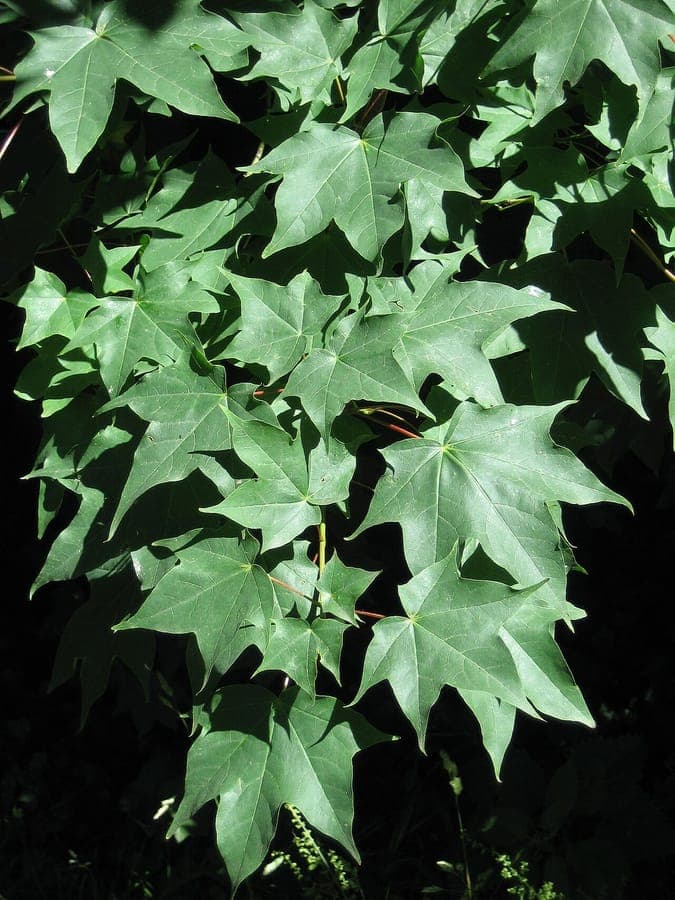
The Cappadocian maple has deeply lobed, five-pointed leaves that are bright green in spring and summer, turning a consistent golden yellow in autumn. The leaves are slightly smaller than those of Acer platanoides, typically 8–12 cm across, and have a smooth texture. In late spring (May to early June), it produces long, pendulous racemes of small yellow flowers, up to 15 cm in length. These aren't showy like cherry blossoms, but they attract pollinators and add subtle charm.
The flowers mature into paired samaras – winged seeds about 2–3 cm long – which disperse in late summer. While not as dramatic as the red samaras of red maples, they contribute to seasonal interest. Fall color is reliable, usually appearing in late October in zone 7, and lasts for two to three weeks.
Ideal location
Plant your Cappadocian maple where it gets partial to dappled shade (light level 7/10). Though it tolerates full sun, especially in cooler zones, it performs best with morning sun and afternoon shade. This prevents leaf scorch and reduces moisture stress. Avoid hot, south-facing walls or open, windy spots that dry out the soil.
Allow at least 3 meters clearance from buildings and 4 meters from other trees. Roots can spread widely, so don't plant near paved areas or drainage pipes. Use gardenworld.app to visualize root spread and canopy growth before committing to a location. This helps prevent future conflicts with utilities or structures.
Soil requirements
This maple prefers moist, well-drained, humus-rich soil with a pH between 6.5 and 7.0. It grows well in loam or clay-loam but struggles in very sandy or compacted soils. Improve sandy soils with compost or well-rotted manure to boost water retention. For heavy clay, add organic matter to enhance drainage.
Avoid highly alkaline soils – this species dislikes high lime content. If your soil pH exceeds 7.5, consider amending with sulfur or choosing a different maple. At planting, dig a hole twice as wide as the root ball but no deeper. Backfill with native soil mixed with compost and a handful of bone meal for root development.
Free design
Want to see Cappadocian maple: complete guide in your garden? Make a free design now.
Watering
Water deeply and regularly during the first two growing seasons. Aim for 20 liters per week per tree during dry spells from April to September. Use a soaker hose or drip irrigation to deliver water slowly to the root zone. After year two, the tree becomes more drought-tolerant but still benefits from watering during prolonged dry periods.
Avoid frequent shallow watering, which encourages weak surface roots. Water early in the morning or late evening to reduce evaporation. Mulch with 5–8 cm of organic material (like bark or leaf mold) to retain moisture and suppress weeds.
Pruning
Pruning is rarely needed. Only remove dead, damaged, or crossing branches to maintain structure. The best time is late summer to early autumn (August–September), when sap flow is low. Pruning in spring risks excessive bleeding due to high sap pressure.
If shaping is desired, limit cuts to minor corrections. Never top the tree or heavily prune lateral branches. Use sharp, clean tools – bypass pruners for small branches and a pruning saw for anything over 3 cm.
Maintenance calendar
- Jan: Inspect for storm damage and broken branches.
- Feb: Dormant period – no action needed.
- Mar: Apply a balanced organic fertilizer if soil is poor.
- Apr: Begin regular watering if rainfall is low.
- May: Flowers emerge; avoid herbicides near the root zone.
- Jun: Monitor for aphids, especially on young trees.
- Jul: Continue watering in dry spells; check for powdery mildew.
- Aug: Light pruning window opens; reduce watering gradually.
- Sep: Let fallen leaves decompose under the tree for natural mulch.
- Oct: Enjoy golden fall color; clean up around the base if needed.
- Nov: Rake excess leaves to prevent fungal issues.
- Dec: Protect young trunks with burlap in zones below 7a.
Winter hardiness
Hardy to USDA zone 6b (-20.5 to -23.3 °C), the Cappadocian maple handles cold winters well. In zone 7 and above, it rarely suffers winter damage. Young trees may experience tip dieback in harsh winters – protect with a tree wrap if temperatures drop below -12 °C. Avoid de-icing salts near the root zone, as they can cause leaf scorch and root damage.
Companion plants
Underplant with shade-tolerant species that thrive in moist, organic-rich soil. Try Helleborus orientalis for winter blooms, Hosta 'Gold Standard' for bold foliage, or Carex elata 'Aurea' for golden grassy texture. Ferns like Dryopteris erythrosora add elegance beneath the canopy.
Avoid invasive groundcovers like ivy or periwinkle, which can compete aggressively. Keep a 1-meter clearance around the trunk to prevent moisture buildup and rodent access.
Closing
The Cappadocian maple is a dependable, attractive tree that grows with grace and minimal fuss. With proper planting and early care, it becomes a long-term feature in any garden. Purchase healthy specimens from reputable garden centres, and inspect for a well-developed root system. Whether you're in the UK or North America, this maple fits beautifully into thoughtful designs. Plan ahead on gardenworld.app to see how it integrates with your space over the years.
Want to see Cappadocian maple: complete guide in your garden? Make a free design now.
Upload a photo, pick a style, and get a photorealistic design with plant list in under a minute.
No credit card required


Similar plants
Acer pycnanthum: complete guide
Acer pycnanthum
Acer pycnanthum, the Japanese swamp maple, is a fast-growing tree with early red flowers and brilliant autumn color, ideal for damp garden settings.
Freeman maple: complete guide
Acer × freemanii
Everything about the Freeman maple (Acer x freemanii): a fast-growing shade tree with spectacular autumn colour for large gardens.
Wild ackee: complete guide
Cupania americana
A comprehensive guide to Cupania americana, a tropical tree from the Sapindaceae family with conspicuous white flowers and brown fruits, native to tropical America.