
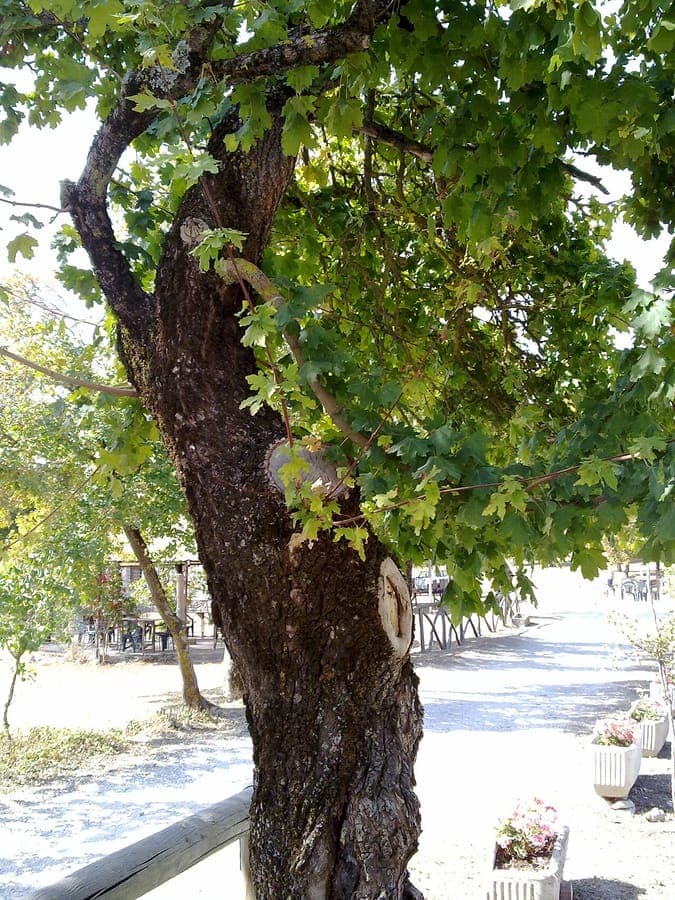
Galloramenu / CC BY-SA 3.0, via Wikimedia Commons
Field maple: complete guide
Acer campestre
Want to see Field maple: complete guide in your garden?
1 minute, no credit card
Overview
Acer campestre, commonly known as the field maple, is a resilient and adaptable tree that thrives across temperate Europe. Native from Belgium to Belarus, it's a quiet workhorse in garden design-less flashy than Japanese maples but far tougher and easier to manage. Reaching 8–12 m in height with a compact, rounded crown, it suits both formal hedges and naturalistic parkland settings. Its moderate growth rate (20–30 cm per year) makes it predictable, and its tolerance for pruning makes it a top pick for clipped hedges or topiary forms. Whether you're planting a boundary screen or a standalone feature, this maple earns its place.
On gardenworld.app, you can design a garden layout that highlights the field maple's structure and seasonal rhythm, especially useful for small urban gardens or mixed borders.
Appearance & bloom cycle
The field maple has five-lobed, dark green leaves that turn a reliable golden yellow in autumn-sometimes with hints of orange. The color change starts in late October and can last into December, adding warmth to the fading garden. In late spring (May), small greenish-yellow flowers appear in drooping clusters. They're not showy, but they attract hoverflies, bees, and other pollinators, contributing to garden biodiversity. After flowering, paired samaras ('keys') develop, ripening by August and often persisting into winter.
The bark on young trees is smooth and grey-green, becoming fissured and darker with age. Mature specimens develop a rugged, textured trunk that adds year-round interest.
Ideal location
Aim for full sun to light shade (light rating 8/10). The field maple performs best with at least 6 hours of direct sunlight daily. In full sun, foliage is denser and autumn color more vibrant. It tolerates partial shade but may grow more upright and open. This species is highly wind-resistant, making it ideal for windbreaks or exposed sites. When planting as a hedge, space trees 60–80 cm apart for quick establishment.
Avoid planting too close to buildings or underground utilities-mature roots can be vigorous. Allow at least 3–4 m from structures. It's also a good candidate for large containers when young, though long-term growth is better in the ground.
Soil requirements
Field maple is remarkably adaptable. It grows well in loam, clay, and sandy soils as long as drainage is adequate. Ideal pH is neutral to slightly alkaline (7.0–7.5), but it tolerates mildly acidic conditions. Improve heavy clay by mixing in well-rotted compost or leaf mould when planting. Avoid waterlogged sites-prolonged wet feet can lead to root rot.
Prepare a planting hole twice as wide as the root ball. Backfill with native soil mixed with organic matter. Don't add synthetic fertiliser at planting-this can burn roots and delay establishment.
Free design
Want to see Field maple: complete guide in your garden? Make a free design now.
Watering
Water deeply once or twice a week during the first growing season, especially in dry spells. Give 10–15 litres per tree weekly. After year one, established trees are drought-tolerant, though young ones appreciate watering during extended dry periods (over 3 weeks without rain). Mulch in spring with compost or bark to retain moisture and suppress weeds.
Pruning
One of the field maple's greatest strengths is its response to pruning. It's one of the few maples that can be tightly clipped into hedges or shaped into topiary. Prune in mid-summer (July or August) to avoid bleeding, which occurs if cut in late winter or early spring.
For hedges: trim 1–2 times per year. First cut in July, second (if needed) in early September. Use sharp shears for clean edges. For standard trees, minimal pruning is required-just remove crossing, damaged, or dead wood in late autumn or winter.
Maintenance calendar
- Jan: Inspect for winter damage, remove broken branches
- Feb: Prepare tools, avoid heavy pruning
- Mar: Check for new growth, apply organic mulch
- Apr: Monitor leaf emergence, watch for aphids
- May: Flowers appear, pollinator activity peaks
- Jun: Steady growth, check soil moisture
- Jul: First hedge trim, water if dry
- Aug: Second trim (optional), seeds develop
- Sep: Reduce watering, prepare for leaf drop
- Oct: Leaves begin to turn, leave fallen leaves as mulch
- Nov: Prune structural issues, protect young trunks
- Dec: Final check, ensure winter protection if needed
Winter hardiness
Hardy to USDA zone 5 (-25°C), the field maple handles cold winters with ease. Young trees may suffer frost damage on new shoots in exposed sites. Protect with horticultural fleece or tree guards in the first 2–3 winters. While deciduous, its branching structure adds form to the winter garden. Avoid late-season fertilising, as this encourages tender growth vulnerable to frost.
Companion plants
Plant beneath the canopy with shade-tolerant perennials like Lamium, Pachysandra, or ferns. Spring bulbs such as Narcissus or Muscari emerge before canopy closure, adding early colour. For hedges, pair with evergreens like box (Buxus) or holly (Ilex) for year-round screening. Avoid invasive groundcovers like periwinkle (Vinca minor) that can outcompete young maples.
Using gardenworld.app, you can visualise companion planting schemes that balance texture, height, and seasonal interest around your field maple.
Closing
The field maple isn't the most dramatic tree, but it's among the most reliable. It offers structure, seasonal colour, and versatility without demanding much in return. Whether clipped tight as a hedge or grown loose as a specimen, it adapts to your vision. Buy young plants from garden centres like B&Q, Wyevale, or local independents. Give it space, steady care in the first years, and it will reward you with decades of quiet beauty. For design ideas, check planting templates on gardenworld.app tailored to Acer campestre.
Want to see Field maple: complete guide in your garden? Make a free design now.
Upload a photo, pick a style, and get a photorealistic design with plant list in under a minute.
No credit card required


Similar plants
Acer pycnanthum: complete guide
Acer pycnanthum
Acer pycnanthum, the Japanese swamp maple, is a fast-growing tree with early red flowers and brilliant autumn color, ideal for damp garden settings.
Freeman maple: complete guide
Acer × freemanii
Everything about the Freeman maple (Acer x freemanii): a fast-growing shade tree with spectacular autumn colour for large gardens.
Wild ackee: complete guide
Cupania americana
A comprehensive guide to Cupania americana, a tropical tree from the Sapindaceae family with conspicuous white flowers and brown fruits, native to tropical America.