
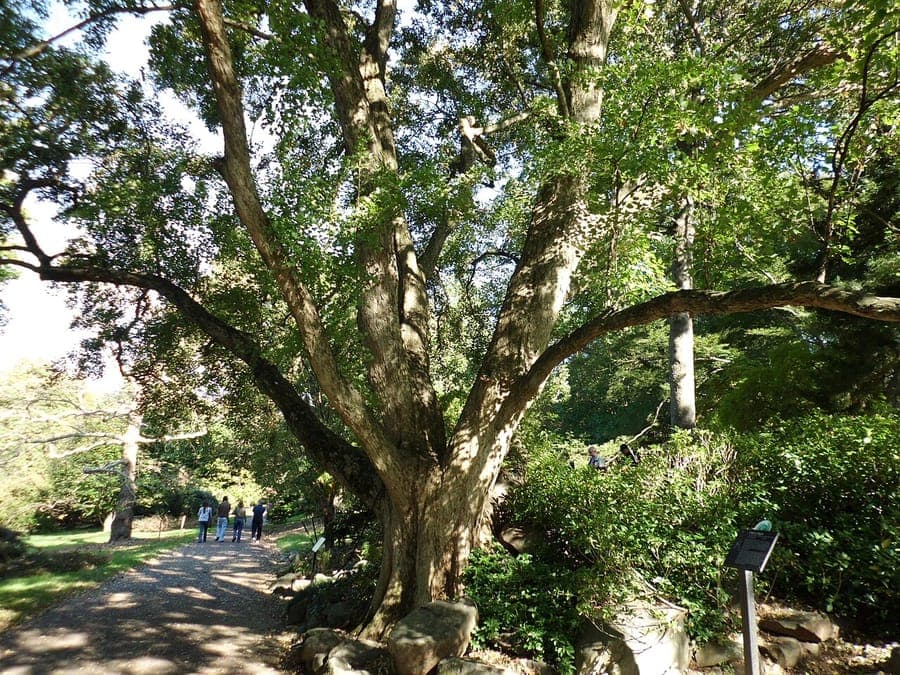
Hurricanefan24 / CC BY-SA 3.0, via Wikimedia Commons
Trident maple: complete guide
Acer buergerianum
Want to see Trident maple: complete guide in your garden?
1 minute, no credit card
Overview
The trident maple (Acer buergerianum) is a resilient and graceful small tree that's gaining favour among gardeners across the UK and northern Europe. Native to central and southeastern China and Taiwan, it typically reaches 6–10 metres in height with a spread of 5–7 metres over 20–30 years. Its compact size and elegant branching make it suitable for smaller gardens, courtyards, or as a specimen near patios. Belonging to the Sapindaceae family, it grows at a moderate pace and responds well to shaping.
One of its standout traits is its adaptability - it tolerates urban conditions better than many other maples. The bark develops an attractive fissured texture with age, adding winter interest. Whether you're planning a minimalist garden or a mixed border, this tree brings structure and seasonal change. On gardenworld.app, you can visualise how a trident maple fits into your garden layout, accounting for shade patterns and growth over time.
Appearance & bloom cycle
The leaves are the star - each one has three distinct lobes, giving it a slightly angular yet refined look. New growth in spring is a fresh, bright green, sometimes tinged with red. By midsummer, the foliage deepens to a glossy medium green. In hot, dry summers, leaf scorch can occur, especially in full sun, so some afternoon shade is beneficial.
Autumn brings warm tones of orange, copper, and russet from late September through October. While not as vibrant as Acer palmatum, the fall display is long-lasting and subtle. The tree produces small, inconspicuous greenish-white flowers in April to May, followed by paired samaras that twirl to the ground in late autumn. These don't cause litter issues and are generally welcomed by wildlife.
Ideal location
Choose a spot with partial shade to full sun - ideally morning sun and afternoon shade in hotter regions. In cooler maritime climates, full sun is acceptable. Avoid south-facing walls that reflect heat, especially in urban gardens. Provide at least 3 metres of clearance from buildings or larger trees to allow for healthy crown development.
Young trees benefit from shelter from strong winds. Use gardenworld.app to model wind exposure and sun paths in your garden, helping you pick the optimal planting site for your trident maple.
Soil requirements
This maple isn't fussy but prefers well-drained, slightly acidic to neutral soil (pH 5.5–7.0). It tolerates clay if drainage is improved with grit or compost. Avoid waterlogged soils - they promote root rot. When planting, mix in organic matter like compost or leaf mould to boost soil structure.
For container growing, use a mix of loam-based compost (John Innes No. 2), perlite, and fine bark. Repot every 3–4 years to prevent pot-binding.
Free design
Want to see Trident maple: complete guide in your garden? Make a free design now.
Watering
Water deeply and regularly during the first two growing seasons - about 10–15 litres per week during dry spells. Once established, it's moderately drought-tolerant but performs better with occasional deep watering in prolonged dry periods (over 3 weeks without rain). Use rainwater if possible, as the tree dislikes hard, alkaline tap water.
Always water at the base to prevent fungal leaf spots. Mulch with bark or leaf litter in spring to retain moisture and suppress weeds.
Pruning
Prune minimally. Remove dead, damaged, or crossing branches in late winter (February) before bud break. Avoid heavy pruning in summer due to sap bleeding. Light shaping to maintain form can be done in early summer (May–June) on young trees.
Use sharp, clean tools. Cut just above a bud or lateral branch at a slight angle. Never remove more than 20% of the canopy in a single year.
Maintenance calendar
- Jan: Inspect branches; remove deadwood.
- Feb: Light pruning possible.
- Mar: Apply mulch around base.
- Apr: Monitor for aphids; water if dry.
- May: Check for pests; avoid pruning.
- Jun: Water during dry spells.
- Jul: Watch for leaf scorch in full sun.
- Aug: Continue monitoring moisture.
- Sep: Autumn colour begins; reduce watering.
- Oct: Leaves fall; leave as natural mulch.
- Nov: Stop feeding; prepare for winter.
- Dec: Check for storm damage.
Winter hardiness
Hardy to USDA zones 6–9 (-23°C to -1°C). In the UK (zones 7–8), it survives most winters without protection. Young trees may benefit from fleece or jute wrapping in severe cold. Mature trees rarely suffer winter damage. Avoid planting in frost pockets.
Companion plants
Pair with shade-tolerant perennials like Hosta, Hakonechloa macra, Ferns, or Liriope. Low evergreens like Pachysandra or Buxus work well under the canopy. Avoid invasive groundcovers like Lysimachia nummularia. A mix of Epimedium and Helleborus adds spring interest beneath the tree.
Closing
The trident maple is a low-maintenance, long-lived tree that offers year-round appeal. Its bark, form, and seasonal colour shifts make it a garden staple. Buy from reputable garden centres with healthy root balls - avoid pot-bound or dried-out specimens. With proper care, it will thrive for decades. For planting inspiration, use gardenworld.app to simulate growth and seasonal changes in your garden design.
Want to see Trident maple: complete guide in your garden? Make a free design now.
Upload a photo, pick a style, and get a photorealistic design with plant list in under a minute.
No credit card required


Similar plants
Acer pycnanthum: complete guide
Acer pycnanthum
Acer pycnanthum, the Japanese swamp maple, is a fast-growing tree with early red flowers and brilliant autumn color, ideal for damp garden settings.
Freeman maple: complete guide
Acer × freemanii
Everything about the Freeman maple (Acer x freemanii): a fast-growing shade tree with spectacular autumn colour for large gardens.
Wild ackee: complete guide
Cupania americana
A comprehensive guide to Cupania americana, a tropical tree from the Sapindaceae family with conspicuous white flowers and brown fruits, native to tropical America.