
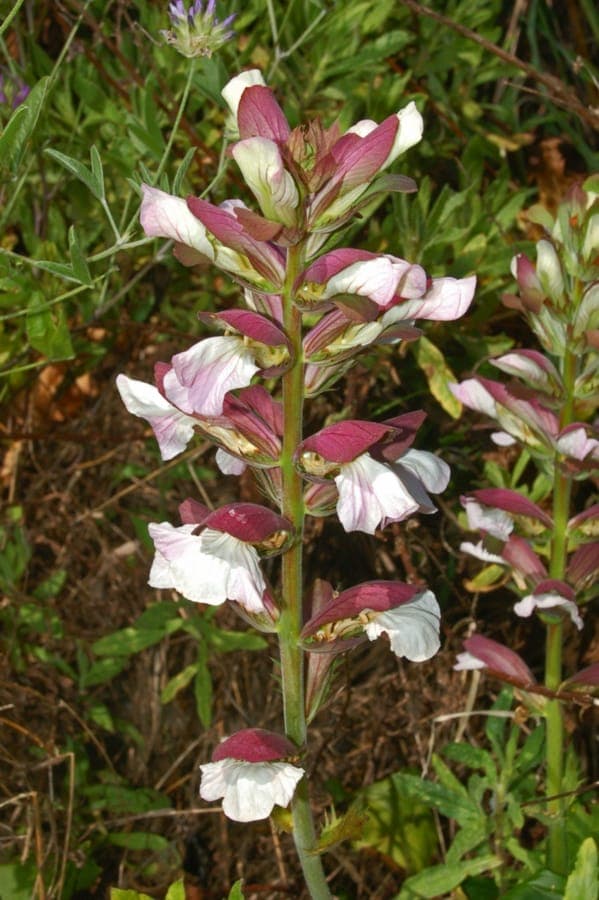
Hectonichus / CC BY-SA 3.0, via Wikimedia Commons
Bear's-breeches: complete guide
Acanthus mollis
Want to see Bear's-breeches: complete guide in your garden?
1 minute, no credit card
Overview
Acanthus mollis, commonly known as bear's-breeches, is a showstopper in the garden. If you've ever walked past a lush, old-world border with dramatic foliage, chances are you've seen this plant. It's a tough perennial that returns year after year in the UK and much of North America, provided it's in the right spot. Native to the Mediterranean basin – think Greece, Italy, and parts of North Africa – this plant thrives in zones 7 to 9. In colder areas, it may die back in winter but resprout in spring. Its deeply cut, glossy leaves can reach up to 60 cm long, creating a bold architectural presence. On gardenworld.app, you can design a planting scheme that highlights the dramatic form of bear's-breeches, ensuring it stands out without overwhelming neighbouring plants.
It spreads slowly via underground rhizomes, so give it space. It's not the most aggressive spreader, but it will form substantial clumps over time. This is a plant that commands attention but doesn't need constant care. Once established, it becomes quite drought-tolerant, though it appreciates some moisture in its first couple of years. You'll find it in many heritage gardens, cottage-style borders, and even urban courtyards where a touch of classical drama is needed.
Appearance & bloom cycle
The foliage is the real star. Large, deeply lobed leaves with a soft, slightly fuzzy underside emerge in spring and stay attractive all season. From May through August, tall flower spikes rise to about 120 cm. The flowers are creamy white with yellow streaks, surrounded by purplish, hooded bracts that give them an almost alien look. They're striking but not overly fragrant. After blooming, seed heads form and can be left for winter interest or removed to prevent self-seeding.
The plant dies back in colder zones during winter, but the roots remain alive. In milder areas, the leaves may persist. This is a slow grower, so don't expect rapid expansion. It takes a couple of seasons to settle in, but once it does, it becomes a reliable fixture. On gardenworld.app, you can track its growth cycle and plan your garden layout accordingly.
Ideal location
Bear's-breeches prefers part shade to light shade – about a 6 to 7 on the light scale. Full sun works in cooler climates if the soil stays moist, but in hot summers, it may scorch. Full shade reduces flowering and makes growth leggy. The best spot is under a dappled tree canopy or against a north-facing wall. It also looks great near stone steps or old stonework, echoing its natural habitat. Avoid exposed, windy sites.
Free design
Want to see Bear's-breeches: complete guide in your garden? Make a free design now.
Soil requirements
It likes fertile, well-drained soil with a pH between 7.5 and 8 – slightly alkaline. It tolerates clay if it doesn't stay waterlogged. Add compost or well-rotted manure when planting. For sandy soils, mix in organic matter to improve moisture retention. A little lime or crushed oyster shell can help if your soil is too acidic. Avoid peat-heavy mixes, as they can acidify the root zone.
Watering
Water regularly in the first year, especially during dry spells. Once established, it's fairly drought-resistant, but it performs best with occasional deep watering during summer. Never water overhead – wet foliage can promote fungal issues. Water at the base, particularly in May and June when flower spikes are forming.
Pruning
Pruning isn't strictly necessary, but you can tidy up in early spring by cutting back old leaves to ground level. Leave flower spikes through winter for structure, then remove in March. If you want to limit self-seeding, cut off seed heads before they ripen. Wear gloves – the leaves can be sharp.
Maintenance calendar
- Jan: check for slug damage
- Feb: prepare for spring cleanup
- Mar: cut back old foliage, add compost
- Apr: monitor for new growth, light feed
- May: water if dry, flower spikes emerge
- Jun: peak bloom, minimal care
- Jul: enjoy flowers, keep base mulched
- Aug: seed heads form, water only if needed
- Sep: leave seed heads for interest
- Oct: inspect for leaf spot
- Nov: reduce care, mulch base
- Dec: winter dormancy
Winter hardiness
Hardy in USDA zones 7-9. In colder zones, mulch the crown with dry leaves or straw. The plant may die back completely but usually regrows from the roots. In milder areas, foliage may remain evergreen.
Companion plants
Pair with geraniums, nepeta, hellebores, or ferns. It contrasts beautifully with fine-textured grasses or soft mounding plants. Avoid overcrowding – it needs room to breathe. Works well with roses, delphiniums, or ornamental grasses in a mixed border.
Closing
Bear's-breeches brings drama and structure to any garden. It's not fussy, but it does need space and the right conditions. Buy from garden centres like B&Q, Wyevale, or local independents that stock mature plants. Use it as a focal point, and don't be afraid of its bold presence. On gardenworld.app, you can visualise how it fits into your overall garden design, season by season.
Want to see Bear's-breeches: complete guide in your garden? Make a free design now.
Upload a photo, pick a style, and get a photorealistic design with plant list in under a minute.
No credit card required


Similar plants
Limestone wild petunia: complete guide
Ruellia strepens
Ruellia strepens is a long-blooming perennial native to central and eastern North America, with lavender trumpet flowers from June to September.
Shrimp plant: complete guide
Justicia brandegeeana
Everything about the shrimp plant (Justicia brandegeeana): cultivation, ideal location, watering, pruning and overwintering of this popular tender ornamental.
Caricature-plant: complete guide
Graptophyllum pictum
Grow the vibrant Caricature-plant with its striking patterned foliage. Care tips, cultivation, and pairing ideas for indoors and outdoors.