
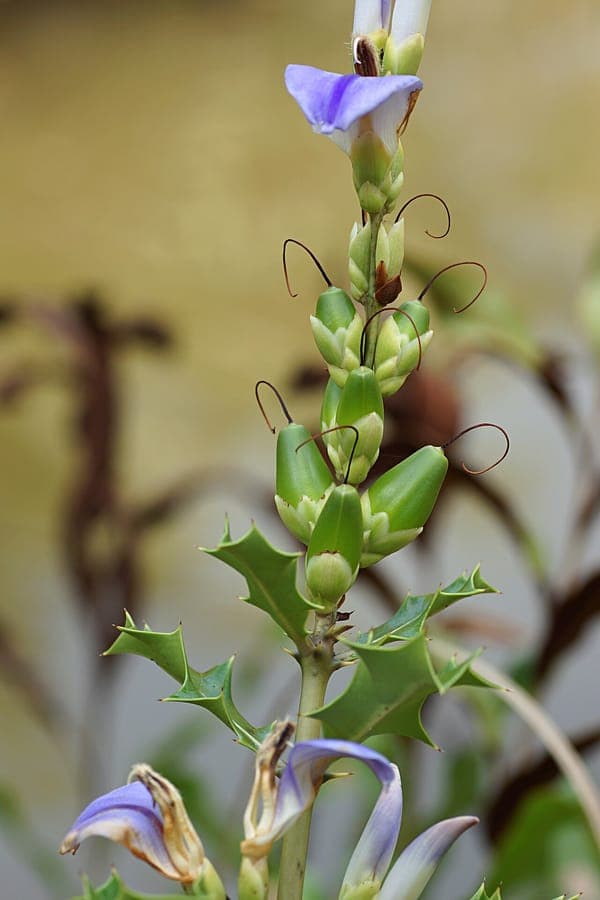
Vengolis / CC BY-SA 3.0, via Wikimedia Commons
Acanthus ilicifolius: complete guide
Acanthus ilicifolius
Want to see Acanthus ilicifolius: complete guide in your garden?
1 minute, no credit card
Overview
Acanthus ilicifolius, commonly known as Mangrove Holly or Holly-leaf Mangrove, is a fascinating coastal shrub in the Acanthaceae family. This unique plant naturally inhabits mangrove ecosystems throughout tropical and subtropical regions from Asia to the Pacific. The plant is remarkable for its ability to tolerate saltwater and brackish conditions, making it ideal for coastal gardens.
Appearance and Bloom
Acanthus ilicifolius typically grows to 1-2 meters as a compact, bushy shrub. The leaves are lanceolate to elongate, green, with characteristic sharp lobes along the margins resembling holly leaves. The plant produces beautiful lavender to purple flowers arranged in dense spikes. These flowers appear during warm seasons and attract butterflies and other pollinators. After flowering, small seed capsules develop.
Ideal Location
Mangrove Holly thrives in full sun to partial shade. For optimal flowering, at least four to six hours of direct sunlight daily is ideal. The plant tolerates partial shade well, which can provide protection from intense midday sun in very hot climates. Position the plant where it receives good air circulation, as it naturally grows along shores exposed to sea breezes.
Soil
One remarkable feature of Acanthus ilicifolius is its ability to thrive in saline soils where most garden plants would perish. While it grows well in standard well-draining garden soil, this plant is uniquely tolerant of brackish water and salty conditions. Moderately fertile to normal soil nutrition is appropriate. The plant can thrive in sandy soils, which is advantageous for coastal gardens with sandy substrates.
Free design
Want to see Acanthus ilicifolius: complete guide in your garden? Make a free design now.
Watering
Mangrove Holly is remarkably drought-tolerant once established, especially in coastal gardens where it receives regular sea spray. In inland areas, provide regular water during the growing season, particularly during dry periods. Once established, mature plants can survive with minimal supplemental watering. The plant is also tolerant of wet conditions and periodic inundation, making it ideal for low-lying coastal zones.
Pruning
Acanthus ilicifolius responds well to pruning and can easily be trimmed to maintain a compact form. Cut back by approximately one-third of height in early spring to stimulate new growth. Remove dead or damaged branches whenever noticed. After flowering, spent flower spikes can be removed. The plant also tolerates formal hedging if desired.
Maintenance Calendar
Spring: Perform major pruning and add compost. Summer: Water during dry periods. Fall: Reduce watering. Winter: Minimal maintenance in appropriate zones.
Winter Hardiness
Acanthus ilicifolius is frost-sensitive. It grows best in USDA zones 10-12, where winter temperatures do not drop below 5 Celsius. In temperate climates, grow as a seasonal container plant. In borderline areas, protect with heavy mulch and provide shelter.
Companion Plants
Mangrove Holly is ideal for coastal gardens where it pairs well with other salt-tolerant plants. Group with Spiranthes sinensis for texture contrast. Add Portulaca oleracea for low-growing colorful groundcover. In inland areas, combine with other Acanthaceae family members for continuous flowering.
Conclusion
Acanthus ilicifolius is an exceptional plant for those with coastal gardens or salt-water tolerance requirements. Its adaptability to harsh coastal conditions, combined with beautiful purple flowers and distinctive foliage, makes it a valuable addition. Whether planted as a specimen or as part of a coastal garden landscape, this mangrove plant will provide years of exotic beauty.
Want to see Acanthus ilicifolius: complete guide in your garden? Make a free design now.
Upload a photo, pick a style, and get a photorealistic design with plant list in under a minute.
No credit card required


Similar plants
Limestone wild petunia: complete guide
Ruellia strepens
Ruellia strepens is a long-blooming perennial native to central and eastern North America, with lavender trumpet flowers from June to September.
Shrimp plant: complete guide
Justicia brandegeeana
Everything about the shrimp plant (Justicia brandegeeana): cultivation, ideal location, watering, pruning and overwintering of this popular tender ornamental.
Caricature-plant: complete guide
Graptophyllum pictum
Grow the vibrant Caricature-plant with its striking patterned foliage. Care tips, cultivation, and pairing ideas for indoors and outdoors.