
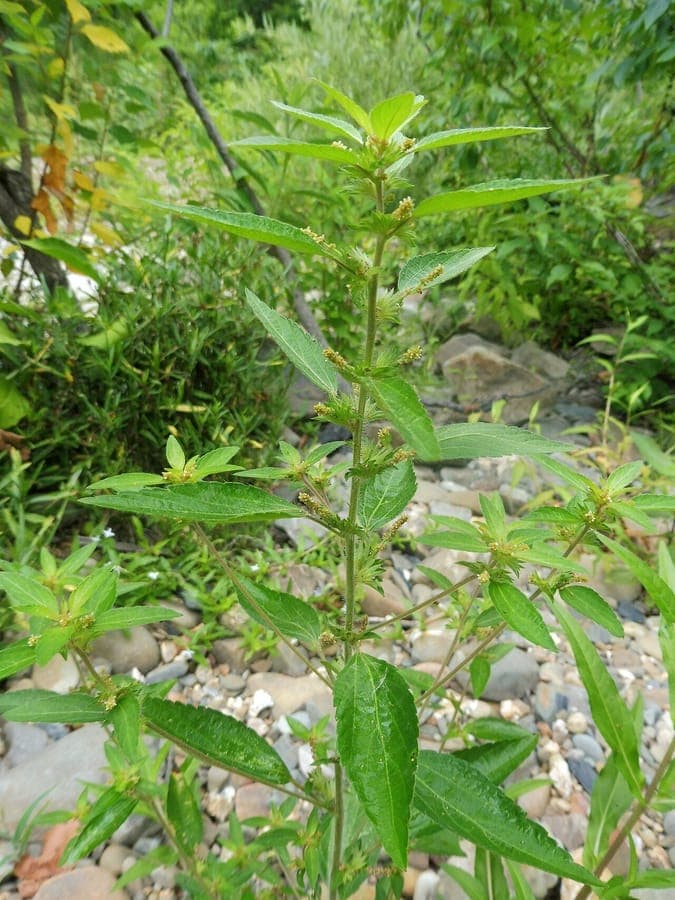
Mason Brock (Masebrock) / Public domain, via Wikimedia Commons
Virginia copperleaf: complete guide
Acalypha virginica
Want to see Virginia copperleaf: complete guide in your garden?
1 minute, no credit card
Virginia copperleaf, scientifically known as Acalypha virginica, is a fast-growing annual plant native to central and eastern America. This plant is less showy than its Asian cousin (Acalypha australis), but still offers interesting decorative possibilities in temperate gardens. The plant grows as an upright herb that can reach 30 to 90 centimeters in height, depending on growing conditions and season.
The characteristic feature of Acalypha virginica are the drooping, red, cat-like flowers that appear especially in August and September. These hanging tassels, which can sometimes be 5 to 10 centimeters long, give the plant a unique and attractive appearance. The leaves are green and inconspicuous, oval in shape and approximately 2 to 6 centimeters long. The stems can take on a red tint in exposed situations, which is visually interesting.
This plant is used by many gardeners in borders and wild gardens, as it is an excellent bird-attracting plant. The red flowers attract nectar-eating birds, which is a nice way to bring life to your garden. Moreover, the plant grows quickly and is very easy to grow from seed.
In terms of growing conditions, Acalypha virginica is adaptable to many different types of soil, but thrives best in nutrient-rich, well-draining soil with a pH between 5.9 and 7.0. The plant is reasonably drought-tolerant, although it grows better when watered regularly. Partial shade is tolerated, but for optimal flowering and rapid growth, full sun is preferable.
Sowing can be done directly in the open bed in late spring, after the risk of frost damage is past (usually May). Press the seeds lightly into the soil and keep them moist until they germinate, which usually takes 1 to 2 weeks. Once the seedlings are large enough to handle, you can move them to their final location and space them about 30 centimeters apart.
Feeding is not essential, but it gives better results. A single application of slow-release fertilizer in spring is usually sufficient. However, the plant grows well without extra feeding on nutrient-rich garden soil.
Watering during dry periods will improve growth rate and stimulate flower clustering. Make sure the soil is regularly moist, but not waterlogged. In very wet situations, the plant can develop diseases.
Diseases and pests are very rare. In warm, humid conditions, fungi can occur, so ensure adequate air circulation around the plant. Spider mites can be a problem in very dry years, but this is uncommon in temperate climates.
The plant is not hardy in temperate zones at all - it will die as soon as the first frost damage occurs. This is actually advantageous because it means you can simply remove the plant when autumn begins, without having to dig or put effort into its removal.
Propagation is done entirely by seed. You can collect seed from your own plants by allowing the seed clusters to ripen at the end of the season. Shake the ripe seed clusters into a bag and collect the seed. Store the seed dry and cool for the next season.
Acalypha virginica is not widely sold as a cultivated plant at specialized nurseries, but seed is easily available through seed catalogs and online suppliers. This makes growing this plant purely a sowing activity.
For gardeners who love native American flora, or who want to attract birds to their garden, Virginia copperleaf is an excellent choice. With its rapid growth, red flowers and bird value, it adds natural, informal beauty to any garden plan. Combine it with other native plants for an authentic wildflower garden.
Want to see Virginia copperleaf: complete guide in your garden? Make a free design now.
Upload a photo, pick a style, and get a photorealistic design with plant list in under a minute.
No credit card required


Similar plants
Woolly mercury: complete guide
Mercurialis tomentosa
All about Mercurialis tomentosa, the woolly mercury from southwestern Europe: site, soil, watering, care and garden design tips.
Shurur: complete guide
Euphorbia fruticosa
Everything about Shurur: cultivation in dry climates, xeriscaping, care and tips for drought-resistant gardens in warm climates
Glary spurge: complete guide
Euphorbia glareosa
Everything about glary spurge: cultivation, maintenance, frost hardiness and use in Mediterranean and mountain-inspired gardens