
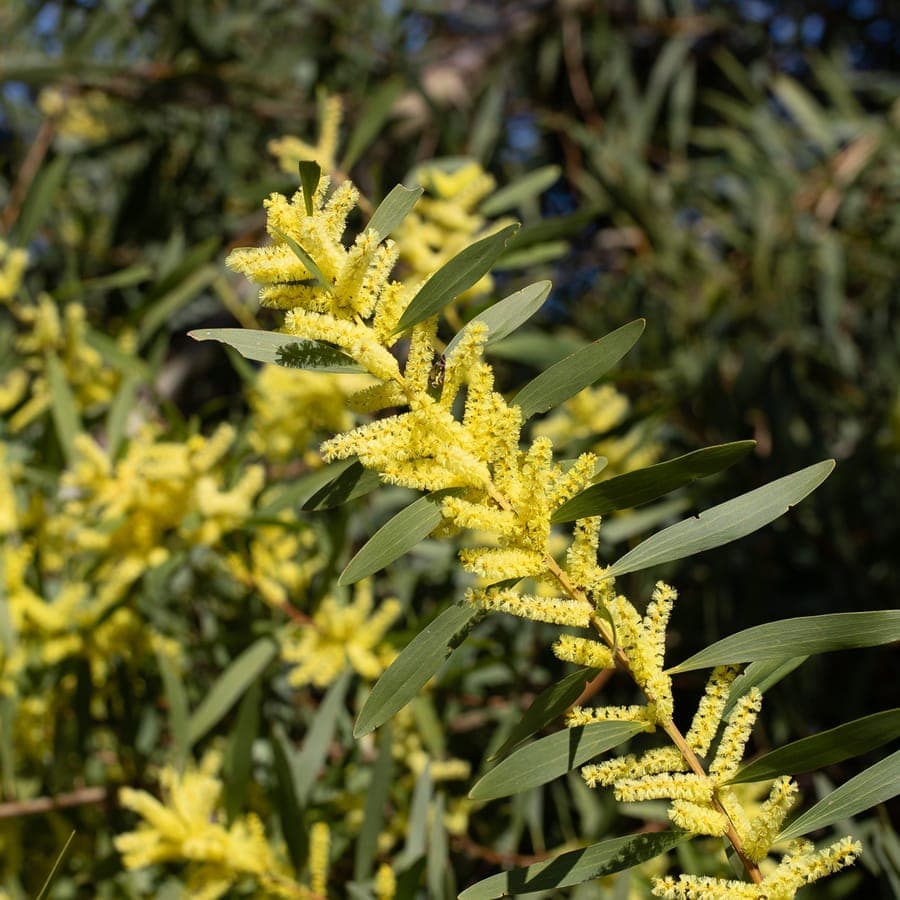
Kym Nicolson / CC BY 4.0, via Wikimedia Commons
Coastal wattle (Acacia sophorae): complete guide
Acacia sophorae
Want to see Coastal wattle (Acacia sophorae): complete guide in your garden?
1 minute, no credit card
Overview
Acacia sophorae, commonly known as coastal wattle, is a fast-growing multi-stemmed shrub or small tree in the legume family Fabaceae. Native to the coastlines of southeastern Australia - from Queensland through New South Wales and Victoria to Tasmania and South Australia - it is one of nature's specialist colonisers of exposed coastal dunes and sandy foreshores.
The species was formally described in 1813 by Robert Brown, who recognised its distinctness from the closely related Acacia longifolia. Over the years taxonomists have placed it under several names including Racosperma sophorae and Acacia longifolia var. sophorae, but the current accepted name is Acacia sophorae (Labill.) R.Br. Its adaptation to salt spray, poor sandy soils, and strong winds makes it a genuinely tough plant with clear ornamental value in garden situations that mimic coastal conditions.
For garden use, coastal wattle offers a combination of rapid establishment, attractive year-round foliage, and a cheerful yellow flower display in late winter to spring. At gardenworld.app you can explore how this and similar Australasian shrubs integrate into modern front garden designs with a dry or coastal theme. Whether you are planting a windbreak, a naturalistic dune garden, or a low-maintenance border, Acacia sophorae earns its place.
Appearance and bloom cycle
Coastal wattle is a multi-stemmed shrub that in its natural habitat can reach 2 to 4 metres in height, though in garden cultivation it typically stays between 1.5 and 3 metres. Young stems are bright green and age to grey-green. Like most acacias, it bears phyllodes rather than true leaves - these are flattened, leaf-like petioles that carry out photosynthesis. On Acacia sophorae the phyllodes are narrow and lance-shaped, leathery in texture, and give the plant a fine, airy appearance that moves gently in the breeze.
Flowering occurs in late winter and spring. The flowers are vivid yellow and form in small, rounded, fluffy heads arranged along the phyllode axils. Though individually tiny, they appear in such profusion that the entire shrub glows golden for several weeks, typically from late February through April in Northern Hemisphere gardens. The scent is mild and honey-like.
After flowering, the plant produces long, papery seed pods characteristic of the legume family. These pods turn brown when ripe and split to release hard, dark-coloured seeds. Left on the plant they add a further textural interest. The seeds have a hard coat that delays germination until conditions are right - in practice this means scarification or brief soaking in hot water is needed before sowing.
The phyllodes remain on the plant all year, providing attractive green structure even in winter, when the garden may otherwise look bare. The overall impression is of a refined, airy shrub with strong seasonal highlights.
Ideal location
Full sun is essential. Acacia sophorae comes from exposed coastal headlands where sunlight, salt wind, and dry conditions are constants. In the garden it performs best on a south- or west-facing aspect, ideally against a warm wall that radiates heat overnight and buffers the worst winter cold.
The species handles salt-laden wind extremely well, which is why it is so useful in coastal gardens. In sheltered inland positions it may grow somewhat taller and softer, with correspondingly reduced frost hardiness. An open, sunny position with good air movement around the plant is preferable to a humid, shaded spot.
In climates where frosts are a regular occurrence, such as much of northern and central Europe, planting against a south-facing wall, combined with appropriate winter protection, greatly improves survival prospects. Container cultivation is a practical alternative, allowing the plant to be moved under cover for winter.
Soil
Well-drained, even poor soil suits Acacia sophorae perfectly. It is native to sandy coastal soils with low organic matter and free drainage, and it genuinely thrives in these conditions. The tolerated pH range is wide - between 6.0 and 8.3 - so slightly acidic to moderately alkaline soils are all acceptable.
Heavy clay soils or ground that stays wet after rain will quickly cause problems. Root rot is the most common cause of plant failure in garden cultivation. If your soil is heavy, improve drainage by digging in coarse grit and raising the planting area slightly. Alternatively, grow the plant in a container filled with a free-draining compost such as a cactus mix blended with additional perlite.
One notable advantage of acacias, shared with other legumes, is their ability to fix atmospheric nitrogen through root nodules. This means Acacia sophorae can actually improve the soil it grows in while asking for very little in the way of fertiliser. Avoid nitrogen-rich feeds, which produce soft, frost-susceptible growth.
Free design
Want to see Coastal wattle (Acacia sophorae): complete guide in your garden? Make a free design now.
Watering
Once established - usually after one full growing season - Acacia sophorae needs very little supplementary water. In its native range it regularly experiences summer drought, and its root system is adapted to seek out deep moisture. In garden conditions this translates to a plant that thrives on neglect once settled in.
During the first season after planting, regular watering is important to help the roots establish. Aim to keep the soil just moist, not waterlogged, and allow it to dry somewhat between waterings. Deep, infrequent watering is preferable to shallow, frequent watering because it encourages roots to go downward rather than staying near the surface.
For container plants, water thoroughly when the top few centimetres of compost have dried out, then let the pot drain fully. Never leave the pot sitting in a saucer of water. In winter, reduce watering significantly - dormant or semi-dormant plants in cool conditions need very little moisture.
Pruning
Coastal wattle requires only light pruning. The shrub naturally forms an attractive multi-stemmed shape, and heavy cutting back into old wood is not recommended as acacias can be reluctant to regenerate from very old stems. The best approach is to remove dead, damaged, or crossing branches as they appear, and to carry out any formative shaping immediately after flowering in spring.
You can lightly tip-prune young plants to encourage bushier growth, but always cut back to a healthy side shoot rather than leaving a bare stub. On established plants, removing spent flower clusters and trimming back wayward shoots in May or June keeps the plant tidy without causing stress.
Avoid pruning in late summer and autumn, as any new soft growth that results will be vulnerable to the first frosts. The ideal pruning window is the four to six weeks following the end of flowering.
Maintenance calendar
January-February: Inspect overwintering plants for frost damage. Apply an extra layer of horticultural fleece if temperatures are forecast to drop sharply.
March-April: Flower buds swell and the main display begins. No pruning during this period. If feeding, use a low-nitrogen bloom fertiliser sparingly.
May-June: After flowering is complete, carry out maintenance pruning - remove spent flowers, dead wood, and any crossing or overcrowded branches. This is the main pruning window.
July-August: Dry weather may call for deep watering every two to three weeks. Watch for seed pod development if you wish to collect seed.
September-October: Growth slows. Stop feeding. Apply a generous mulch of bark chips around the base to insulate roots ahead of winter.
November-December: Move container plants to a frost-free, bright space such as a cool greenhouse or conservatory. Protect outdoor plants with horticultural fleece.
Winter hardiness
Acacia sophorae is rated at USDA hardiness zones 9 to 10, tolerating light frosts down to approximately -5 to -7 degrees Celsius for brief periods. This places it in the range of borderline hardy for much of northern Europe, where winter temperatures occasionally fall well below these thresholds.
In practice, established plants in sheltered coastal gardens with mild maritime climates - such as the southwest coast of England, the Atlantic coast of France, or the coastal regions of Belgium and the Netherlands - can survive outdoors most winters. Inland, especially in continental climates with severe winters, the plant should be treated as a container specimen that overwinters under glass.
Planting against a south-facing wall significantly increases outdoor survival rates. The wall absorbs heat during the day and releases it at night, raising the local microclimate by several degrees. Wrapping the base of the plant with horticultural fleece when frost is forecast adds further protection.
Companion plants
Coastal wattle pairs naturally with other sun-loving, drought-tolerant plants that share its preference for free-draining, low-nutrient soils. Cistus species (rock roses) make excellent companions, flowering at a similar time in spring and sharing the same dislike of wet conditions. Lavender, rosemary, and Phlomis complement the golden flowers with contrasting silver and grey foliage.
For a fuller Australian planting, consider combining Acacia sophorae with Callistemon (bottlebrush) and Leptospermum if the climate allows. These form a cohesive planting palette that feels authentic and works well in dry, sunny front gardens. Ornamental grasses with a fine texture - such as Stipa tenuissima - complement the phyllodes beautifully without competing aggressively.
At gardenworld.app, design inspiration for front gardens often pairs coastal-style shrubs with low ground covers such as Thymus and Sedum to create a seamless, low-maintenance planting. These ground covers also help suppress weeds and keep the soil surface dry around the base of the shrub, further reducing the risk of root rot.
Closing
Acacia sophorae is a plant with a clear personality: sun-loving, wind-resistant, drought-tolerant, and undemanding once established. Its brilliant yellow spring flowers, airy phyllode foliage, and rapid growth make it a rewarding choice for anyone who wants impact without excessive maintenance. The main management challenge in colder climates is winter protection, but with the right siting and a little insulation, coastal wattle can be kept thriving year after year.
If you are looking to add a touch of the Australian coast to your front garden - or simply want a tough, attractive shrub for a dry, sunny spot - Acacia sophorae deserves serious consideration. Its ability to colonise poor soils, fix its own nitrogen, and shrug off salt wind makes it as practical as it is beautiful.
Want to see Coastal wattle (Acacia sophorae): complete guide in your garden? Make a free design now.
Upload a photo, pick a style, and get a photorealistic design with plant list in under a minute.
10,000+ gardens designed already
No credit card required


Similar plants
Sydney golden wattle: complete guide
Acacia longifolia
Sydney golden wattle (Acacia longifolia) is a fast-growing, full-bodied tree with beautiful golden flowers. Excellent for Mediterranean gardens and sturdy screening.
Swamp wattle: complete guide
Acacia retinodes
A comprehensive guide to Acacia retinodes, a resilient Australian shrub with year-round blooms. Learn how to plant, grow and maintain swamp wattle in your garden.
Toulon broom (Adenocarpus telonensis): complete guide
Adenocarpus telonensis
A full guide to Adenocarpus telonensis, the rare Mediterranean broom shrub - growing conditions, soil, pruning and winter hardiness explained.