
Murray Fagg / CC BY-SA 4.0, via Wikimedia Commons
Acacia auriculiformis: complete guide
Acacia auriculiformis
Want to see Acacia auriculiformis: complete guide in your garden?
1 minute, no credit card
Earleaf Acacia: A Tropical Beauty for Warm Climates
Overview The Earleaf Acacia (Acacia auriculiformis), also called Australian Babul, Northern Black Wattle, or Darwin black wattle, is a fast-growing tropical to subtropical tree native to Southeast Maluku, New Guinea, and Northern Australia. This attractive tree is valued for its dense foliage, impressive growth rate, and abundant golden flowers. It's a popular choice for warm regions and gardens needing quick structure and shade.
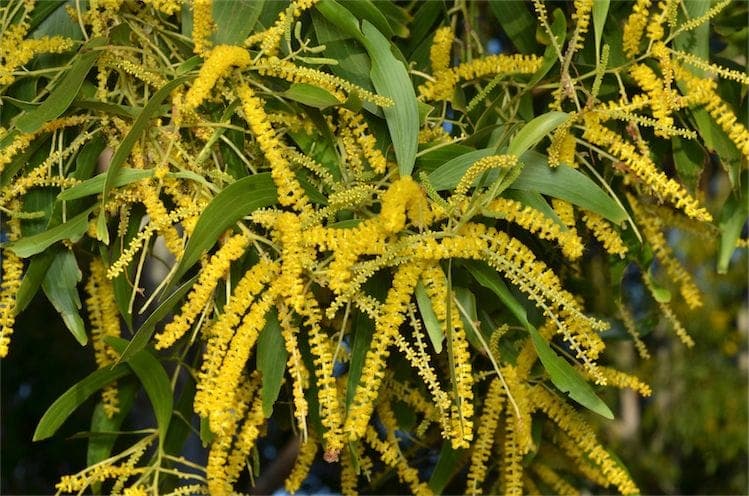
Appearance and Bloom The Earleaf Acacia is a vigorous tree reaching eight to twelve meters or taller in favorable conditions. The plant has distinctive thin, slender, gray-green "leaves" (actually phyllodes - flattened petioles). These pseudo-leaves are ear-shaped, giving the plant its name. The tree grows regularly to widely spreading form. Golden yellow flowers appear in dense, short spikes and are highly fragrant. Flowering is extended, with multiple bloom seasons yearly in tropical climates.
Ideal Location The Earleaf Acacia requires full sun and high temperatures. Not suitable for cool, temperate climates unless grown in a greenhouse. Plant in full sun in sheltered locations. The tree dislikes shade and may decline without adequate light. In subtropical gardens it thrives outdoors; in northern regions grow only as a container plant.
Soil The Earleaf Acacia grows on virtually all soil types from sand to clay, provided drainage is good. Not fond of waterlogged soil, it thrives on moderately moist, nutrient-rich soils. Use garden soil with good drainage. For potted specimens, use well-draining potting mix. Prefers neutral to slightly acidic soil.
Watering The Earleaf Acacia requires more water than many acacias. Water regularly, especially during growing season and warm days. The tree dislikes prolonged drought and may shed leaves during extended dry periods. Water container-grown specimens more frequently than ground-planted trees. Ensure good drainage to prevent waterlogging.
Pruning Pruning is not absolutely necessary but can be used for shaping. Pinch shoot tips when young to encourage branching. Later pruning is possible but not essential. Remove damaged or diseased branches. Use sharp, clean tools.
Maintenance Calendar Spring: Apply feeding, check water. Summer: Regular watering, monitor pests. Autumn: Reduce water and feeding. Winter: Minimal care, monitor temperature protection.
Winter Hardiness The Earleaf Acacia is not winter-hardy in temperate climates. Temperatures below 10 degrees Celsius cause damage; below 5 degrees can be fatal. In subtropical and tropical regions, the tree is hardy. In northern regions grow only as a houseplant or in a warm greenhouse.
Support The tree grows upright without support once well-established. Young plants may need support in windy situations.
Companion Plants Combine with other tropical or subtropical plants with similar warmth and light requirements. Possible companions are other acacias, Grevilleas, eucalyptuses, and tropical shrubs.
Closing Thoughts The Earleaf Acacia is a perfect choice for warm-climate gardens needing fast-growing shade trees. Highly reliable and vigorous, this tree delivers results. Northern European gardeners can grow it as a seasonal container specimen. At gardenworld.app, integrate it into tropical and subtropical garden designs. With full sun, regular watering, and warmth, you'll enjoy this tropical treasure.
Available at specialized nurseries and garden centers. Find more design inspiration at gardenworld.app.
Want to see Acacia auriculiformis: complete guide in your garden? Make a free design now.
Upload a photo, pick a style, and get a photorealistic design with plant list in under a minute.
No credit card required


Similar plants
Tall Silky Lupine: complete guide
Lupinus elatus
Tall silky lupine is a fast-growing Californian perennial with silvery foliage and blue-purple flower spikes, ideal for a prairie-style garden.
Garfield Lupine: complete guide
Lupinus garfieldensis
The Garfield lupine is a rare, fast-growing American perennial for alkaline, dry grassland gardens, with striking blue flower spikes.
Lupinus elegans: complete guide
Lupinus elegans
Lupinus elegans, the elegant lupine, is a spectacular blooming plant from Mexico with blue flower spikes. Care, cultivation and garden use.