
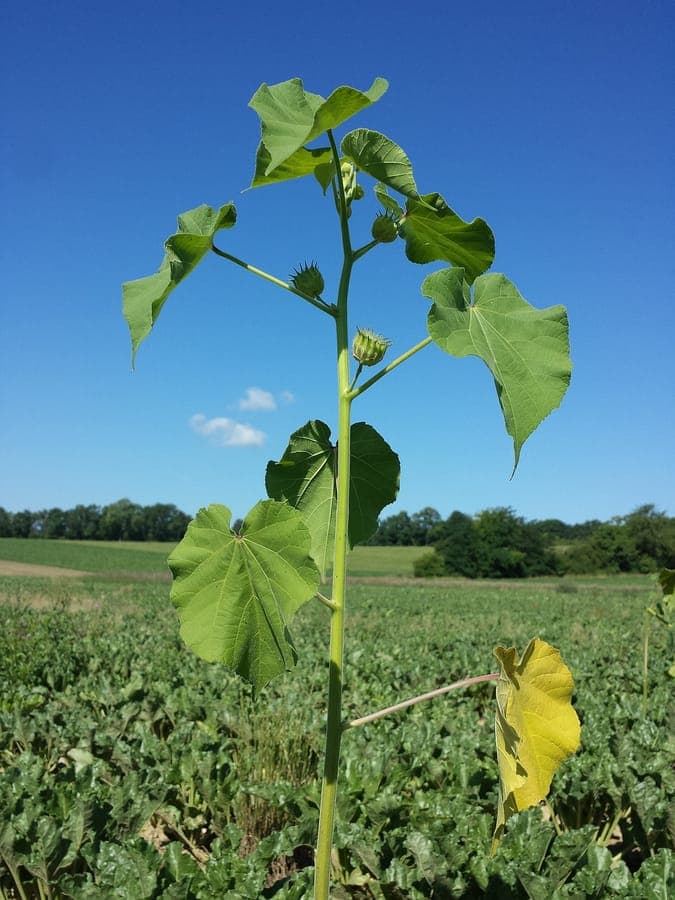
Stefan.lefnaer / CC BY-SA 4.0, via Wikimedia Commons
Chingma-lantern: complete guide
Abutilon theophrasti
Want to see Chingma-lantern: complete guide in your garden?
1 minute, no credit card
Overview
Chingma-lantern (Abutilon theophrasti) is a bold, fast-growing annual that brings tropical flair to temperate gardens. Native to central and southeastern China, Inner Mongolia, and parts of Central Asia, this member of the Malvaceae family thrives in full sun and well-drained soil. In a single season, it can shoot up to 1.5–2 meters tall, making it a dramatic backdrop or focal point in borders and containers. Don't expect it to last through winter - it's strictly a one-season performer - but what it lacks in longevity, it makes up for in vigor and visual impact.
This plant is often grown from seed, either started indoors 6–8 weeks before the last frost or sown directly outdoors when soil temperatures hit 18°C. It's surprisingly tough, tolerating poor soil and dry spells once established. If you're planning a sun-drenched border, consider using gardenworld.app to map out spacing - Chingma-lantern needs room to stretch without shading out smaller neighbors.
Appearance & bloom cycle
The foliage is the first clue you're dealing with something special: large, heart-shaped, softly hairy leaves up to 15 cm across, with a velvety texture that gives it the Dutch name Fluweelblad. The leaves are light green and deeply veined, resembling a linden or hibiscus leaf. From June through July, nodding yellow flowers appear - bell-shaped, about 4–5 cm long, with a delicate downward curve. They look like tiny lanterns, hence the common name.
Flowering is prolific in full sun and warm conditions. Each bloom lasts a few days, but new ones keep forming, especially if you deadhead or pinch tips early in the season. After pollination, seed capsules form - fuzzy, round, and persistent into fall. These can be collected for next year's sowing, though self-seeding often occurs if you leave the plant in place.
Ideal location
Chingma-lantern loves sun - rate it an 8/10 for light exposure. That means at least 6–8 hours of direct sunlight daily. A south-facing garden bed or patio container works best. It grows well in USDA zones 2–11, but in cooler zones (below 7), starting seeds indoors gives a head start. Avoid shady spots or areas crowded by tree roots. It's not a plant to tuck into a mixed border unless you're okay with it towering over everything else.
Use it as a specimen in a large pot (minimum 40 cm diameter) or plant it toward the back of a sunny border. On gardenworld.app, you can visualize how its height and spread fit into your existing layout, especially when paired with shorter annuals.
Free design
Want to see Chingma-lantern: complete guide in your garden? Make a free design now.
Soil requirements
It prefers a neutral to slightly alkaline soil - pH 7.5 to 8.0 - but tolerates a wide range as long as drainage is good. Heavy clay or waterlogged soil will rot the roots. Amend dense soils with compost and coarse sand. A mix of garden soil, perlite, and a bit of lime works well in containers. While it doesn't demand rich soil, a light application of balanced fertilizer at planting time can boost early growth.
Watering
Water deeply but infrequently. Once established, it's drought-tolerant and only needs supplemental watering during prolonged dry spells. In containers, check the top 2–3 cm of soil - if dry, water thoroughly. Avoid daily sprinkling, which encourages shallow roots. Use rainwater when possible; tap water with high chlorine content can stress young plants.
Pruning
No heavy pruning needed, but pinching back the tips in early June encourages bushier growth and more flowers. Cut just above a leaf node. Remove any yellowing or damaged leaves to improve air circulation and reduce disease risk. Don't cut it back hard - it won't recover like a perennial.
Maintenance calendar
- Jan: No action
- Feb: No action
- Mar: Start seeds indoors (weeks 9–11)
- Apr: Transplant seedlings to larger pots; harden off
- May: Plant out after last frost; space 40–60 cm apart
- Jun: Blooming begins; pinch tips for branching
- Jul: Peak bloom; monitor for pests
- Aug: Flowering tapers; watch for seed pods
- Sep: Collect seeds or allow self-sowing
- Oct: Remove dead plants
- Nov: No action
- Dec: No action
Winter hardiness
Not winter-hardy. Dies with first frost. Treat as an annual in all climates. Doesn't survive below 0°C for extended periods. In USDA zones 8–11, it may self-seed and reappear next year, but the parent plant won't overwinter.
Companion plants
Pair with other sun-loving annuals: Zinnia, Cosmos, Marigold, or Salvia. Its height makes it ideal for back-of-border planting. Avoid planting near moisture-loving species like Impatiens. Attracts bees and hummingbirds - great for pollinator gardens. Keep it away from aggressive spreaders that might choke its base.
Closing
Chingma-lantern is a showstopper with minimal demands. It's perfect for gardeners who want fast results and bold texture. Start seeds early or buy young plants from garden centres in late spring. Give it sun, decent drainage, and a little space - and it'll reward you with months of lantern-like blooms. Whether you're refreshing a patio or filling a bare corner, it's a reliable performer. Check gardenworld.app for design ideas that highlight its vertical strength and golden flowers.
Want to see Chingma-lantern: complete guide in your garden? Make a free design now.
Upload a photo, pick a style, and get a photorealistic design with plant list in under a minute.
No credit card required


Similar plants
Crimean linden: complete guide
Tilia × euchlora
Crimean linden is an elegant, fast-growing shade tree ideal for large gardens. Discover cultivars, spacing, maintenance tips and winter hardiness.
California flannelbush: complete guide
Fremontodendron californicum
Everything about California flannelbush (Fremontodendron californicum): sunny placement, drainage, pruning and care for this spectacular yellow-flowering shrub.
Hairy rose mallow: complete guide
Hibiscus moscheutos subsp. lasiocarpos
Full growing guide for hairy rose mallow (Hibiscus moscheutos subsp. lasiocarpos): location, soil, watering, winter hardiness and garden design tips.