
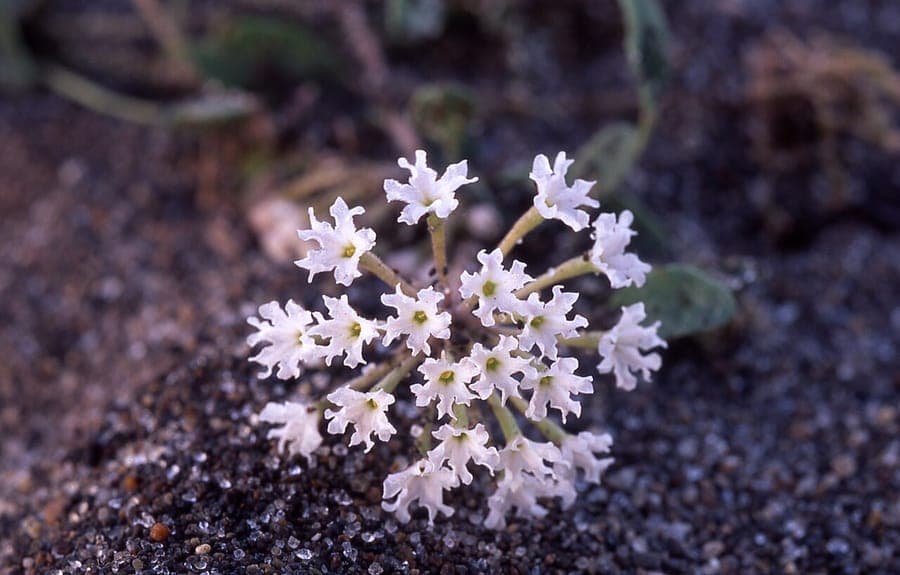
National Park Service / Public domain, via Wikimedia Commons
Abronia ammophila: complete guide
Abronia ammophila
Want to see Abronia ammophila: complete guide in your garden?
1 minute, no credit card
Overview
Abronia ammophila, commonly known as Wyoming sand verbena, is a rare and captivating wildflower native to the sandy plains of Wyoming in the western United States. This compact perennial reaches just 10 to 30 centimetres in height and belongs to the Nyctaginaceae family (four-o'clock family), producing wonderfully fragrant pink-purple flowers that attract butterflies and moths throughout summer. For gardeners who appreciate unusual plants with genuine character, the Wyoming sand verbena offers something truly special.
Hardy in USDA zones 4 through 7, this little plant handles brutal cold far better than its delicate appearance suggests. It thrives across a broad range of climates, from the frigid winters of the northern United States and Canada to the milder conditions of the United Kingdom, northern Europe, and parts of Australia and New Zealand. The key requirement everywhere is the same: excellent drainage and plenty of sun. At gardenworld.app you can create a garden design that accounts for the specific needs of specialist plants like Abronia ammophila, ensuring they perform at their best in your particular setting.
Appearance & bloom cycle
The Abronia ammophila is a low-growing herbaceous perennial with a rosette-like growth habit. The leaves are fleshy, spoon-shaped, and slightly sticky to the touch due to fine glandular hairs that help the plant conserve moisture in its dry native habitat. The stems are prostrate to ascending, spreading across the ground to form a mat-like carpet of foliage.
The flowers are the undeniable star of the show. They appear from June through August in spherical umbels containing 15 to 25 individual tubular florets. Each floret is trumpet-shaped, roughly 2 centimetres long, and displays a gorgeous pink to purple colour that fades to a lighter shade toward the centre. The fragrance is sweet, reminiscent of jasmine, and becomes most intense during the evening hours when the blooms attract hawkmoths and other nocturnal pollinators.
After flowering, the plant produces small winged fruits designed for wind dispersal across sandy terrain. In cultivation, expect a blooming window of six to eight weeks, depending on temperature and sunlight. The flowers open most fully on warm, sunny days and partially close during overcast conditions, making the plant a dynamic and engaging presence in the garden throughout the season.
Ideal location: sun, shade or partial shade
The Wyoming sand verbena is a devoted sun worshipper. Choose a position in full sun where the plant receives at least six to eight hours of direct sunlight per day. In its native habitat, it grows on open, exposed sand flats with zero shade, and it carries that preference directly into the garden.
Partial shade is tolerated but results in fewer flowers and a more leggy growth habit. Full shade is out of the question; the plant will decline and eventually perish. In the UK, a south-facing border, rock garden, or raised bed is ideal. In Australia and New Zealand, a north-facing position achieves the same effect. North American gardeners should select the brightest spot available, keeping in mind that the plant handles reflected heat from paths and walls without complaint.
Wind protection is not strictly necessary, as the low growth form makes the plant naturally wind-resistant. However, it is wise to choose a location sheltered from prolonged rainfall, since waterlogging is the single greatest threat to this desert native. In regions with wet winters, a covered position or cold frame can make all the difference.
Soil & underground requirements
Soil choice is arguably the single most important factor in successfully growing Abronia ammophila. This plant has an uncompromising preference for poor, sandy, exceptionally well-draining ground. In its natural habitat, it grows in near-pure sand with virtually no organic matter, and you need to replicate this as closely as possible.
An ideal soil mix consists of 70 percent coarse sand, 20 percent fine gravel or perlite, and 10 percent potting compost. The pH should be neutral to slightly alkaline, between 6.5 and 8.0. Avoid heavy clay soil absolutely; standing water around the roots leads inevitably to root rot. If your garden soil is heavy, a raised bed or large container filled with custom-blended substrate is the best solution.
The roots form a deep taproot that reaches down in search of moisture. Ensure a minimum depth of 30 centimetres of free-draining substrate. A layer of gravel or crocks at the bottom of containers improves water flow further. Fertilisation is barely necessary; a light top-dressing of compost in early spring is more than sufficient. Over-feeding produces lush foliage at the expense of flowers.
Watering: when and how much
Less is more when watering the Wyoming sand verbena. This plant is adapted to arid conditions and will die far more quickly from overwatering than from drought. In the ground, you will rarely need to water at all in temperate climates like the UK, unless there is an extended heatwave.
For container growing, the rule of thumb is simple: let the soil dry out completely between waterings. Push a finger into the soil; if it feels dry to a depth of 5 centimetres, you can water. When you do water, drench the pot thoroughly so the water runs out the bottom, then empty any saucer underneath.
During winter, watering should virtually cease. The plant enters dormancy and has minimal moisture requirements. Excess winter moisture is the most common cause of death for this species in cultivation. In wet climates, a sheltered position under an overhang, in an unheated greenhouse, or under a rain shelter is often the difference between survival and failure.
The best time to water is early morning, allowing any moisture on the leaves to evaporate before nightfall. This significantly reduces the risk of fungal diseases, which are the main pathological threat to sand verbenas in cultivation.
Free design
Want to see Abronia ammophila: complete guide in your garden? Make a free design now.
Pruning: when and how
The Abronia ammophila requires very little pruning, which suits its low-maintenance character perfectly. The primary task is deadheading spent flower stalks to keep the plant tidy and potentially encourage a second flush of blooms. Cut the flower stems back to just above the leaf rosette using sharp, clean secateurs.
At the end of the growing season, when the above-ground parts die back after the first hard frost, you can carefully remove the dead material. Wait until the foliage is completely brown and dry, as the plant continues transporting nutrients down to the root system until this process is complete.
Spring pruning in the traditional sense is not needed. When the plant re-emerges in April or May, simply remove any dead remnants left from the previous autumn. Drastic cutbacks are never required and can actually be harmful, since the plant grows from its root crown and the growing point cannot be reset by cutting.
Maintenance calendar
March-April: Inspect the plant after winter. Remove dead foliage and any weeds around the base. Add a light top layer of coarse sand if the soil surface has compacted or subsided.
May: New growth begins. Watch for slug damage on tender young shoots. A ring of copper tape around the pot or planting area deters slugs effectively.
June-August: Flowering season. Enjoy the fragrant blooms and deadhead spent flower stems regularly. During extreme heat (above 35 degrees Celsius), a light morning watering is acceptable.
September: Collect seed for propagation if desired. The winged fruits are ripe when they turn light brown and detach easily from the plant.
October-November: Above-ground growth dies back. Leave the foliage in place until fully withered. Move containers to a sheltered, dry position.
December-February: Winter dormancy. Do not water. For container plants, check monthly that the root ball has not dried out completely; a very small amount of moisture every six weeks is sufficient to keep the roots alive.
Winter hardiness & protection
With hardiness spanning USDA zones 4 to 7, Abronia ammophila is remarkably cold-tolerant. The plant can survive temperatures down to approximately -30 degrees Celsius, provided the roots stay dry. It is not the cold that kills this plant; it is the combination of cold and wet.
In the United Kingdom and much of western Europe (USDA 7b-9a), winter cold is seldom the problem. The challenge lies in wet winters. Protect the plant by placing a cloche or piece of glass over the root zone to deflect rain. In the open ground, a thick gravel mulch helps water drain away quickly.
For container-grown plants, elevate the pot off the ground on pot feet during winter and place it against a sheltered south-facing wall (north-facing in the Southern Hemisphere). An overhang or unheated greenhouse provides the best protection. Avoid heated rooms, as the plant requires its cold dormancy period to flower well the following year.
Fleece or hessian wrapping is generally unnecessary for the plant itself but can help insulate the container against extreme frost that might freeze the root ball solid.
Companion plants & combinations
The Wyoming sand verbena pairs beautifully with other drought-loving plants that share similar soil requirements. In a rock garden or gravel garden, it combines wonderfully with lavender (Lavandula angustifolia), catmint (Nepeta), and various sedum species. The pink-purple flowers contrast elegantly with the silver-grey foliage of Artemisia schmidtiana or the blue-green of sea holly (Eryngium maritimum).
For a thematic planting of North American wildflowers, combine Abronia ammophila with Oenothera macrocarpa (Ozark sundrops), Penstemon species, and Echinacea purpurea. This creates a naturalistic prairie effect that suits informal garden styles and wildlife-friendly planting schemes.
In containers on the patio, the plant works well alongside other succulent-like species such as Delosperma cooperi (ice plant) and Sempervivum (houseleek). Avoid pairing it with moisture-loving plants like hostas or astilbes, as the watering requirements are too different for them to coexist in the same bed or pot.
An additional benefit of the right combination is that the fragrant flowers, together with lavender and thyme, create a pollinator paradise. Butterflies, bees, and moths are drawn in large numbers to this aromatic mix, making your garden a genuine haven for wildlife.
Conclusion
Abronia ammophila is most easily propagated by seed. Collect the winged fruits in September when ripe and allow them to dry for a few weeks on kitchen paper. The seeds require cold stratification: store them in damp sand in the refrigerator for four to six weeks before sowing.
Sow in early spring (March-April) in seed trays filled with pure sand or a very lean mix. Cover the seeds only lightly and keep the substrate carefully moist but never wet. Germination is slow and irregular; expect the first seedlings after three to six weeks. Not all seeds will germinate, so sow generously.
A noteworthy feature of this plant is its endemic status. Abronia ammophila occurs in the wild only in a restricted area of Wyoming and faces pressure from habitat loss. By growing this plant in your garden, you contribute to awareness and indirectly to the conservation of this rare species. However, it is essential to use only seed from cultivated plants and never collect from wild populations.
The name 'Abronia' derives from the Greek word 'abros', meaning 'graceful' or 'delicate', which perfectly captures the plant's appearance. The species epithet 'ammophila' translates literally as 'sand-loving', a direct reference to its preferred habitat.
Abronia ammophila is an outstanding choice for gardeners seeking something genuinely rare and rewarding. Its combination of scarcity, fragrant flowers, extreme cold hardiness, and minimal maintenance requirements makes it a jewel for the rock garden, gravel garden, or sunny container on the terrace. The single most important thing to get right is the free-draining, sandy soil, followed by restraint with the watering can.
Although the Wyoming sand verbena is not found in every garden centre, specialist nurseries and online seed merchants are reliable sources. With a little patience during the germination phase and the right growing conditions, you will be rewarded with a plant that surprises year after year with its fragrant, pink-purple flower display.
Want to discover how Abronia ammophila fits best into your garden layout? At gardenworld.app you can create a personalised garden plan that takes into account all your preferences and the specific conditions of your outdoor space.
Want to see Abronia ammophila: complete guide in your garden? Make a free design now.
Upload a photo, pick a style, and get a photorealistic design with plant list in under a minute.
No credit card required


Similar plants
Colorado four o'clock: complete guide
Mirabilis multiflora
Complete guide to Mirabilis multiflora: a showstopping perennial with magenta blooms opening at dusk, highly drought-tolerant and pollinator-friendly.
Sand-verbena: complete guide
Abronia umbellata
Discover sand-verbena, a beautiful pink flower from California perfect for sunny, dry gardens and groundcover with low maintenance needs.
Bougainvillea spectabilis: complete guide
Bougainvillea spectabilis
Great bougainvillea from Brazil with spectacular colored bracts. Climbing plant for warm climates. Care and propagation techniques.