
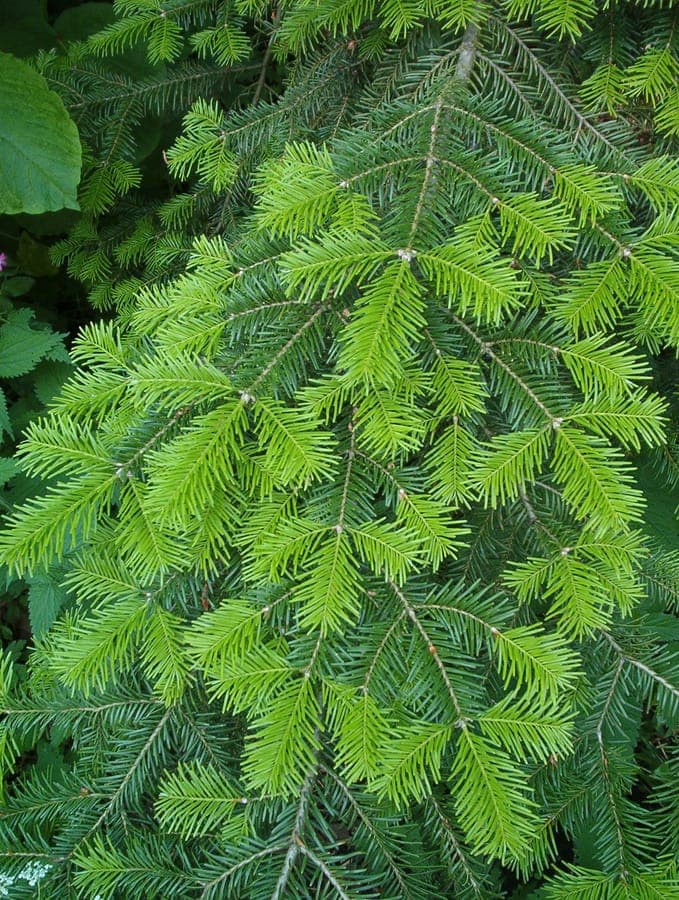
Wikimedia Commons / CC BY-SA 3.0, via Wikimedia Commons
Veitch's Silver Fir (Abies veitchii): complete guide
Abies veitchii
Want to see Veitch's Silver Fir (Abies veitchii): complete guide in your garden?
1 minute, no credit card
Overview
Veitch's Silver Fir, scientifically known as Abies veitchii, is a fast-growing Japanese conifer that has earned a devoted following among gardeners, landscapers, and Christmas tree growers across the temperate world. Named after the renowned Victorian nursery firm James Veitch and Sons, which introduced it to Western cultivation in the 1860s, this fir combines vigorous growth with remarkable ornamental quality. Its most celebrated feature is the vivid silver-white banding on the underside of every needle, which creates a shimmering, flashing effect when the wind moves through the crown.
With a mature height of 20 to 35 meters and a relatively narrow, conical form, Veitch's Silver Fir is more garden-friendly than many large fir species. Its exceptional cold hardiness, rated to USDA zone 3, means it thrives across a vast range of climates, from Scandinavia to the mountains of Japan, from the Scottish Highlands to the northern United States. In the United Kingdom, it has become one of the most popular non-traditional Christmas trees, prized for its symmetrical shape, soft needles, and excellent needle retention. Curious how this striking conifer could anchor your landscape? Explore design possibilities at gardenworld.app to see how Veitch's Silver Fir can transform your garden plan.
Appearance & growth characteristics
Abies veitchii grows into a tree of 20 to 35 meters tall with a regular, narrowly conical to columnar crown. One of its most appealing characteristics for gardeners is its growth rate: young trees can put on 40 to 60 cm of height per year under good conditions, making it one of the fastest-growing fir species. This means visible results in the garden within just a few years, a welcome contrast to many slow-growing conifers that take decades to reach an impressive size.
The needles are the star of the show. They are 1.5 to 2.5 cm long, glossy dark green on the upper surface, and adorned with two broad, brilliantly silver-white stomatal bands on the underside. When a breeze catches the branches, the needles lift and twist to reveal their silver undersides, creating a flickering, luminous effect that is unique to this species. This silver flash is so distinctive that Veitch's Silver Fir can be identified at a considerable distance, even in a mixed planting.
The cones are ornamental in their own right. They stand erect on the upper branches, are 5 to 7 cm long, and display a striking blue-purple color that transitions to brown as they mature. As with all true firs, the cone scales disintegrate at maturity while the central axis persists on the branch.
The bark is smooth and grey-brown on young trees, often studded with resin blisters. With age, it becomes more scaly and darker but retains a relatively smooth texture compared to many other conifers. The overall impression is one of neatness and refinement, a tree that looks well-kept without any human intervention.
Ideal location: sun, shade, or partial shade
Veitch's Silver Fir is more versatile regarding light conditions than most fir species. It performs well in full sun to partial shade, tolerating more direct sunlight than many of its relatives. In cooler climates, full sun is perfectly acceptable and even preferred, as it encourages denser growth and more vigorous needle production. In warmer regions, light afternoon shade helps prevent heat stress during peak summer months.
Choose a location sheltered from persistent, drying winds, particularly in open landscapes. While the tree is wind-firm once established, young specimens can suffer wind damage and desiccation in exposed positions. A spot on the lee side of a building, hedge, or existing tree line provides ideal conditions during the establishment years.
Thanks to its relatively narrow crown, Veitch's Silver Fir is better suited to medium-sized gardens than many other large fir species. Allow a clear space of 4 to 6 meters around the trunk. The tree grows rapidly upward but spreads less widely than species like Abies nordmanniana or Abies alba, making it a practical choice where vertical structure is desired without sacrificing too much horizontal space.
For the maximum visual impact of the silver needle flash, position the tree where the prevailing wind will catch the branches while you watch from a seating area, patio, or window. The silver effect is most dramatic on breezy days and in late afternoon light.
Soil & underground requirements
Veitch's Silver Fir is less demanding regarding soil than many fir species, but it performs best in slightly acidic to neutral, moisture-retentive but well-drained soil with a pH between 5.0 and 7.0. It tolerates a broader range of soil types than most Abies species, including lightly loamy soils, provided drainage is adequate.
When planting, amend the excavated soil with compost and coarse sand or perlite to improve structure and drainage. On heavy clay soils, take additional drainage measures such as placing a layer of gravel or pumice beneath the root ball. A completely waterlogged site is unsuitable and will almost certainly lead to root rot.
A mulch layer of 5 to 8 cm of pine needles, bark chips, or wood chips around the base helps keep the soil moist and acidic, suppresses weeds, and protects the shallow roots from temperature fluctuations. Keep mulch 10 cm away from the trunk to prevent fungal issues at the collar.
Avoid planting near concrete foundations, limestone features, or areas where lime regularly leaches into the soil. While Veitch's Silver Fir tolerates slightly alkaline conditions better than some firs, persistently high pH will cause nutrient lockout and yellowing foliage over time.
Watering: when and how much
As a fast-growing tree, Veitch's Silver Fir has a higher water demand than slow-growing fir species, particularly during its establishment years. The tree prefers consistently moist soil but does not tolerate waterlogging.
For newly planted trees, provide 15 to 20 liters of water per week during the first two growing seasons, split across two to three watering sessions. In hot weather above 25 degrees Celsius, increase the frequency. Always water slowly and deeply so that moisture reaches the full depth of the root zone rather than merely wetting the surface.
Established trees are more self-sufficient but still benefit from supplemental watering during extended dry spells, particularly in summer. The tree signals drought stress through drooping needle tips and a greying of the foliage. Respond promptly to these signs with a thorough, deep watering.
Rainwater is ideal due to its low calcium content. If you use tap water, check whether the hardness level is appropriate, since the tree prefers slightly acidic soil. In areas with hard water, occasional additions of composted pine needles or sulfur can help maintain a suitable pH.
Free design
Want to see Veitch's Silver Fir (Abies veitchii): complete guide in your garden? Make a free design now.
Pruning: when and how
Veitch's Silver Fir requires little to no pruning under normal garden conditions. The tree naturally develops a regular, conical crown with a strong central leader. Pruning is limited to removing dead, damaged, or diseased branches and occasionally correcting competing leaders.
Perform any necessary pruning in late winter, preferably from February through early March, before the new growing season begins. Use sharp, clean tools and sterilize blades with rubbing alcohol before and after use to prevent the spread of fungal infections.
If double leaders develop, which occasionally happens in young specimens, remove the weaker shoot and retain the stronger one as the new leader. Do this as early as possible to ensure good trunk and crown formation.
Never remove the central leader unless you deliberately want to limit height growth. Topping the tree leads to a broad, irregular crown that diminishes the tree's ornamental value. Do not cut into old wood without green needles, as conifers cannot regenerate from bare wood.
The tree has a natural self-pruning tendency: lower branches gradually die back when they receive insufficient light. You can cleanly remove these dead lower branches to create a clear trunk, which gives the tree a more mature, parkland appearance and allows underplanting.
Maintenance calendar
- January - February (Winter): Inspect for winter damage, particularly after heavy snowfall or ice storms. Remove broken or damaged branches. Check that the mulch layer around the base is intact and top up if needed.
- March (Early spring): Apply a fresh layer of mulch around the base. Feed with a slow-release conifer fertilizer. This is the best time for any necessary pruning.
- April - May (Spring): The tree breaks into fresh, light green growth. Watch for pests such as adelgids and woolly aphids. Begin regular watering as conditions dry out. Protect young specimens from late frost if needed.
- June - August (Summer): Critical period for watering, especially for young trees. Provide extra water when temperatures exceed 25 degrees Celsius. Monitor for signs of drought stress. Mulch helps stabilize soil temperature and retain moisture.
- September - October (Autumn): The purple cones ripen and disintegrate. Gradually reduce watering. Topdress with compost around the root zone. Test soil pH and adjust if necessary.
- November - December (Late autumn): Ensure the tree has adequate water before winter. Check for bark damage from wildlife on young trees. If growing as a Christmas tree, this is the harvest window for cut trees.
Winter hardiness & protection
Veitch's Silver Fir is among the hardiest of all fir species, tolerating temperatures as low as minus 40 degrees Celsius (USDA zones 3 through 7). This exceptional cold tolerance is a direct inheritance from its native habitat in the Japanese mountains, where it grows at elevations of 1500 to 2500 meters and routinely endures heavy snowfall, ice storms, and prolonged freezing temperatures.
Mature specimens require absolutely no winter protection in any European or North American climate. Even young trees are remarkably cold-hardy and survive severe winters without difficulty. The only vulnerability arises during late spring frosts in April or May, when the tender new shoots have just emerged. A light frost can damage the fresh growth, but the tree typically recovers quickly by producing secondary buds.
In the United Kingdom, where Veitch's Silver Fir has become a popular Christmas tree species, growers appreciate its tolerance of the damp, cool British climate. The tree actually prefers cool, moist conditions and can show stress during hot, dry summers, particularly in southern and eastern England. Adequate watering during warm spells is more important than any winter protection.
For Christmas tree production, Veitch's Silver Fir is valued for its symmetrical shape, soft non-prickly needles, pleasant scent, and excellent needle retention after cutting, often outperforming Nordmann fir in this regard. Trees are typically grown for 8 to 12 years before harvest.
Companion plants & garden design
Veitch's Silver Fir is an exceptionally versatile tree in garden design, thanks to its narrow, regular crown shape and the eye-catching silver needle effect. It works beautifully as a lawn specimen, an accent in a mixed tree group, or as a backdrop in a large mixed border.
The silver-white needle undersides create the most dramatic display when the tree is positioned so that the prevailing wind catches the branches. Place it where you can observe the silver flash from a sitting area, patio, or key window. The effect is most striking in late afternoon light when the low sun illuminates the silver bands.
For underplanting, shade-tolerant perennials and groundcovers work well. Combine with ferns (Dryopteris, Polystichum), hostas, astilbe, and bergenia for a lush, layered planting. Rhododendrons and azaleas are excellent partners that appreciate the same acidic soil conditions.
For a Japanese-inspired garden that honors the tree's origins, pair Veitch's Silver Fir with Japanese maple (Acer palmatum), ornamental cherry (Prunus serrulata), ornamental grasses (Miscanthus or Hakonechloa), and groundcovers such as Pachysandra terminalis. Moss plantings beneath the tree create an authentically Japanese atmosphere.
In larger gardens and parkland settings, Veitch's Silver Fir works well in group plantings with other conifers such as blue spruce (Picea pungens), Nordmann fir (Abies nordmanniana), and Japanese larch (Larix kaempferi) for a diverse and seasonally varied conifer panorama.
Closing thoughts
Veitch's Silver Fir is one of those rare conifers that combines fast growth, striking ornamental value, and extreme cold hardiness in a single tree. Whether you are looking for an elegant specimen, a lively addition to a conifer collection, a reliable structural tree that delivers quick results, or even a premium Christmas tree, Abies veitchii deserves a prominent place on your shortlist.
The flickering silver-white needles in the wind, the purple cones in autumn, and the rapid, upright growth make this a tree that earns admiration throughout the year. With the right site and some attention to moisture, it rewards you with decades of growing pleasure. Plan your ideal garden design featuring Veitch's Silver Fir at gardenworld.app, where you can discover how this magnificent Japanese fir can become the centrepiece of your outdoor space.
Want to see Veitch's Silver Fir (Abies veitchii): complete guide in your garden? Make a free design now.
Upload a photo, pick a style, and get a photorealistic design with plant list in under a minute.
No credit card required


Similar plants
Abies delavayi: complete guide
Abies delavayi
Delavayi fir is an elegant, medium-sized coniferous tree from the Pinaceae family with dark green needles. This Asian evergreen is perfect for alpine gardens and large landscapes.
Taiwan fir: complete guide
Abies kawakamii
Discover the magnificent Taiwan fir, a rare evergreen conifer from Taiwan's mountain regions. Learn growth requirements, care tips, and why this beautiful tree is perfect for collectors of unique garden specimens.
Farges fir: complete guide
Abies fargesii
Discover the majestic Farges fir, an impressive conifer from China's mountains with elegant foliage and columnar form. Ideal for large gardens.