
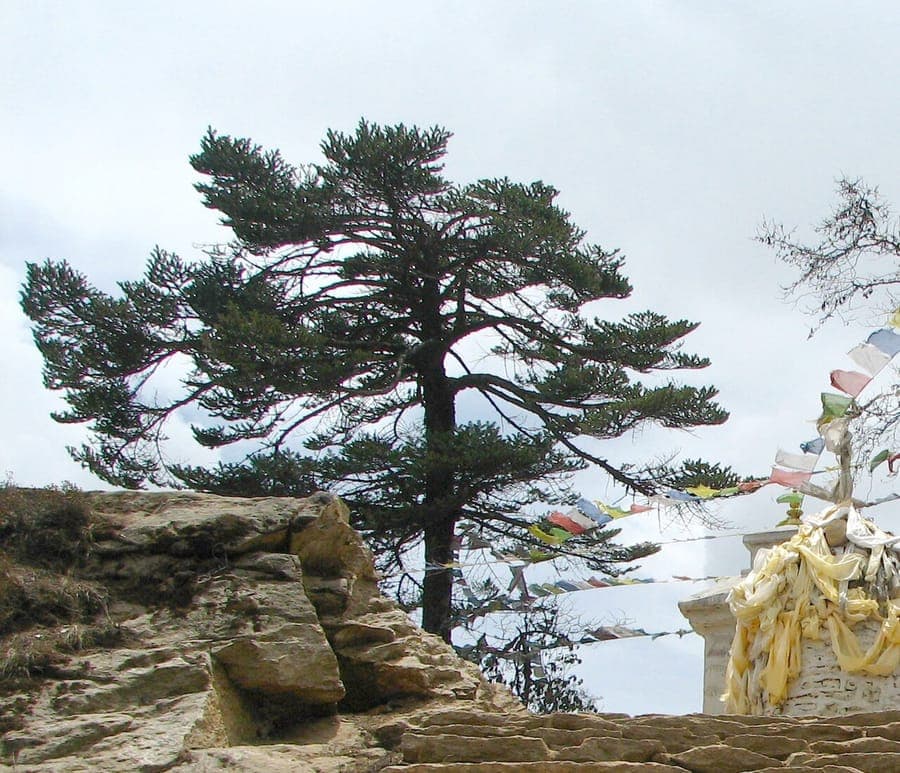
Mckaysavage on Flickr / CC BY 2.0, via Wikimedia Commons
Himalayan Fir: complete guide
Abies spectabilis
Want to see Himalayan Fir: complete guide in your garden?
1 minute, no credit card
Overview
The Himalayan Fir, Abies spectabilis, is one of the most visually striking conifers in cultivation. Native to the eastern Himalaya, where it clothes mountain slopes between 2,400 and 4,000 metres altitude in Nepal, Bhutan, and northeastern India, this tree commands attention with its broad conical crown, silver-backed needles, and enormous ornamental cones measuring 14 to 20 centimetres in length. In Nepal it is considered a sacred tree, woven into religious ceremonies and local forestry traditions for centuries.
In the wild, the Himalayan Fir reaches 30 to 50 metres tall, forming dense stands in the cloud forests where moisture hangs permanently in the air. In temperate gardens across Europe, North America, and parts of Australasia, it typically stays more modest but still develops into a substantial, head-turning specimen. Hardy to USDA zone 7, it suits a wide range of climates from the mild maritime regions of the British Isles to the temperate valleys of the Pacific Northwest and the cooler highlands of Japan. The species epithet 'spectabilis' says it all: this is a tree that demands to be noticed. Learn how it fits your garden at gardenworld.app.
Appearance & growth cycle
Abies spectabilis develops a broad, conical crown that becomes increasingly full and layered with age. Younger trees show a neat pyramidal outline, while mature specimens adopt a more open, tiered branching pattern that lets light penetrate to the interior. The trunk is straight and robust, clothed in dark grey to reddish-brown bark that becomes deeply furrowed and rough-textured on older trees. Young bark is smoother and dotted with resin blisters.
The needles are among the longest in the Abies genus at 3 to 6 centimetres, broad and flat, with a glossy dark green upper surface and two conspicuous silvery-white stomatal bands beneath. When a breeze stirs the canopy, the silver undersides flash dramatically, giving the whole tree a shimmering quality that few other conifers can match. The needles are densely packed in a semi-spiral arrangement along the twigs and persist for several years before dropping.
Flowering occurs from April to June depending on climate. Male flowers are small, purplish-red, and inconspicuous. Female cones develop into the tree's crowning glory: cylindrical structures 14 to 20 centimetres long and 6 to 8 centimetres wide, standing bolt upright on the uppermost branches like purple candles. They begin deep violet to purple and age to brown. As with all true firs, the cone scales detach at maturity while the central axis remains on the branch. The sight of dozens of large purple cones crowning the tree in late summer and autumn is genuinely spectacular and unlike anything else in the conifer world.
Ideal location: sun, shade or partial shade
In its Himalayan homeland, the species inhabits montane and subalpine forest zones characterised by cool temperatures, high humidity, and regular rainfall augmented by monsoon clouds. Translating these conditions to a garden setting means choosing a sheltered position in partial shade to full sun, with reliable moisture.
The Himalayan Fir handles full sun well provided the soil remains consistently moist. On dry, wind-exposed sites in full sun, needle scorch and desiccation become real risks. An east-facing aspect with morning sun and light afternoon shade is the sweet spot, or a position within the influence of taller deciduous trees that filter the strongest midday and afternoon light.
Given its potential size, this tree needs generous space. Expect a mature crown spread of 5 to 8 metres. Allow at least 5 metres clearance from buildings and boundaries. The Himalayan Fir is a tree for larger gardens, estates, and parkland settings rather than compact urban plots. Specialist tree nurseries are the most reliable source, as mainstream garden centres rarely stock this species.
Soil & root requirements
The Himalayan Fir demands high-quality soil. It thrives in deep, humus-rich, well-drained ground with a slightly acidic to neutral pH between 5.0 and 6.5. In the Himalaya, it grows on mountain slopes with loose, mineral-rich soil continuously fed by rainwater and snowmelt, indicating a need for consistent but not excessive moisture at the roots.
Before planting in temperate gardens, soil improvement is almost always necessary. Blend the excavated soil with a combination of leaf mould, well-rotted garden compost, and coarse peat-free ericaceous mix to improve structure and water-holding capacity. On heavy clay, a drainage layer of coarse gravel at the base of the planting hole is essential. Dig the hole at least one and a half times wider than the root ball and the same depth, ensuring the top of the root ball sits level with the surrounding soil surface.
The root system is sturdy and relatively deep-anchoring, combining a taproot with extensive lateral roots. This makes the Himalayan Fir more wind-stable than many other Abies species but also means the subsoil must be free-draining. Permanently high water tables within one metre of the surface are problematic and promote root rot.
Watering: when and how much
As a tree from a cloud forest ecosystem, the Himalayan Fir requires consistent moisture availability. In its natural range, monsoon rains deliver enormous quantities of water during the growing season, while winters are cooler but never bone-dry. Replicating this pattern in a garden means providing regular water, especially from April through September.
During the first five years after planting, water deeply once a week in dry weather, applying 25 to 40 litres per tree. The Himalayan Fir has higher moisture needs than many common garden conifers, so err on the generous side. Use drip irrigation or a watering ring to deliver water slowly and evenly to the root zone. Avoid overhead sprinklers: the dense needle arrangement traps moisture on the twigs and can promote fungal issues.
Mulching is particularly important for this species. Apply a 10 to 12 centimetre layer of bark chips, woodchip, or leaf mould around the base, keeping the material at least 15 centimetres away from the trunk to prevent bark rot. This thick mulch layer mimics the humus-rich forest floor of the Himalaya and helps keep roots cool and moist. Refresh the mulch annually in March or April. Even mature trees tolerate prolonged drought poorly and benefit from supplemental watering during hot summers.
Free design
Want to see Himalayan Fir: complete guide in your garden? Make a free design now.
Pruning: when and how
The Himalayan Fir has a superb natural growth form that needs minimal pruning intervention. Its broad, conical silhouette develops naturally when the tree receives adequate space and light. Confine pruning to the removal of dead, diseased, or damaged branches, preferably in late spring (May to June) when active growth promotes rapid wound healing.
Always use clean, sharp tools, disinfected between cuts with a solution of methylated spirits or similar. Make pruning cuts close to the branch collar and allow the tree to form its own callus tissue. Wound sealant is unnecessary for conifers and research suggests it can actually slow the healing process.
To steer growth or encourage a denser habit, you can trim the new season's candle growth by one-third to one-half in June. This promotes lateral branching and a fuller crown. Never remove the leader: cutting the central terminal shoot fundamentally disrupts the growth form and leads to an irregular crown that is difficult to correct.
On older specimens, lower branches may die back naturally as the canopy becomes denser and shades them out. This is a normal process. You can remove these dead branches for a tidier appearance, but it is not essential as they will eventually shed on their own.
Maintenance calendar
A seasonal maintenance schedule keeps the Himalayan Fir in peak condition throughout the year.
In early spring (March to April), refresh the mulch layer and apply a slow-release fertiliser for acid-loving plants. Check the tree for frost damage, paying particular attention to young shoots that may have been caught by late frosts. The Himalayan Fir breaks dormancy relatively early in the season, making it vulnerable to late spring frosts in April and May. Remove any damaged growth.
During summer (June to August), watering takes centre stage. Check soil moisture twice weekly in warm weather and water generously when the top layer feels dry. This is also the season to trim new growth if you want a more compact habit. Monitor for aphids and spider mites, which can appear during hot, dry conditions.
In autumn (September to November), enjoy the spectacular cones crowning the upper branches. Gradually reduce watering but ensure the tree enters winter well-hydrated. Clear fallen leaves from other trees that have lodged in the dense canopy, as trapped debris holds moisture and can cause needle fungus.
In winter (December to February), the tree needs little attention. Protect young specimens (up to about five years old) during hard frosts below -15°C with a hessian or fleece wrap around the crown. Mature trees are hardy enough for the typical temperate winter without additional protection.
Winter hardiness & protection
The Himalayan Fir is hardy to USDA zone 7, tolerating minimum temperatures between -18°C and -12°C. Across most of the British Isles, western Europe, the Pacific Northwest, and similar maritime climates, it winters reliably. However, extended periods of sharp frost combined with drying wind can cause some needle damage on young trees.
The greater risk comes not from winter cold itself but from late spring frost. The Himalayan Fir breaks bud relatively early, and the soft new growth is highly susceptible to night frosts in April and May. A late frost episode can destroy the entire flush of new growth, costing the tree a season's development. Plant the tree away from frost hollows, where cold air collects, and choose a site where cold air can drain freely downhill.
Summer drought protection matters just as much as winter protection. The tree is not adapted to prolonged heat above 35°C and can suffer significant needle damage during extended dry spells. Provide shade during extreme heatwaves and maintain generous watering. As summers grow warmer with climate change, site selection deserves extra thought: a somewhat sheltered position with a northeast orientation offers the best balance of light and protection.
Diseases & pests
In European and North American gardens, the Himalayan Fir is a relatively healthy tree, partly because many of its natural pests from the Himalaya are absent in temperate regions. Problems still arise, however, especially when growing conditions are suboptimal.
Root rot caused by Phytophthora is a serious threat on poorly drained soils. Symptoms include yellowing needles, limp new shoots, and an overall unhealthy appearance. Prevention through proper drainage is by far the best strategy. Avoid overwatering and ensure water never pools around the trunk base. If Phytophthora is suspected, laboratory analysis of soil samples can provide a definitive diagnosis.
Conifer aphids (Cinara) and adelgids may colonise shoots, particularly in spring. Check the undersides of twigs regularly for woolly white deposits or sticky honeydew. Light infestations often resolve naturally as ladybirds and lacewings move in. For more serious cases, a potassium soap spray provides effective control without harming beneficial insects.
Spider mites pose the greatest risk during warm, dry summers. They cause grey-green discolouration of needles and fine webbing on twigs. Regular misting of the canopy helps prevent infestations. The Himalayan Fir can also develop rust fungi, recognisable by orange spore clusters on the underside of needles. Remove affected branches promptly and improve air circulation around the tree by thinning nearby vegetation if necessary.
Companion planting & combinations
With its broad, majestic presence, the Himalayan Fir naturally becomes the focal point of any garden setting. It looks most impressive as a standalone specimen in a spacious landscape, where its imposing silhouette can be appreciated from all angles. Well-chosen companion plants enhance the composition further.
Beneath and around the tree, shade-loving perennials create a lush understory. Hostas in various leaf colours and forms, ferns such as Matteuccia struthiopteris (ostrich fern), and Astilbe varieties provide a layered ground planting. Rhododendrons are classic partners for Abies species, sharing the preference for acidic, humus-rich soil and delivering spectacular spring blooms that contrast beautifully with the dark needle foliage.
For an Asian-inspired theme that echoes the tree's Himalayan origins, combine it with Japanese maples (Acer palmatum), clumping bamboo (Fargesia), and Japanese anemones. Ornamental grasses such as Miscanthus sinensis or Molinia caerulea introduce airiness and seasonal movement at the canopy edge. Spring bulbs including Narcissus, Muscari, and Galanthus deliver early colour beneath the crown while light still filters freely through the branches.
Closing
The Himalayan Fir is a tree for gardeners who want something genuinely extraordinary. Its enormous purple cones, silver-flashing needles, and deep connection to the sacred forests of Nepal give it a presence and story that no ordinary garden conifer can match. In temperate climates, it demands thoughtful siting, quality soil preparation, and consistent moisture, but the payoff is a magnificent specimen that draws admiration for generations.
What sets Abies spectabilis apart from other garden conifers is the combination of scale, ornamental value, and cultural significance. The large purple cones standing like candles on the upper branches are an unparalleled garden spectacle. Whether you are creating a parkland landscape or seeking a standout specimen tree for a generous plot, the Himalayan Fir deserves serious consideration. Visit gardenworld.app for a tailored garden design that shows exactly how this remarkable tree shines in your outdoor space.
Want to see Himalayan Fir: complete guide in your garden? Make a free design now.
Upload a photo, pick a style, and get a photorealistic design with plant list in under a minute.
No credit card required


Similar plants
Abies delavayi: complete guide
Abies delavayi
Delavayi fir is an elegant, medium-sized coniferous tree from the Pinaceae family with dark green needles. This Asian evergreen is perfect for alpine gardens and large landscapes.
Taiwan fir: complete guide
Abies kawakamii
Discover the magnificent Taiwan fir, a rare evergreen conifer from Taiwan's mountain regions. Learn growth requirements, care tips, and why this beautiful tree is perfect for collectors of unique garden specimens.
Farges fir: complete guide
Abies fargesii
Discover the majestic Farges fir, an impressive conifer from China's mountains with elegant foliage and columnar form. Ideal for large gardens.