
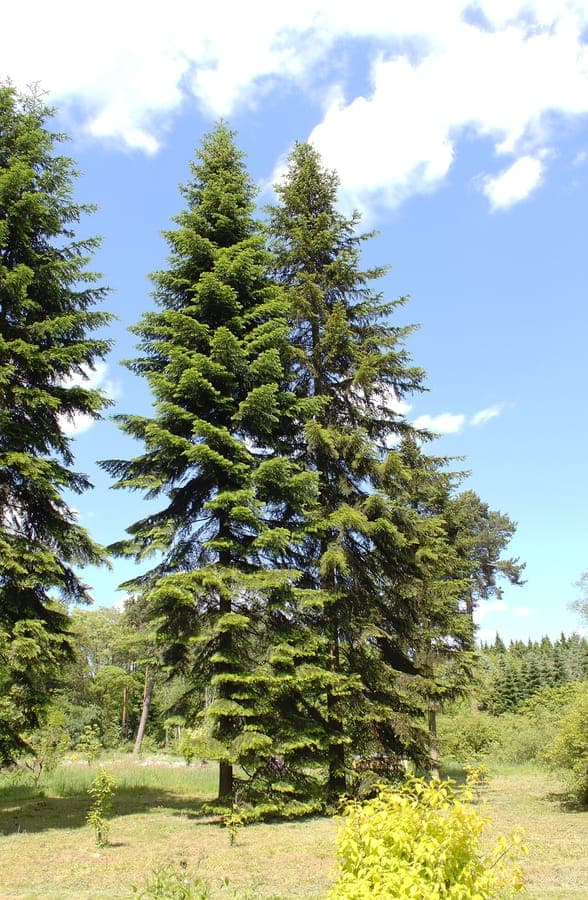
Crusier / CC BY-SA 3.0, via Wikimedia Commons
Siberian Fir: complete guide
Abies sibirica
Want to see Siberian Fir: complete guide in your garden?
1 minute, no credit card
Overview
The Siberian Fir, known botanically as Abies sibirica, ranks among the toughest conifers on the planet. Native to the vast taiga forests stretching from the Ural Mountains to Kamchatka, this tree withstands temperatures plummeting to -50°C without batting a needle. Its slender, spire-like form can reach 30 to 35 metres in its homeland, though cultivated specimens in temperate gardens typically stay more compact. The species belongs to the Pinaceae family and holds a centuries-long reputation as a source of aromatic essential oils, prized across Russia and Scandinavia.
What makes the Siberian Fir stand out in a global gardening context is its unmatched frost tolerance combined with genuine ornamental appeal. The soft, fragrant needles release a fresh balsamic scent when brushed, and the narrow silhouette fits into landscapes where wider-spreading conifers would overwhelm the space. Whether you garden in Canada, northern Europe, the highlands of Japan, or the cooler zones of New Zealand's South Island, this fir brings year-round structure and a touch of boreal wilderness. Explore how it fits your garden layout at gardenworld.app.
Appearance & growth cycle
Abies sibirica develops a distinctively narrow, conical crown that can extend nearly to ground level when grown in the open. The trunk is straight and relatively slender, covered in smooth grey bark that develops shallow fissures with age. Small resin blisters dot the bark surface, releasing aromatic balsam when punctured, a trait shared with the closely related Balsam Fir.
The needles measure 2 to 3.5 centimetres in length, soft to the touch and arranged in a flat, comb-like pattern along the twigs. They are glossy dark green above with two whitish wax bands on the underside. When crushed, they produce a strong, clean fragrance that has made this species commercially important for essential oil production. The oil, known as Siberian fir needle oil, contains high concentrations of bornyl acetate and is widely used in aromatherapy.
Flowering occurs in May to June. Male pollen cones are small and yellowish, tucked among the needles on the underside of branches. Female seed cones stand upright on upper branches, starting purplish-blue and maturing to brown. Mature cones are 5 to 9 centimetres long, cylindrical, and disintegrate on the tree when ripe, scattering winged seeds on the wind while leaving the central axis (rachis) attached to the branch. This upright-cone-that-falls-apart habit is the hallmark of all true firs and instantly distinguishes them from spruces and pines.
Ideal location: sun, shade or partial shade
In its native range, the Siberian Fir tolerates deep shade during its youth, gradually pushing through the canopy to reach full sun. In garden settings across temperate climates, partial shade to full sun works best. The tree handles morning sun well but appreciates some afternoon shade in regions where summer temperatures regularly exceed 28°C.
For gardeners in the United Kingdom, northern France, Germany, the Pacific Northwest of North America, or southern Canada, a position with at least four to six hours of direct sunlight delivers the best growth and densest crown. In warmer climates such as USDA zones 7 and above, a sheltered east-facing or north-facing aspect helps prevent heat stress.
Allow adequate space for the mature canopy. Although the Siberian Fir is among the narrower Abies species, it still requires a spread of 3 to 5 metres at maturity. Maintain a minimum distance of 4 metres from buildings, fences, and underground services. The shallow root system poses little threat to foundations but can lift paving if planted too close to hardscape elements.
Soil & root requirements
The Siberian Fir demands acidic to neutral soil with a pH between 4.5 and 6.5. It thrives in well-drained, humus-rich ground that retains moisture without becoming waterlogged. Heavy clay soils are problematic unless amended heavily with organic matter and provided with subsurface drainage.
Before planting, test your soil pH using a simple kit available from any garden centre. If the reading exceeds 6.5, incorporate generous amounts of composted pine bark, peat-free ericaceous compost, or sulphur chips to lower the pH. Dig the planting hole at least twice the width of the root ball and slightly shallower than its depth so the root flare sits at or just above ground level. On poorly drained sites, consider raising the planting area by 20 to 30 centimetres and incorporating coarse grit to improve water movement.
The root system is relatively shallow and spreading, occupying the upper 40 to 60 centimetres of soil. This means the tree can establish on sites with compacted subsoil or high water tables, provided the topsoil layer drains freely. However, the shallow rooting also makes the tree somewhat vulnerable to windthrow in exposed positions, so a sheltered site is preferred for mature specimens.
Watering: when and how much
Despite tolerating extreme cold, the Siberian Fir is sensitive to drought, particularly during establishment. The species evolved in a climate with consistent rainfall spread across the growing season, so supplemental watering is essential in drier temperate regions.
During the first three to five years after planting, water deeply once a week during dry spells, applying 20 to 30 litres per tree. Direct the water to the root zone using a soaker hose or watering ring rather than overhead sprinklers, which wet the foliage and encourage fungal issues. Early morning watering is ideal, allowing the soil surface to dry before evening.
Mulching is a critical companion to watering. Spread an 8 to 10 centimetre layer of pine bark, woodchip, or composted conifer needles around the base of the tree, keeping the mulch 10 centimetres away from the trunk to prevent bark rot. This layer conserves soil moisture, moderates root zone temperature, and suppresses competing weeds. Refresh the mulch annually in early spring. Once established, mature Siberian Firs cope with moderate dry spells but still benefit from deep watering during prolonged heatwaves.
Free design
Want to see Siberian Fir: complete guide in your garden? Make a free design now.
Pruning: when and how
The Siberian Fir naturally maintains a tidy, symmetrical shape and rarely needs corrective pruning. Unnecessary cutting disrupts its characteristic spire form and can create entry points for disease. Limit pruning to the removal of dead, damaged, or diseased wood, ideally in late spring when active growth promotes rapid wound closure.
Use sharp, clean tools: bypass secateurs for small branches, a pruning saw for larger limbs. Make cuts just outside the branch collar, the slightly swollen ring where the branch meets the trunk or parent branch. Do not apply wound sealant, as research consistently shows it hinders rather than helps healing in conifers.
If you wish to encourage denser growth or limit the tree's height gain in a particular year, pinch or shear the new candle growth by half in June. This technique stimulates lateral bud development without altering the overall conical outline. Never remove the leader (central top shoot) unless it is damaged. Loss of the leader results in multiple competing tops and an irregular crown that is difficult to correct.
Maintenance calendar
A seasonal routine keeps the Siberian Fir healthy and vigorous throughout the year.
In early spring (March to April), refresh the mulch layer and apply a slow-release fertiliser formulated for acid-loving plants or conifers. Inspect the tree for winter damage and remove any broken or dead branches. Check for signs of bark beetle activity: small round holes and fine sawdust on the trunk.
During summer (June to August), focus on watering. Monitor soil moisture weekly and irrigate whenever the top 5 centimetres feel dry. If desired, trim new growth in June for a denser habit. Watch for spider mite symptoms such as stippled, grey-green needles and fine webbing, especially during hot, dry weather.
In autumn (September to November), reduce watering gradually but ensure the tree enters winter well-hydrated. Clear fallen leaves from other trees that have lodged in the canopy, as trapped debris holds moisture and can cause needle fungus. No fertiliser is needed in autumn.
In winter (December to February), the Siberian Fir is fully in its comfort zone. After heavy snowfall, gently shake or brush snow from branches to prevent breakage, particularly on younger trees with more flexible wood.
Winter hardiness & protection
With a hardiness rating extending to USDA zone 1, the Siberian Fir is built for cold that would destroy most garden plants. Temperatures of -50°C and below are routine in its native range. In practically every temperate garden zone worldwide, winter cold is a non-issue for this species.
The real vulnerability lies at the other end of the thermometer. Prolonged summer heat above 30°C causes moisture stress, needle scorch, and reduced vigour. In warmer climates, this manifests as browning needle tips, premature needle drop, and increased susceptibility to pests such as spider mites and aphids. Air pollution compounds the problem: the Siberian Fir performs noticeably better in rural areas with clean air than in urban environments near heavy traffic.
Protective measures against heat include deep mulching, supplemental irrigation during heatwaves, and temporary shade cloth for young trees when temperatures exceed 32°C for multiple consecutive days. Siting the tree where it receives afternoon shade from a building or larger tree is the simplest long-term strategy.
Diseases & pests
The Siberian Fir is generally a healthy species when grown in suitable conditions. Most problems arise from environmental stress rather than inherent susceptibility.
Root rot caused by Armillaria (honey fungus) is the most serious threat, typically striking trees growing in poorly drained or waterlogged soil. Symptoms include yellowing needles, branch dieback, and white fungal fans beneath the bark near the soil line. Prevention through proper drainage is far more effective than treatment. Remove severely infected trees promptly to prevent spread.
Conifer aphids (Cinara species) may colonise young shoots in spring, producing honeydew that attracts sooty mould. A strong water jet dislodges light infestations. For heavier attacks, insecticidal soap or fatty acid sprays offer effective biological control without harming beneficial insects. Spider mites thrive in hot, dry conditions, causing needle stippling and fine webbing. Regular misting of the canopy during dry weather helps deter them. Bark beetles can target stressed trees; maintaining tree health through proper watering and nutrition is the best defence.
Companion planting & combinations
The Siberian Fir makes a striking specimen tree when planted solo in a larger garden, its narrow spire providing a strong vertical accent. Thoughtful companion planting enhances the overall composition.
Shade-tolerant ground covers thrive beneath the canopy. Pachysandra terminalis, Vinca minor, and woodland ferns such as Dryopteris or Polystichum create a lush green carpet. Rhododendrons and azaleas are natural partners, sharing the preference for acidic soil and providing vivid spring colour against the dark evergreen backdrop.
For a naturalistic woodland feel, pair the fir with other acid-loving shrubs such as Pieris japonica, Gaultheria, or Vaccinium (blueberry). Ornamental grasses like Hakonechloa macra or Carex pendula add textural contrast at the canopy edge. Spring bulbs including Galanthus (snowdrop), Eranthis (winter aconite), and Cyclamen coum thrive in the dappled shade beneath the branches and deliver early colour when the rest of the garden is still waking up.
Closing
The Siberian Fir is a tree for gardeners who value resilience, elegance, and year-round structure. Its unrivalled cold hardiness makes it virtually indestructible in winter, though the warmer months demand careful attention to watering and heat management in temperate and maritime climates. With the right site, well-prepared acidic soil, and consistent moisture during dry spells, this boreal conifer rewards you with decades of graceful, aromatic greenery.
The fragrant needles, the slender silhouette, and the sheer toughness of the Siberian Fir set it apart from more common garden conifers. Whether you are designing a woodland border, establishing a windbreak, or simply want a statement tree that laughs off frost, Abies sibirica deserves a place on your shortlist. Visit gardenworld.app for tailored garden design advice that shows exactly where and how this remarkable tree fits your outdoor space.
Want to see Siberian Fir: complete guide in your garden? Make a free design now.
Upload a photo, pick a style, and get a photorealistic design with plant list in under a minute.
No credit card required


Similar plants
Abies delavayi: complete guide
Abies delavayi
Delavayi fir is an elegant, medium-sized coniferous tree from the Pinaceae family with dark green needles. This Asian evergreen is perfect for alpine gardens and large landscapes.
Taiwan fir: complete guide
Abies kawakamii
Discover the magnificent Taiwan fir, a rare evergreen conifer from Taiwan's mountain regions. Learn growth requirements, care tips, and why this beautiful tree is perfect for collectors of unique garden specimens.
Farges fir: complete guide
Abies fargesii
Discover the majestic Farges fir, an impressive conifer from China's mountains with elegant foliage and columnar form. Ideal for large gardens.