
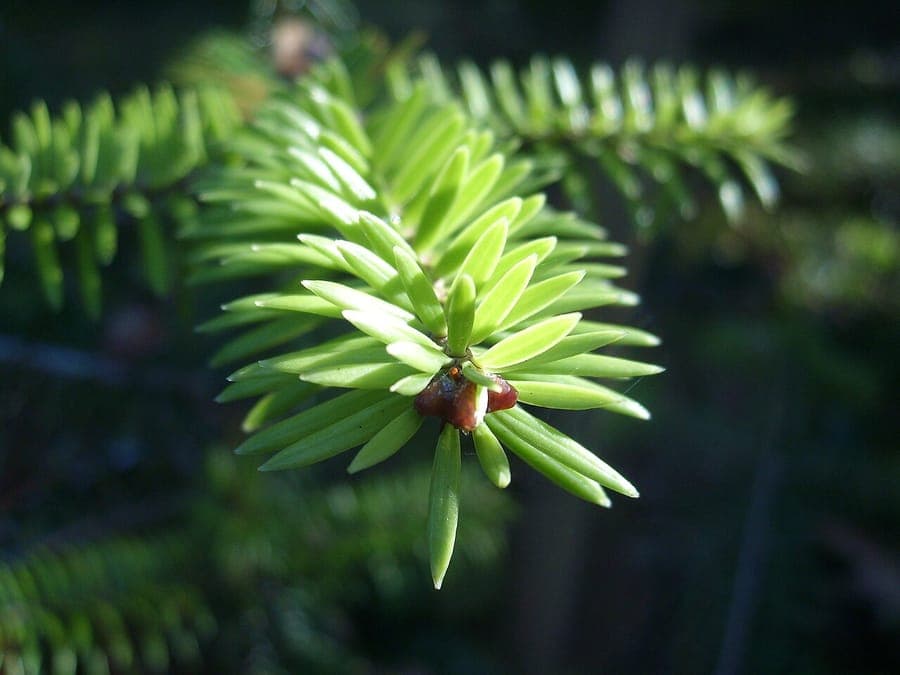
Tilo Podner / CC BY-SA 3.0, via Wikimedia Commons
Min Fir (Abies recurvata): complete guide to this rare Chinese conifer
Abies recurvata
Want to see Min Fir (Abies recurvata): complete guide to this rare Chinese conifer in your garden?
1 minute, no credit card
Overview
The Min Fir, botanically known as Abies recurvata, is one of the most intriguing and least known fir species that a dedicated conifer enthusiast can pursue. This tree is endemic to the mountain regions of China's Sichuan and Gansu provinces, where it grows at elevations between 2,000 and 3,500 metres in cool, humid montane forests. Reaching a mature height of 15 to 25 metres, it is more modest in stature than many of its relatives, but what truly sets it apart are the distinctively curved needles that earned it the scientific epithet recurvata, meaning 'recurved' or 'bent backward'.
In Western cultivation, the Min Fir remains exceptionally rare. Only a handful of botanical gardens and specialist collectors across Europe, North America and Australasia grow this species. That very scarcity makes it profoundly attractive to gardeners seeking something genuinely unique and conversation-worthy. Visit gardenworld.app to create a garden design that accommodates the specific needs of rare tree species like the Min Fir.
Appearance and growth characteristics
Abies recurvata forms a regular, narrow to broadly conical crown depending on growing conditions. In its native habitat it reaches heights of 15 to 25 metres, but in European and North American gardens it typically stays smaller, around 10 to 18 metres. The crown is relatively compact and dense, with regularly spaced branch whorls that give the tree a tidy, graceful appearance.
The most striking feature is undoubtedly the needles. They measure 1.5 to 3 cm in length, are firm, dark green on the upper surface with two narrow silvery stomatal bands on the underside. The needles are distinctly recurved, sometimes almost sickle-shaped, giving the tree a unique texture that immediately distinguishes it from other fir species. They feel firm but not prickly to the touch, with a subtle resinous fragrance when crushed.
The bark on young trees is smooth and grey-brown. With age it becomes rougher and develops shallow furrows. The cones are cylindrical to oblong, 5 to 8 cm long, and stand upright on the upper branches. They are initially purplish to blue-green and turn brown at maturity. As with all true firs (Abies), the cones disintegrate on the tree when ripe, leaving only the central axis behind.
Growth rate is moderate, averaging 15 to 30 cm per year under favourable conditions. The spread of a mature specimen typically measures 4 to 7 metres. Lifespan in the wild is estimated at several hundred years, though cultivated specimens are too young to confirm this definitively.
Ideal site and soil requirements
The Min Fir performs best in a cool, sheltered position with morning sun and afternoon shade, or in lightly filtered light. In its natural habitat it grows in montane forests where temperatures are moderate and humidity is high. Replicating these conditions as closely as possible in your garden is the key to success with this species.
Avoid fully south-facing, exposed positions where summer sun bakes the ground and temperatures climb. A site on the north or northeast side of a building, or sheltered by taller trees, is often ideal. Protection from desiccating winds is equally important, as the fine needles lose moisture rapidly in dry, windy conditions.
The Min Fir prefers moist, well-drained, humus-rich, slightly acidic to neutral soil. A pH between 5.0 and 6.5 gives the best results. The tree does not tolerate compacted or waterlogged ground. In USDA zones 5 to 7 the tree grows comfortably. Gardeners in warmer zones (8 and above) face greater challenges, as prolonged summer heat above 30 degrees Celsius causes stress. Supplementary watering and afternoon shade become non-negotiable in those regions.
Planting step by step
The best planting window is early spring (March to April), giving the tree an entire growing season to establish before winter arrives. Autumn planting (October) is also possible but less ideal for this sensitive species. Since the Min Fir is rarely available at mainstream garden centres, you will likely need to source it from specialist conifer nurseries, botanical garden plant sales, or international rare plant dealers.
Dig a planting hole twice as wide and one and a half times as deep as the root ball. Mix the excavated soil with mature leaf compost, peat-free potting mix and a handful of bone meal. The Min Fir sets high demands on soil structure: aim for a loose, crumbly medium that drains freely yet retains moisture.
Position the tree at the same depth it was growing in the container, with the top of the root ball level with the surrounding ground. Backfill with the amended soil, firm gently and water thoroughly. Apply a mulch layer of 5 to 8 cm of leaf compost or fine bark, maintaining a 10 cm gap from the trunk.
Water faithfully during the first three years. This species is far less drought-tolerant than many other firs. Ten to fifteen litres per week is a minimum during dry spells, increasing in extreme heat. A drip irrigation system is an excellent investment for this tree.
Watering and feeding
The Min Fir requires consistent moisture to remain healthy. Unlike hardier firs such as Abies concolor or Abies nordmanniana, this species tolerates virtually no prolonged drought. Keep the soil evenly moist throughout the year, but never waterlogged. A drip irrigation system can be invaluable, particularly during summer months in regions with warm, dry summers.
Feed in early spring with an organic conifer fertiliser at a low dose. The Min Fir is not a heavy feeder and excessive fertilisation can cause root damage. A light application in March and a repeat in June are sufficient. Use a slow-release organic formulation by preference. Avoid fertilisers with a high lime content, as these raise soil pH and stress the tree.
Maintain the mulch layer year-round. Leaf compost, shredded bark or pine needle mulch are excellent options. The mulch keeps the soil cool and moist, suppresses weeds and gradually feeds the soil ecosystem. In dry climates, consider adding a layer of gravel beneath the organic mulch to further reduce evaporation.
Free design
Want to see Min Fir (Abies recurvata): complete guide to this rare Chinese conifer in your garden? Make a free design now.
Pruning and maintenance
The Min Fir requires virtually no pruning. Its natural growth form is compact and regular, and unnecessary cutting can weaken the tree. Limit intervention to the removal of dead or damaged wood during late winter (February to March).
As the tree establishes, you will notice a fairly slow but steady rate of growth. No dwarf forms or cultivars of the Min Fir are known to exist, so you work with the species as nature shaped it. That is precisely the charm: the unspoiled, natural character that makes this tree so appealing to collectors.
Monitor regularly for signs of stress such as needle yellowing, premature needle drop or resin bleeding from the trunk. These symptoms often indicate overly dry conditions, soil compaction or a pH that has drifted too high. Address the underlying cause promptly, as this species has limited reserves to recover from prolonged stress.
Pests and diseases
The Min Fir is relatively healthy in its native habitat, but in Western gardens it can be more vulnerable due to different climate and soil conditions. The green spruce aphid (Elatobium abietinum) is the most common pest and may strike after mild winters. Check the undersides of needles in February and March and treat infestations early with a biological control agent.
Root rot from Phytophthora is a real risk on poorly drained soils. Always ensure permeable ground and avoid compaction around the root zone. Rust fungi (Melampsorella caryophyllacearum) can occasionally cause witches' brooms on firs. Remove affected branches entirely and destroy the prunings.
The tree may also be susceptible to spider mites during hot, dry summers. A regular fine water mist over the canopy in the evening hours helps raise humidity around the tree and discourage mite activity. In all cases, maintaining proper growing conditions, adequate moisture, cool roots and good air circulation, remains the most effective pest and disease management strategy.
Winter hardiness and climate resilience
The Min Fir is hardy in USDA zones 5 to 7, tolerating temperatures down to approximately minus 25 to minus 30 degrees Celsius. In temperate maritime climates it winters without difficulty. The greater risk comes from warm, dry summers that are becoming increasingly common across many temperate regions. The tree originates from a cool, humid mountain climate and struggles with prolonged heat above 30 degrees Celsius.
Shelter, afternoon shade and a moist, mulched soil are the keys to success in a warming climate. During extremely hot summers, it may be necessary to provide supplementary misting and, for young specimens, temporary shade cloth.
Late spring frosts can damage tender new shoots. Plant the tree in a sheltered spot where cold air can drain away rather than pooling. North-facing slopes or positions protected by buildings or evergreen hedges work well. In continental climates across Central Europe and interior North America, selecting a microclimate with consistent snow cover can also help protect the roots during winter.
Propagation and availability
The Min Fir is one of the rarest fir species in Western nursery production. Propagation is primarily by seed, but seed collection is challenging because the cones disintegrate on the tree. Seed must be sown fresh and requires a cold stratification period of 4 to 6 weeks to germinate. Germination rates are moderate and seedlings grow slowly, often taking several years to reach a size suitable for planting out.
Vegetative propagation by grafting onto rootstocks of Abies alba or Abies nordmanniana is an alternative employed by specialist nurseries. Grafted specimens often grow somewhat faster than seedlings and are guaranteed to retain the species characteristics true to type.
To obtain a Min Fir, contact specialist conifer nurseries, botanical gardens with exchange programmes, or international rare plant dealers. Expect higher prices for larger specimens due to the rarity and slow growth. Seed exchanges through organisations such as the International Conifer Society or Alpine Garden Society occasionally offer Abies recurvata seed.
Comparison with related species and closing thoughts
The Min Fir is sometimes confused with other Chinese fir species. Compared to Abies fargesii (Farges Fir), the Min Fir has more distinctly curved needles and a more compact growth habit. Abies forrestii (Forrest Fir) has longer needles and a wilder, more irregular habit. The most closely related species is probably Abies squamata (Flaky Fir), also from Sichuan, which is distinguished by its striking flaky, purplish bark.
For gardeners seeking a more accessible alternative with a similar feel, Abies koreana (Korean Fir) is worth considering. It is widely available, compact and produces decorative cones even at a young age. However, it lacks the exotic character and unique needle form that make the Min Fir so special. Abies veitchii (Veitch Fir) from Japan offers another relatively compact option with silvery needle undersides, though again without the distinctive recurved needles.
Summary and closing thoughts
The Min Fir is not a tree for every garden or every gardener. It is a species for the enthusiast, the collector, the plant hunter at heart. Its rarity, the characteristically curved needles and its mysterious origins in the mountains of Sichuan make it a conversation piece and a source of pride for anyone who manages to grow it successfully.
Give it a cool, sheltered position, a moist and humus-rich soil, and protect it from extreme heat. In return, this remarkable fir rewards you with an elegant, compact silhouette that becomes more interesting with each passing year. Visit gardenworld.app to create a garden design perfectly suited to rare and distinctive tree species like the Min Fir.
Want to see Min Fir (Abies recurvata): complete guide to this rare Chinese conifer in your garden? Make a free design now.
Upload a photo, pick a style, and get a photorealistic design with plant list in under a minute.
No credit card required


Similar plants
Abies delavayi: complete guide
Abies delavayi
Delavayi fir is an elegant, medium-sized coniferous tree from the Pinaceae family with dark green needles. This Asian evergreen is perfect for alpine gardens and large landscapes.
Taiwan fir: complete guide
Abies kawakamii
Discover the magnificent Taiwan fir, a rare evergreen conifer from Taiwan's mountain regions. Learn growth requirements, care tips, and why this beautiful tree is perfect for collectors of unique garden specimens.
Farges fir: complete guide
Abies fargesii
Discover the majestic Farges fir, an impressive conifer from China's mountains with elegant foliage and columnar form. Ideal for large gardens.