
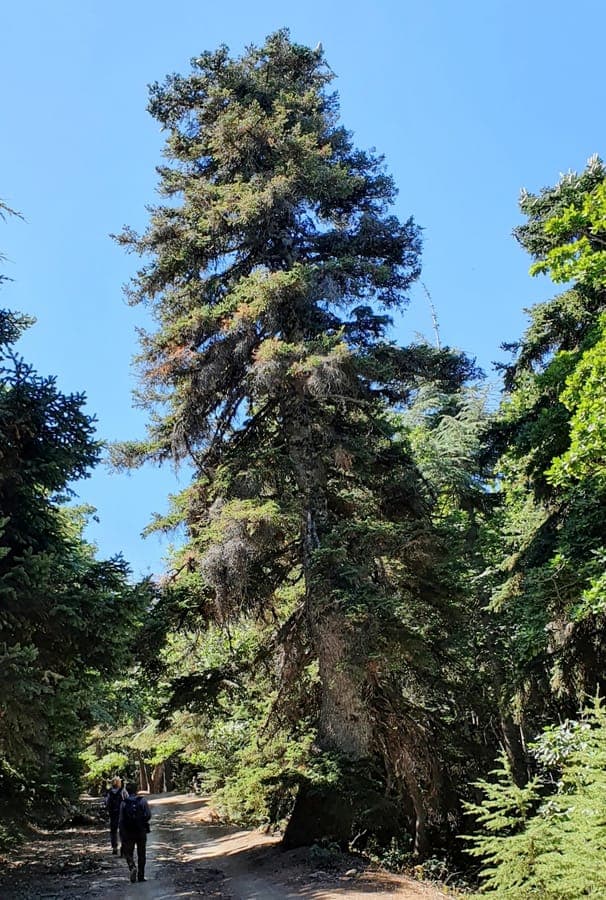
mehdichetibi / CC BY 4.0, via Wikimedia Commons
Algerian Fir (Abies numidica): complete guide
Abies numidica
Want to see Algerian Fir (Abies numidica): complete guide in your garden?
1 minute, no credit card
Overview
The Algerian Fir, botanically Abies numidica, is one of the most remarkable and rare conifers you can grow in a temperate garden. This fir is an endemic species from the Babor Mountains in northeastern Algeria, where it occurs naturally across just a few square kilometres of mountain forest at elevations between 1,800 and 2,000 metres. It ranks among the world's most endangered tree species, with only a few thousand wild specimens estimated to remain.
What makes the Algerian Fir so compelling for gardeners across the globe is its outstanding drought tolerance, a trait that is exceptionally rare among Abies species. While most firs struggle through hot, dry summers, Abies numidica actually handles them well, a significant advantage as climate patterns shift toward warmer and drier conditions in many regions. The tree reaches 20 to 35 metres in the wild and typically grows to 15 to 20 metres in cultivation, with a dense, conical to columnar crown. Explore garden designs that showcase this extraordinary tree at gardenworld.app.
Appearance & characteristics
The Algerian Fir distinguishes itself from other Abies species through its exceptionally dense needle arrangement. The needles radiate around the twig in a brush-like pattern, giving the tree a fuller, more compact appearance than most other firs. They are 1.5 to 2.5 centimetres long, stiff, dark green on the upper surface, and bear two silvery bands on the underside. The needles are packed so closely together that the twigs are almost entirely concealed, creating a highly decorative effect that catches the eye in any garden setting.
The bark is smooth and grey-brown on young trees, developing a dark, irregularly fissured texture on mature specimens. Cones are cylindrical, 15 to 20 centimetres long, and stand upright on the uppermost branches, characteristic of the Abies genus. Immature cones are greenish, ripening to brown. Male flowers appear in spring as small yellow clusters on the undersides of branches. The tree has a compact, conical crown that broadens slightly with age but never develops the wide-spreading silhouette of some other conifers. Growth rate averages 20 to 25 centimetres per year, making it a steady grower that maintains a manageable size for decades.
Ideal location
The Algerian Fir thrives in a sunny to partially shaded position. Unlike many other firs, it handles full sun exceptionally well, even combined with heat. This stems from its origins in the Mediterranean climate of the Atlas Mountains, where summers are hot and dry. Partial shade is also well tolerated, especially when the tree is young. A position sheltered from strong northerly winds is advisable, not so much for cold protection but to allow the tree to develop its symmetrical crown to best effect.
Allow at least 5 to 7 metres of space on all sides to accommodate the mature spread. Thanks to its more compact habit compared to species such as the Nordmann Fir, the Algerian Fir is better suited to medium-sized gardens. A solitary position on a lawn, as a focal point in a border, or as part of a collection of unusual conifers all make excellent choices. The tree also makes a striking landscape planting in parks and arboreta, where its rarity adds botanical interest. It performs well across USDA zones 6 through 8, making it suitable for gardens from the British Isles and the Pacific Northwest of North America through to the Mediterranean basin, parts of Australia, New Zealand and temperate South America.
Soil & ground requirements
One of the strengths of Abies numidica is its tolerance for various soil types. In the wild it grows on calcareous mountain soils, which means that, unlike many Abies species, it copes well with a neutral to slightly alkaline pH (6.0 to 7.5). It even tolerates mildly limey ground, a characteristic that makes it particularly suitable for gardens on clay or loess soils that are naturally calcareous.
The most critical requirement is good drainage. Standing water around the roots is fatal to this tree regardless of soil composition. In heavy clay, it is wise to dig a generous planting hole and amend it with coarse sand, gravel and compost to improve permeability. Sandy soil is fine provided sufficient organic matter is incorporated to ensure some moisture retention. A soil analysis before planting is recommended to check that pH and nutrient levels are appropriate. Most well-stocked garden centres carry conifer-specific composts and soil amendments that can help you create optimal growing conditions.
Watering & moisture management
The drought tolerance of the Algerian Fir is one of its most valuable attributes. Once established, this tree can withstand considerably longer dry periods than most other firs. That said, young trees in their first two to three years after planting do need regular watering to build a strong root system. During this establishment period, provide 10 to 20 litres of water weekly in dry weather, applied slowly and deeply.
After the establishment phase, water requirements decrease substantially. Mature specimens survive comfortably on natural rainfall alone in most temperate climates, even during the dry summer months that have become increasingly common across Europe, parts of North America and Australasia. Only during extreme heat combined with prolonged drought of more than four to six weeks without rain is supplementary watering advisable. Mulching with a 6 to 8 centimetre layer of bark chips or wood mulch helps regulate soil moisture and suppresses weeds. Always maintain a 10-centimetre gap around the trunk to prevent fungal issues. Critically, avoid overwatering this tree, as waterlogging is a far greater threat than drought. This characteristic makes it an outstanding choice for water-wise gardens and xeriscaping projects.
Free design
Want to see Algerian Fir (Abies numidica): complete guide in your garden? Make a free design now.
Pruning & shaping
The Algerian Fir naturally develops a dense, regular conical form and typically requires minimal pruning. The only routine work is removing dead, damaged or diseased branches, preferably in late winter before new growth begins. Thanks to its compact growth habit, an irregular crown that needs correction rarely develops.
If a double leader forms because the central shoot has been damaged by wind or animal browsing, remove one of the two competing shoots promptly and train the remaining leader vertically with a bamboo cane. Avoid cutting into old wood without green needles, as the Algerian Fir, like other conifers, will not regenerate from bare wood. The tree is also amenable to light summer pruning of soft new shoots if you are aiming for an extra-compact form. Always use clean, sharp tools and disinfect them between trees to prevent the spread of disease. Given the rarity of this species, maintaining each specimen in peak health through careful, minimal pruning is especially worthwhile.
Maintenance calendar
- January - February: Check for snow breakage. Due to its dense needle arrangement, the tree can trap more snow than open conifers. Gently remove heavy accumulations. Inspect for winter damage to bark and branches.
- March: Good planting month for container-grown specimens. Carry out soil improvement if needed. Begin light feeding with an organic conifer fertiliser.
- April - May: Fresh growth appears as light green tips. Monitor for adelgids and gall midges. Provide supplementary water to young trees if rain is lacking.
- June - July: The tree handles warmth well, but check young specimens for moisture stress. Shorten new shoots for a more compact shape if desired.
- August - September: Water during extreme drought, especially young trees. Inspect for bark beetle activity. Begin applying an autumn mulch layer.
- October: Cones ripen and disintegrate. Good month for autumn planting. Top-dress the root zone with compost.
- November - December: Ensure adequate soil moisture before winter sets in. Protect young trees in their first winter with a windbreak or horticultural fleece if necessary.
Winter hardiness & protection
The Algerian Fir is hardy to approximately -20°C to -23°C, corresponding to USDA zones 6 through 8. Across most of Western Europe, the temperate parts of North America, coastal Australia, New Zealand, and similar climates, mature specimens require no winter protection. In colder continental regions or during exceptionally severe winters, additional protection for young trees may be prudent.
Young plantings benefit from a 10 to 15 centimetre mulch layer around the base during their first two to three winters. This stabilises soil temperature and protects roots from sudden temperature fluctuations. A windbreak of burlap or horticultural fleece can be useful in exposed, windy locations. Watch out for late spring frosts: the new growth that appears in April is vulnerable to damage at temperatures below -4°C. Cover young shoots temporarily if overnight frost is forecast. Once well established, the Algerian Fir is surprisingly robust and handles winters in most temperate zones without difficulty.
Companion plants & combinations
The Algerian Fir's compact, dense crown provides excellent opportunities for garden combinations. Its tolerance for drier conditions makes it an ideal partner for other drought-resistant plants. At the base of the tree, Mediterranean herbs such as lavender (Lavandula angustifolia), rosemary and thyme perform brilliantly on the sunny side, provided they receive sufficient light.
For the partially shaded side of the crown, ground covers such as Geranium macrorrhizum, bergenia or Epimedium make excellent choices. These plants tolerate both some drought and shade. In a collector's garden, Abies numidica pairs beautifully with other rare conifers such as Cedrus atlantica (another North African species), Pinus nigra or Cupressus sempervirens for a Mediterranean-inspired planting scheme. For spring colour contrast, early-flowering bulbs such as crocuses, snowdrops and botanical tulips make a stunning addition between the conifers. The tree's dark, dense foliage serves as a perfect backdrop for silver-leaved plants like Stachys byzantina and ornamental grasses such as Festuca glauca, creating a planting that looks cohesive across all four seasons.
Closing thoughts
The Algerian Fir is a jewel among conifers: rare, resilient and surprisingly easy to care for. Its drought tolerance makes it superbly suited to the future of our changing climate, while its dense, decorative crown provides a green beacon in the garden throughout the year. By planting an Abies numidica, you also contribute to the survival of an endangered species beyond its ever-shrinking natural habitat in the Babor Mountains. Whether you are an experienced collector looking to expand your conifer collection or a gardener seeking a dependable, distinctive tree that stands apart from the ordinary, the Algerian Fir deserves a place on your wish list. Discover how this extraordinary tree fits into your garden plan at gardenworld.app.
Want to see Algerian Fir (Abies numidica): complete guide in your garden? Make a free design now.
Upload a photo, pick a style, and get a photorealistic design with plant list in under a minute.
No credit card required


Similar plants
Abies delavayi: complete guide
Abies delavayi
Delavayi fir is an elegant, medium-sized coniferous tree from the Pinaceae family with dark green needles. This Asian evergreen is perfect for alpine gardens and large landscapes.
Taiwan fir: complete guide
Abies kawakamii
Discover the magnificent Taiwan fir, a rare evergreen conifer from Taiwan's mountain regions. Learn growth requirements, care tips, and why this beautiful tree is perfect for collectors of unique garden specimens.
Farges fir: complete guide
Abies fargesii
Discover the majestic Farges fir, an impressive conifer from China's mountains with elegant foliage and columnar form. Ideal for large gardens.