
Bruce Marlin / CC BY-SA 3.0, via Wikimedia Commons
Manchurian fir (Abies nephrolepis): complete guide
Abies nephrolepis
Want to see Manchurian fir (Abies nephrolepis): complete guide in your garden?
1 minute, no credit card
The Manchurian fir, scientifically Abies nephrolepis, is an unconventional but rewarding choice for gardens in cooler climates. Native to the Far East - Siberia, Manchuria, Korea, and the Amur region - this species thrives in alpine and subalpine zones where winters are harsh and summers brief. Its robust constitution, adapted to extreme conditions, makes it valuable in temperate regions too.
Overview
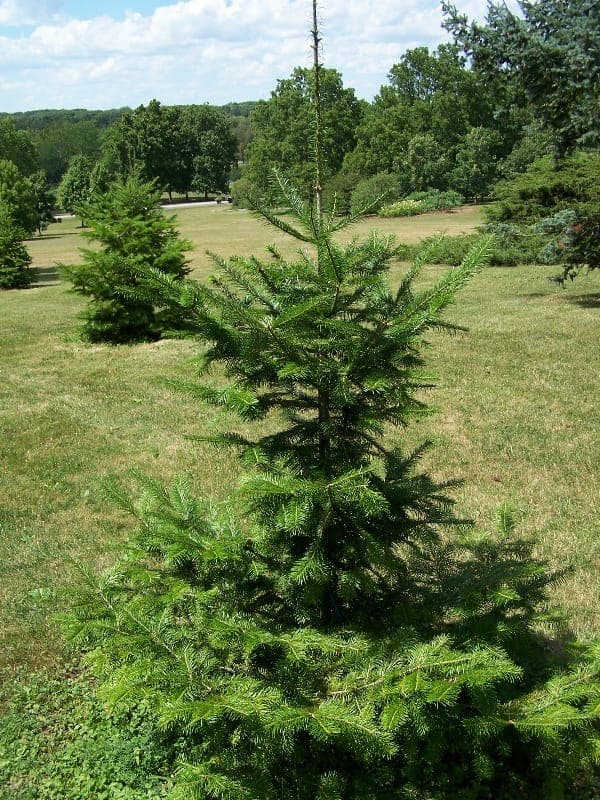
Abies nephrolepis distinguishes itself through a pyramidal form and dense branching. This is not a tree that commands attention through flashy colour or dramatic features, but rather through quiet, classical beauty. In gardens seeking a more naturalistic, understated aesthetic, the Manchurian fir serves as a subtle yet powerful structural backbone. In its native habitat, it can reach 30 metres; in Northern European gardens, more modest proportions are typical.
Appearance & bloom
The needles of Abies nephrolepis grow in a comb-like arrangement along twigs, giving the tree a fine, silken texture. Colour is a deep green with a glossy sheen. In spring, new growth carries a subtle, almost bronzed tone. Bark is rough and greyish-brown. Female cones ripen in autumn, shifting from green with purplish hues to yellow-brown.
Ideal location
This species prefers full sun or light shade. Choose a location where afternoon summer sun does not desiccate the foliage. Wind exposure is well tolerated, making it suitable for coastal or elevated sites. Shelter from the harshest winds helps young trees establish faster.
Soil
Abies nephrolepis grows best in acidic to neutral soil (pH 5.5-7.0). Drainage is critical; the roots detest waterlogging. Heavy clay soils should be amended with sand and peat before planting. A loose, slightly acidic soil enriched with organic matter promotes vigorous growth.
Free design
Want to see Manchurian fir (Abies nephrolepis): complete guide in your garden? Make a free design now.
Watering
After planting, young trees need consistent moisture, especially during hot, dry summers. Once established, Abies nephrolepis tolerates moderate drought better than many conifers. Supplemental watering during extreme dry spells helps, particularly for specimen trees. Avoid waterlogging; this invites root rot.
Pruning
Regular pruning is unnecessary. The natural form remains elegant and intact. Remove only dead, damaged, or diseased branches, ideally in late autumn or early spring.
Maintenance calendar
- Spring: Inspect for winter damage, observe new growth carefully.
- Summer: Water during dry spells, refresh mulch layer.
- Autumn: Check nutrient status, apply slow-release fertiliser if needed.
- Winter: Mature trees require no special protection; young specimens benefit from wind shelter.
Winter hardiness
Abies nephrolepis is exceptionally hardy, USDA zones 3-6, withstanding temperatures down to -35 degrees Celsius. Winter hardiness is not a concern in Northern Europe.
Companion plants
This conifer pairs well with other temperate-zone trees. Good companions include Acer species, Betula pubescens, or other deciduous understory species. At ground level, shade-tolerant groundcovers such as Hedera helix or Vinca minor thrive beneath the canopy.
Closing
The Manchurian fir is a refined, classical choice for those seeking something different from run-of-the-mill conifers. The tree establishes readily in well-prepared, acidic soils and provides decades of ornamental value with minimal fuss. Dwarf cultivars suit smaller spaces. Reputable garden centres stock quality specimens. GardenWorld recommends this tree for anyone drawn to classical elegance without exotic complications.
Want to see Manchurian fir (Abies nephrolepis): complete guide in your garden? Make a free design now.
Upload a photo, pick a style, and get a photorealistic design with plant list in under a minute.
No credit card required


Similar plants
Abies delavayi: complete guide
Abies delavayi
Delavayi fir is an elegant, medium-sized coniferous tree from the Pinaceae family with dark green needles. This Asian evergreen is perfect for alpine gardens and large landscapes.
Taiwan fir: complete guide
Abies kawakamii
Discover the magnificent Taiwan fir, a rare evergreen conifer from Taiwan's mountain regions. Learn growth requirements, care tips, and why this beautiful tree is perfect for collectors of unique garden specimens.
Farges fir: complete guide
Abies fargesii
Discover the majestic Farges fir, an impressive conifer from China's mountains with elegant foliage and columnar form. Ideal for large gardens.