
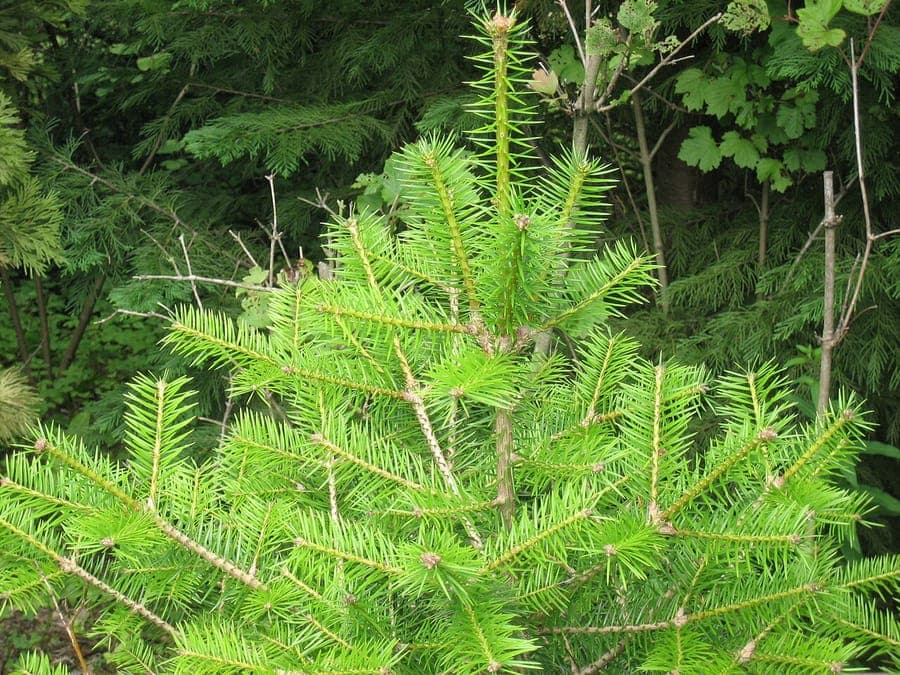
No machine-readable author provided. MPF assumed (based on copyright claims). / CC BY 2.5, via Wikimedia Commons
Abies holophylla: complete guide
Abies holophylla
Want to see Abies holophylla: complete guide in your garden?
1 minute, no credit card
Overview
Abies holophylla, commonly known as Manchurian fir or needle fir, is an impressive and relatively underappreciated conifer from the mountainous regions of Korea, Manchuria, and Primorye. This stately fir species offers refined beauty and elegance rather than crude visual force. With its regular conical form, fine blue-green needles, and characteristic tree structure, it is an excellent choice for gardeners seeking structural presence, shade, and lasting visual interest in larger landscapes.
Appearance and Growth
Abies holophylla grows as a beautiful, regularly conical tree, typically reaching 10-15 meters in established gardens. The trunk is straight and strong, with grey bark that develops interesting character traits with age. Branches grow in orderly tiers, creating an architecturally appealing silhouette. The needles are short, fine-textured, with subtle blue-green coloration and silvery grey on the undersides. This needle arrangement creates refined, nearly sculptural texture. In spring, young trees produce purple to red immature cones that become tan-brown when mature, with characteristic fir cone structure.
Ideal Location
Manchurian fir requires full sun to light shade. Minimum five hours of direct sunlight daily is ideal for optimal growth and needle color. Plant in open locations where the regular form can be appreciated. It works beautifully as a solitary specimen, as a background tree in garden borders, or as a component of larger tree groupings. Due to its ultimate size, provide ample space. Wind tolerance is good, though protection from sharp winter wind can be beneficial in very cold zones.
Soil
Abies holophylla grows best in acidic to neutral, well-draining soil. It thrives in sandy, gravelly, or clay-loam substrates provided drainage is excellent. The tree shows preference for slightly acidic soil (pH 5.5-6.5) but tolerates to pH 7.0. Organic matter such as peat, compost, and leaf mold improves both drainage and water retention in proper balance. This tree enjoys moderately fertile soil with good structure. Raise the planting area in very heavy clay.
Watering
During the first growing season, water regularly until a deep, strong root system is established. This may take two to three years. Thereafter, Abies holophylla tolerates reasonable drought, though regular watering during dry periods promotes vigorous growth. In areas receiving less than 500mm annual rainfall, provide supplemental water. Well-established trees can thrive for years without added water in normal rainfall regions. Avoid prolonged waterlogged conditions; this causes root rot. Mulch 5-7.5cm deep helps moisture retention.
Free design
Want to see Abies holophylla: complete guide in your garden? Make a free design now.
Pruning
Professional pruning is rarely needed. This tree naturally grows in excellent form. Remove only dead branches or damaged needles. Lateral branches can be subtly thinned to remove dense inner branching, which improves air circulation and prevents fungal diseases. Do this in late winter. Never cut the terminal leader; never damage apical dominance. Pruning Abies species is more complex than it appears; when in doubt, let it grow.
Maintenance Calendar
Spring (Mar-Apr): Inspect for winter damage. Have dead branches removed by a certified arborist if needed. Summer: Water regularly in dry years. Fall: Winter preparation; check drainage around tree base. Winter: Protect young aboveground growth from heavy snow; carefully remove heavy snow loading to prevent branch breakage.
Winter Hardiness
Abies holophylla is extremely hardy to USDA zone 4b-5a (-26 to -23 degrees Celsius). This is a tree that can endure serious cold. In much of Europe and North America, it grows in full hardiness. Very young trees (first two years) may benefit from protection against extreme winter wind. Winter desiccation may occur in very windy, dry winters; plant in sheltered locations in such regions. In zone 3, it may survive under very protected conditions. This is a true hardy beauty.
Companion Plants
Abies holophylla works beautifully as a component of larger tree groupings in woodland settings. Smaller conifers such as Tsuga, Picea, and Pinus form elegant landscape components. Shade-loving understory plants such as hostas, hellebores, ferns, and Epimedium grow well beneath the tree canopy. Flowering understory plants such as rhododendrons and azaleas can be established in full shade zones beneath the tree. Avoid plants seeking intense nutrition near the base. Paving and forest floor mulch work well visually.
Closing Thoughts
Abies holophylla is for gardeners with long-term vision. This is not a tree for instant gratification - it grows gradually but steadily. Over years, as it matures, it delivers annual structure, beauty, and character. This is a tree for future generations. For specimen trees or seeds, seek specialized conifer nurseries. Gardenworld.app helps you integrate this impressive tree specimen perfectly into your garden vision with our landscape visualization tools. Plant now, enjoy for a lifetime.
Want to see Abies holophylla: complete guide in your garden? Make a free design now.
Upload a photo, pick a style, and get a photorealistic design with plant list in under a minute.
No credit card required


Similar plants
Abies delavayi: complete guide
Abies delavayi
Delavayi fir is an elegant, medium-sized coniferous tree from the Pinaceae family with dark green needles. This Asian evergreen is perfect for alpine gardens and large landscapes.
Taiwan fir: complete guide
Abies kawakamii
Discover the magnificent Taiwan fir, a rare evergreen conifer from Taiwan's mountain regions. Learn growth requirements, care tips, and why this beautiful tree is perfect for collectors of unique garden specimens.
Farges fir: complete guide
Abies fargesii
Discover the majestic Farges fir, an impressive conifer from China's mountains with elegant foliage and columnar form. Ideal for large gardens.