
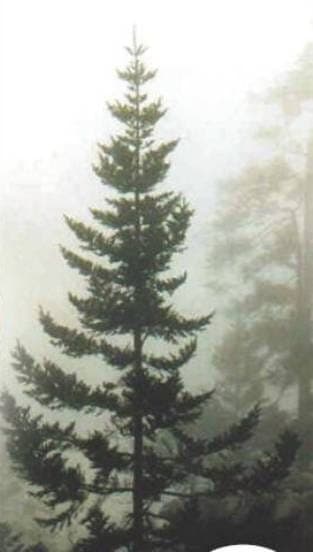
en:User:Authenticmaya / CC BY-SA 3.0, via Wikimedia Commons
Guatemalan Fir (Abies guatemalensis): complete guide
Abies guatemalensis
Want to see Guatemalan Fir (Abies guatemalensis): complete guide in your garden?
1 minute, no credit card
Overview
The Guatemalan Fir, scientifically known as Abies guatemalensis, is one of the most remarkable and least-known conifers in the world. Native to the cloud forests of Central America, this endangered species grows at elevations between 2,400 and 3,400 metres in Guatemala, Honduras, El Salvador, and southern Mexico. Reaching heights of 20 to 35 metres with a slender, conical crown, the Guatemalan Fir is a stately presence in its montane habitat. Listed as Endangered on the IUCN Red List, this tree represents both a conservation priority and an extraordinary horticultural challenge for gardeners on multiple continents.
For gardeners in temperate and subtropical regions worldwide, the Guatemalan Fir offers a rare opportunity to grow something truly exceptional. Whether you garden in the Pacific Northwest of North America, the mild coastal regions of the British Isles, or the humid highlands of East Asia, this species can thrive given the right microclimate. At gardenworld.app?utm_source=blog&utm_medium=plant-guide&utm_campaign=abies-guatemalensis you can design a garden layout that accommodates the particular requirements of rare specimens like the Guatemalan Fir.
Abies guatemalensis holds the distinction of being the southernmost naturally occurring fir species on Earth. Its range extends through the highlands of Central America, from the Mexican states of Chiapas and Oaxaca through Guatemala, Honduras, and into El Salvador. In these regions, it inhabits cloud forests, montane ecosystems that are enveloped in clouds and mist for most of the day. Temperatures in these habitats typically range from 5 to 18 degrees Celsius, with relative humidity rarely dropping below 80 percent.
In its natural environment, the Guatemalan Fir forms mixed stands with oaks (Quercus spp.), cypresses (Cupressus lusitanica), and other cloud forest species. The tree plays a vital ecological role by capturing moisture from fog on its needles, channelling water droplets down to the forest floor where they feed springs and streams that supply drinking water to communities at lower elevations. Decades of deforestation for agriculture and illegal logging have severely reduced wild populations, making this species a conservation concern of international significance. Cultivating this tree in gardens around the world contributes to ex-situ conservation of genetic material.
Appearance and growth habit
The Guatemalan Fir is an evergreen conifer with a slender, conical silhouette. Young trees display a regular, pyramidal form with branches arranged in distinct whorls. As the tree matures, the crown may become more open and irregular, particularly in specimens exposed to wind. The needles are 1.5 to 4 centimetres long, glossy dark green on the upper surface, and marked with two whitish bands on the underside. They are densely packed on the twigs and emit a pleasant resinous fragrance when rubbed.
The bark on young trees is smooth and greyish-brown, dotted with prominent resin blisters. With age, the bark thickens, darkens, and develops a scaly texture. The cones are a striking feature: they stand upright on the branches, measure 8 to 12 centimetres in length, and are cylindrical in shape. Immature cones are purplish to dark green, turning brown at maturity before the scales fall away, leaving the central axis attached to the branch. Growth rate is moderate, with annual increments of 20 to 40 centimetres under favourable conditions. Mature trees can live for several centuries when undisturbed.
Climate and hardiness
The Guatemalan Fir is rated for USDA zones 8 to 10, tolerating minimum winter temperatures of approximately -12 degrees Celsius. This makes it suitable for a surprising range of locations worldwide. In North America, coastal areas from Northern California through Oregon and Washington provide excellent conditions, as do parts of the southeastern United States with adequate elevation. In Europe, the mild maritime climates of western Britain, Ireland, and coastal France are well suited. In the Southern Hemisphere, parts of New Zealand, southeastern Australia, and the highlands of South America offer compatible growing conditions.
The key factor is not so much cold tolerance as it is the combination of cool summers, high humidity, and protection from drying winds. The tree performs poorly in continental climates with hot, dry summers and severely cold winters. In borderline zones, selecting a sheltered microclimate can make the difference between success and failure. Plant near buildings, walls, or established tree cover that provides wind protection and helps maintain humidity. Avoid exposed hilltops or south-facing slopes that receive intense afternoon sun.
Soil requirements and preparation
The Guatemalan Fir thrives in moist, humus-rich, well-drained soil with a slightly acidic to neutral pH between 5.0 and 6.5. In its cloud forest habitat, the soil is rich in organic matter and continuously moistened by condensation from passing clouds. Replicating these conditions requires generous soil amendment at planting time. Incorporate plenty of leaf compost, peat moss, or well-composted bark into the planting hole and surrounding area.
Heavy clay soils should be avoided or thoroughly improved with coarse sand and organic matter to prevent waterlogging. Pure sandy soil is too free-draining and nutrient-poor, but can be made suitable with substantial additions of compost and a permanent mulch layer. Apply an organic conifer fertiliser in spring and repeat with a half-strength application in midsummer. Avoid high-nitrogen synthetic fertilisers, as these promote soft growth that is more susceptible to cold damage. A yearly layer of 5 to 8 centimetres of leaf mulch around the trunk helps maintain soil moisture and acidity.
Free design
Want to see Guatemalan Fir (Abies guatemalensis): complete guide in your garden? Make a free design now.
Watering and humidity management
Water is the single most important factor in successfully growing a Guatemalan Fir outside its native range. This tree is adapted to near-constant moisture, both in the soil and in the air. Regular watering is essential throughout the growing season, from spring through early autumn. Water deeply once a week, ensuring the entire root zone is moistened. During warm or dry spells, increase frequency to twice weekly.
Equally important is atmospheric humidity. In dry climates or during summer heat waves, mist the foliage regularly with rainwater, preferably in the early morning or late afternoon to prevent needle scorch. A thick mulch layer of 8 to 10 centimetres around the base reduces evaporation from the soil surface. Positioning the tree near a pond, stream, or water feature helps create a humid microclimate. Underplanting with moisture-retaining groundcovers further contributes to favourable conditions. Use rainwater or filtered water where possible, as this species does not appreciate hard, calcareous tap water.
Pruning and shaping
The Guatemalan Fir requires minimal pruning. The tree naturally develops a handsome, regular conical form that rarely needs correction. Limit pruning to the removal of dead, damaged, or diseased branches. The best time for this work is late winter, before new growth begins in spring. Always use clean, sharp tools and sterilise blades between cuts to prevent disease transmission.
Never remove the leader (the central growing tip), as this permanently disrupts the natural growth pattern. If the tree threatens to outgrow its allotted space, it is far better to choose an appropriate site from the outset than to attempt drastic reduction later. When removing larger branches, use the three-cut method to prevent bark tearing: first an undercut, then a top cut slightly further from the trunk, and finally a clean flush cut to remove the stub. Wound sealant is generally unnecessary for conifers, as the tree produces resin that naturally seals pruning wounds.
Pests, diseases and prevention
The Guatemalan Fir is relatively susceptible to stress-related problems when growing conditions are suboptimal. Phytophthora root rot is a serious risk, particularly in poorly drained or waterlogged soils. Ensure excellent drainage at all times and avoid allowing water to pool around the base of the trunk. Spider mites can appear during hot, dry weather. Inspect the undersides of needles regularly for fine webbing and treat infestations early with biological controls or by hosing the tree down with a strong jet of water.
Aphids and scale insects occur occasionally and can usually be managed by encouraging natural predators such as ladybirds and lacewings. Fungal infections including rust and needle cast may develop during prolonged wet weather with poor air circulation. Provide adequate spacing around the tree and avoid excessive overhead misting in stagnant conditions. A healthy, unstressed tree is the best defence against all pests and diseases. Maintain optimal growing conditions and the tree will demonstrate considerable natural resilience.
Seasonal care calendar
Year-round attention keeps the Guatemalan Fir in peak condition. In January and February, check for frost damage and remove any snow load from branches to prevent breakage. Protect young specimens with horticultural fleece when severe frost is forecast. March is the month to renew the mulch layer and apply the first fertiliser application once the ground has thawed.
From April through June, the tree enters its period of active growth. Water regularly and monitor for new shoot development. Apply the second fertiliser dose in mid-June. July and August are dominated by watering duties, both soil irrigation and foliar misting during dry spells. September and October are ideal for enriching the soil around the trunk with compost and preparing the tree for winter. In November and December, ensure adequate winter protection is in place and give a thorough watering before the ground freezes.
Companion planting and garden design
The Guatemalan Fir makes a superb focal point in a woodland garden or exotic-themed planting scheme inspired by cloud forests. Pair it with shade-loving plants that share its preference for moist conditions. Tree ferns (Dicksonia antarctica) make spectacular companions in a sheltered garden area, along with large hostas and rodgersias whose lush foliage reinforces the forest-floor atmosphere. Hakonechloa macra, Japanese forest grass, provides a beautiful textural contrast at the base of the fir.
For lower planting layers, ferns such as Polystichum and Dryopteris are excellent choices. Rhododendrons and pieris perform well in the same acidic, humus-rich soil. Moss-like groundcovers such as Sagina subulata or Soleirolia soleirolii complete the cloud forest effect. Avoid plants with aggressive root systems that would compete with the fir for water and nutrients. In regions with mild winters, consider adding Podocarpus or Araucaria species for a broader collection of Southern Hemisphere conifers.
Final thoughts
The Guatemalan Fir is a tree for the dedicated plantsperson who seeks something genuinely extraordinary. With its origins in the misty mountain forests of Central America, it brings a piece of exotic natural heritage to gardens on multiple continents. The challenge lies in replicating its cloud forest conditions, but with careful attention to shelter, humidity, and soil quality, this endangered species can flourish far from its homeland. By including it in your garden, you contribute to the ex-situ conservation of a tree whose wild populations continue to decline. Visit gardenworld.app?utm_source=blog&utm_medium=plant-guide&utm_campaign=abies-guatemalensis for a garden design that accommodates the special needs of the Guatemalan Fir and discover how you can give this rare conifer a home.
Want to see Guatemalan Fir (Abies guatemalensis): complete guide in your garden? Make a free design now.
Upload a photo, pick a style, and get a photorealistic design with plant list in under a minute.
No credit card required


Similar plants
Abies delavayi: complete guide
Abies delavayi
Delavayi fir is an elegant, medium-sized coniferous tree from the Pinaceae family with dark green needles. This Asian evergreen is perfect for alpine gardens and large landscapes.
Taiwan fir: complete guide
Abies kawakamii
Discover the magnificent Taiwan fir, a rare evergreen conifer from Taiwan's mountain regions. Learn growth requirements, care tips, and why this beautiful tree is perfect for collectors of unique garden specimens.
Farges fir: complete guide
Abies fargesii
Discover the majestic Farges fir, an impressive conifer from China's mountains with elegant foliage and columnar form. Ideal for large gardens.