
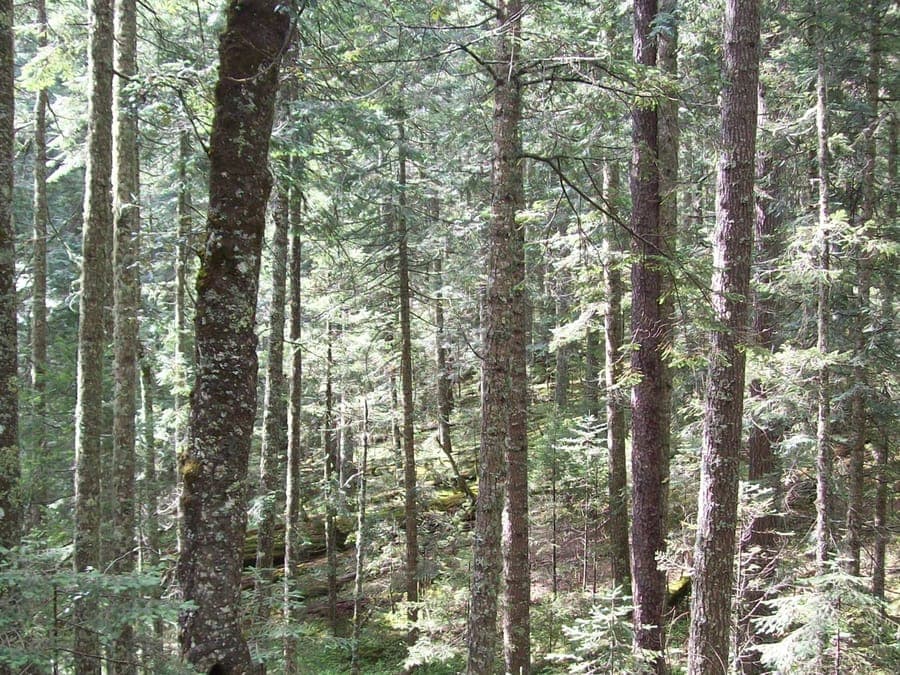
Oscargsol / CC BY 3.0, via Wikimedia Commons
Durango Fir (Abies durangensis): complete guide
Abies durangensis
Want to see Durango Fir (Abies durangensis): complete guide in your garden?
1 minute, no credit card
Overview
The Durango Fir, Abies durangensis, is one of the rarest and least-known members of the fir family, a botanical treasure found naturally only in the remote mountain forests of the Sierra Madre Occidental in northwestern Mexico, primarily in the state of Durango. For gardeners worldwide, this species represents the frontier of conifer cultivation, a tree that very few private collections can boast, and one that offers a genuine sense of botanical discovery to anyone willing to take on the challenge of growing it.
In its native habitat, the Durango Fir reaches heights of 25 to 40 metres, forming part of the mixed conifer-oak forests that clothe the high ridges between 2,000 and 3,000 metres elevation. In cultivation outside Mexico, it remains exceptionally rare, with only a handful of specimens growing in specialist arboreta and private collections in Mediterranean climates, mild temperate regions of the United Kingdom, and sheltered gardens along the Pacific coast of North America. Visit gardenworld.app to explore how rare conifers like the Durango Fir can bring unique character to your garden design.
Appearance and bloom
Abies durangensis is an evergreen conifer that develops a regular, conical crown in youth, gradually broadening and becoming more informal with age. Mature specimens in Mexico reach 25 to 40 metres, with trunk diameters sometimes exceeding one metre. In European and North American cultivation, growth is expected to be more modest, likely settling between 10 and 20 metres depending on climate and site conditions.
The needles are the tree's most distinguishing feature in close examination. They measure 1.5 to 3.5 centimetres long, are slightly curved, and arranged in a comb-like pattern along the shoots. The upper surface is dark green and glossy, while the underside bears two pale stomatal bands. The texture is notably soft, almost velvety to the touch, a pleasant characteristic that sets this species apart from many of its more rigid-needled relatives.
Flowering follows the standard Abies pattern. Small, inconspicuous male and female flowers appear along the branches in spring. After pollination, the characteristic upright cones develop, cylindrical in shape and 8 to 15 centimetres long. As with all true firs, the cone scales detach at maturity while the central axis persists on the branch, creating the distinctive bare "candelabra" that remains through winter.
The bark progresses from smooth, grey-brown on young trees to rougher, deeply fissured plates on mature specimens. In its native range, trees are believed to live for several centuries, though precise longevity data is sparse owing to the remoteness of its habitat.
Ideal location
Growing the Durango Fir successfully outside its native range is fundamentally an exercise in microclimate creation. In its natural habitat, this species experiences cool summers, mild winters with only brief and moderate frosts, and a pronounced wet season from June to October followed by a dry season through winter and spring.
In Mediterranean climates such as coastal California, parts of coastal Australia, and the milder regions of South Africa, the Durango Fir finds conditions closest to its native environment. The key is to provide a sheltered position with protection from intense afternoon sun and drying winds. A site with morning sun and afternoon shade, or dappled light beneath taller trees, is ideal.
In temperate regions of the United Kingdom and western Europe, sheltered urban gardens in USDA zones 8 and above offer the best prospects. The tree tolerates light frost but struggles with prolonged periods below minus 10 degrees Celsius. In colder continental climates across much of North America and central Europe, container culture with winter protection is the safest approach.
Allow 5 to 7 metres of clearance around the trunk. While the tree will likely remain smaller in cultivation than in the wild, cramped conditions increase susceptibility to disease and limit the development of its naturally graceful form.
Soil
The Durango Fir grows naturally on volcanic mountain soils that are mineral-rich, well-drained, and slightly acidic. Replicating these conditions as closely as possible gives the best results in cultivation.
Aim for a well-drained, humus-rich growing medium with a pH between 5.5 and 6.8. A blend of quality garden soil, leaf mould, and coarse volcanic grit or perlite in roughly equal parts creates an excellent substrate for both in-ground and container planting. The volcanic grit component is particularly valuable, as it mimics the mineral character of the tree's native soils while ensuring excellent drainage.
Heavy clay soils are problematic without significant amendment. The roots are sensitive to prolonged waterlogging and can succumb to root rot in poorly drained conditions. If your garden has heavy soil, raised beds filled with a custom blend, or container culture, are preferable to fighting against unfavourable native ground.
Fertilise sparingly with a balanced, slow-release conifer feed in early spring. Avoid high-nitrogen formulations that push soft, frost-susceptible growth. The Durango Fir is naturally slow-growing, and attempting to accelerate its growth through heavy feeding is counterproductive.
Watering
The watering regime is one of the most important aspects of Durango Fir cultivation. In its native range, the tree experiences a strongly seasonal rainfall pattern: abundant moisture from June to October during the Mexican monsoon season, followed by a pronounced dry period from November to May. This rhythm provides valuable guidance.
During the growing season, from spring through autumn, provide regular deep watering. In temperate climates, aim for a thorough soaking once a week during dry periods, delivering 10 to 15 litres per metre of tree height. In Mediterranean climates, more frequent watering may be needed during the hottest months. The key is to water deeply and infrequently rather than little and often, encouraging roots to explore the soil volume deeply.
In winter, reduce watering significantly but never allow the root zone to dry out completely. Container-grown specimens are particularly vulnerable to winter desiccation, as pots dry out faster than garden soil, especially during frosty weather when evaporation from frozen surfaces can be surprisingly rapid.
The Durango Fir tolerates brief dry spells better than prolonged wet feet. Overwatering, particularly during cool weather, is the most common cause of failure in cultivation. Always check soil moisture at 8 to 10 centimetres depth before watering.
Free design
Want to see Durango Fir (Abies durangensis): complete guide in your garden? Make a free design now.
Pruning
The Durango Fir requires very little pruning under normal circumstances. Like most firs, it develops an attractive conical to broadly pyramidal crown naturally, without human intervention. Pruning should be limited to the removal of dead, damaged, or frost-injured branches.
The best time for any pruning work is late winter, in February or early March, before new growth commences. Avoid autumn pruning, when higher humidity and lower temperatures slow wound healing and increase vulnerability to fungal infection.
Never remove the central leader unless it has been damaged by frost or physical injury. If frost kills the leader, select a strong lateral branch and train it upward as a replacement by tying it to a vertical stake. This requires patience over one to two growing seasons, but the tree will eventually re-establish its natural conical form.
As with all firs, cuts into old wood that bears no green foliage will not produce new growth. Only work with green, actively growing wood when shaping is necessary. Always use sterilised tools. Given the rarity and irreplaceability of this species, preventing infection is especially important.
Maintenance calendar
- January - February: Check for frost damage, particularly on young trees. Remove dead wood. Monitor root zone moisture for container specimens. Provide frost protection with fleece when temperatures drop below minus 8 degrees.
- March: Begin cautious fertilisation as soil temperatures rise. Use a low-nitrogen conifer feed. Inspect for winter damage and prune as needed.
- April - May: The growth period begins. Gradually increase watering. Watch for aphids and spider mites on emerging growth. New shoots are especially vulnerable to late frost; cover on nights when frost is forecast.
- June - July: Peak growth period. Water regularly and deeply. Mulch the root zone with 5 to 8 centimetres of bark chips or volcanic grit to conserve moisture. Monitor weekly for pests and diseases.
- August - September: Growth slows. Reduce fertilisation to allow the tree to harden off before winter. Cones ripen during this period on trees old enough to produce them.
- October - November: Gradually reduce watering. Apply a protective mulch layer of at least 15 centimetres around the base. Move container specimens to frost-free but cool winter quarters where possible.
- December: Minimal maintenance. Check frost protection during cold spells. Ensure container plants do not dry out completely.
Winter hardiness
Winter hardiness is the single greatest challenge when growing the Durango Fir outside its native range. The tree comes from a climate where winter temperatures rarely drop below minus 8 to minus 10 degrees, with only occasional dips to minus 15 degrees at the highest elevations. This places it in USDA zones 7 to 9.
In mild maritime climates, such as southwestern England, coastal Wales, Ireland, the Pacific Northwest of North America, and coastal regions of Australia and New Zealand, the tree can be grown outdoors year-round with minimal winter protection. Gardens in these regions that already successfully grow other borderline-hardy species, such as tree ferns, palms, or eucalyptus, are likely candidates for the Durango Fir.
In colder regions, container culture is the most reliable strategy. Overwinter the tree in an unheated greenhouse, cool conservatory, or frost-free garage where temperatures remain between 0 and 8 degrees. The tree still requires light during winter, so completely dark storage is unsuitable.
For in-ground specimens in marginal climates, protect the trunk and lower branches with horticultural fleece during cold snaps. A thick mulch layer of 15 to 20 centimetres around the base insulates roots against the worst of the cold. Pay special attention in spring, when late frosts can damage tender new growth. A layer of fleece on frosty nights provides simple but effective protection.
Companion plants
When selecting companion plants for the Durango Fir, choose species that appreciate similar conditions: a sheltered, partially shaded position with well-drained, slightly acidic soil.
In mild temperate gardens, Japanese maples (Acer palmatum) make outstanding partners. Their fine-textured foliage and autumn colour provide a beautiful contrast with the dark green needles of the fir. Shade-loving perennials such as hostas, heucheras, and woodland ferns create lush groundcover beneath the canopy.
For gardens with a subtropical or exotic theme that reflects the tree's Mexican origins, consider companions like Fatsia japonica, Mahonia, or Tetrapanax papyrifer, which thrive in similar sheltered, partially shaded conditions. Ground-covering bamboos such as Shibataea kumasaca provide an Asian-influenced understorey that complements the fir's form.
In Mediterranean climates, pair the Durango Fir with other drought-adapted shade plants such as Aspidistra, Clivia miniata, or native ferns. Ornamental grasses like Hakonechloa macra bring movement and textural contrast to the planting scheme.
Avoid vigorous, competitive species directly beneath the canopy. The Durango Fir's rarity means every specimen deserves protection from root competition. Needle fall will gradually acidify the surrounding soil, favouring acid-loving companions like rhododendrons and camellias.
Closing
The Durango Fir is not a tree for every garden or every gardener. It is a species for the dedicated collector, the botanical enthusiast, and the gardener who relishes the challenge of growing something truly extraordinary. Every specimen thriving outside its native Mexican mountains represents a small triumph of horticultural skill and botanical passion.
With careful site selection, thoughtful soil preparation, and attentive winter protection, this rare Mexican fir can reward its grower with decades of quiet beauty and the deep satisfaction of cultivating one of the world's least-known conifers. Explore gardenworld.app for more inspiration on incorporating rare and unusual trees into your garden plan.
Want to see Durango Fir (Abies durangensis): complete guide in your garden? Make a free design now.
Upload a photo, pick a style, and get a photorealistic design with plant list in under a minute.
No credit card required


Similar plants
Abies delavayi: complete guide
Abies delavayi
Delavayi fir is an elegant, medium-sized coniferous tree from the Pinaceae family with dark green needles. This Asian evergreen is perfect for alpine gardens and large landscapes.
Taiwan fir: complete guide
Abies kawakamii
Discover the magnificent Taiwan fir, a rare evergreen conifer from Taiwan's mountain regions. Learn growth requirements, care tips, and why this beautiful tree is perfect for collectors of unique garden specimens.
Farges fir: complete guide
Abies fargesii
Discover the majestic Farges fir, an impressive conifer from China's mountains with elegant foliage and columnar form. Ideal for large gardens.