
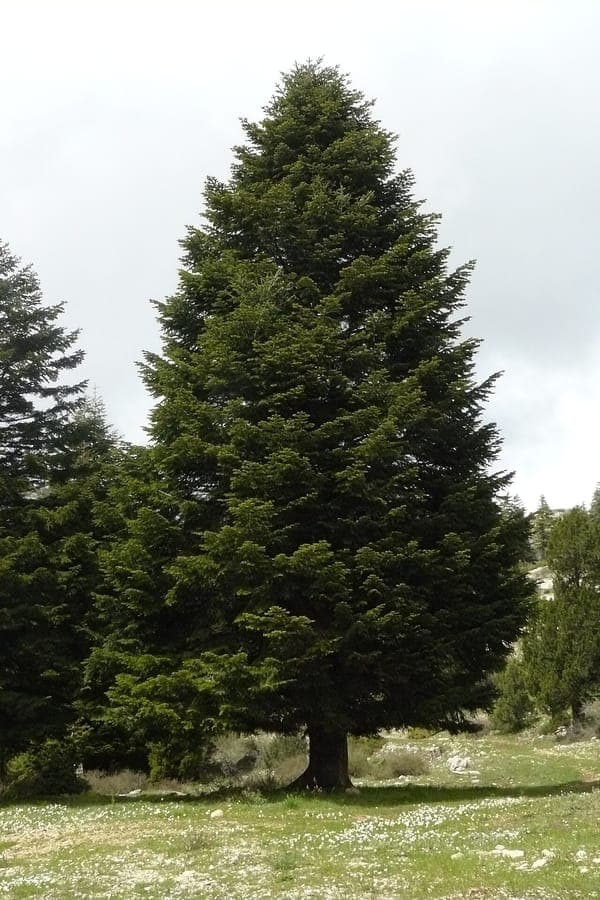
Elie plus / CC BY 3.0, via Wikimedia Commons
Cilician Fir: complete guide
Abies cilicica
Want to see Cilician Fir: complete guide in your garden?
1 minute, no credit card
Overview
The Cilician Fir, botanically known as Abies cilicica, is a majestic conifer native to the mountainous regions of Turkey, Syria, and Lebanon. This impressive tree can reach heights of 25 to 30 meters in its natural habitat, although in cultivation, it often remains smaller, typically around 15 to 20 meters. It is a slow-growing species that develops a pyramidal shape with a dense, symmetrical crown, making it an excellent choice as a specimen tree in larger gardens or parks. Its elegant appearance and relatively low maintenance make it a favorite among garden enthusiasts looking for a stately, evergreen addition.
Before you start planning the perfect spot for your Cilician Fir, it's helpful to explore garden design possibilities. On gardenworld.app, you can create a garden design that perfectly suits this imposing tree, taking into account its eventual size and requirements, ensuring it thrives in your outdoor space.
Appearance & bloom cycle
Abies cilicica is characterized by its glossy, dark green needles, which are typically 2 to 4 centimeters long. These needles are arranged spirally around the twigs and feature two prominent white stripes on their undersides, formed by stomata. The bark of young trees is smooth and gray, but as the tree ages, it becomes rougher, developing shallow grooves and fissures, often with a more reddish-brown hue. The most striking features, however, are its cones. These stand upright on the branches, a characteristic trait of true firs, and are initially green or purplish, ripening to brown. They usually appear in late summer and autumn, reaching lengths of 15 to 30 centimeters. Unlike many other conifers, fir cones do not fall off whole; the scales detach one by one, leaving only the naked central spindle on the branch. The 'bloom' of the fir, which is actually the development of male and female cones, occurs in spring. The male cones are small and yellowish, producing pollen, while the female cones develop into the larger, seed-bearing cones described above.
Ideal location: sun, shade, or partial
The Cilician Fir thrives best in a location with full sun to light partial shade. While young plants may appreciate some protection from the intense midday sun, mature specimens will prefer a spot where they receive at least 6 hours of direct sunlight per day. Too much shade can lead to a looser growth habit and less dense needle coverage. It is crucial to choose a site with ample space, as this tree will grow significantly in both height and spread. Allow for an eventual width of 5 to 8 meters. Avoid planting the tree too close to buildings, driveways, or other plants that would be overshadowed or crowded by its size. An open, airy location is also important to prevent fungal diseases.
Soil & underground requirements
For optimal growth, Abies cilicica requires well-drained, moist but not waterlogged soil. It prefers loamy soil that is rich in organic matter. The soil pH can range from slightly acidic to neutral, ideally between 6.0 and 7.0. Heavy clay soils that retain water are unsuitable, as this can lead to root rot. When planting, it is advisable to generously amend the planting hole with a mixture of excavated soil, compost, and possibly some sand to improve drainage. Ensure the tree is planted with its root ball level with the ground surface, not too deep, as this can impede oxygen supply to the roots. Good soil structure is essential for the development of a strong root system that can anchor the tree and provide it with nutrients.
Watering: when and how much
Especially in the first few years after planting, regular watering is crucial for the Cilician Fir. The soil should be kept consistently moist, but never soggy. Water deeply to encourage roots to grow deeper into the ground, which improves long-term drought tolerance. A good rule of thumb is to allow the top 5 to 10 cm of soil to dry out before watering again. During dry periods and in summer, this might mean watering 1 to 2 times per week. Once established, a mature tree is relatively drought-tolerant but will still benefit from supplementary watering during prolonged dry spells. Always check the soil moisture before watering by sticking a finger into the ground. Mulching around the base of the tree with a 5 to 10 cm layer of organic material like bark chips or wood chips helps retain soil moisture and suppress weeds.
Free design
Want to see Cilician Fir: complete guide in your garden? Make a free design now.
Pruning: when and how
Abies cilicica naturally develops a beautiful, symmetrical form and generally requires minimal pruning. It is primarily a matter of maintenance pruning. The best time to prune is in late winter or early spring, before new growth begins. Remove any dead, damaged, or diseased branches to promote the tree's health and prevent the spread of diseases. Any branches that cross or rub against others can also be removed to prevent wounds. Avoid topping the tree unless its height absolutely needs to be restricted, as this can disrupt the tree's natural form and leave unsightly scars. If the tree becomes too wide, some lower branches can be removed to improve clearance, but do so sparingly to maintain its pyramidal shape. Always use sharp and clean tools to make smooth cuts and minimize infections.
Maintenance calendar
- January - February (Winter): Check for frost damage. This is a good period for light shaping or removing dead branches. Ensure adequate watering during prolonged dry spells, especially if the ground is not frozen.
- March (Early Spring): Begin with spring fertilization if the soil is deficient in nutrients, preferably with a slow-release conifer fertilizer. Check the mulch layer and replenish if necessary.
- April - May (Spring): Observe the development of new shoots. Begin regular watering during dry weather, especially for young trees. Check for early signs of pests or diseases.
- June - August (Summer): The most crucial period for watering, especially during hot, dry spells. Ensure the tree receives sufficient moisture. Monitor for pests like spider mites or aphids and intervene if necessary. Avoid heavy pruning during this period, as it can stress the tree.
- September - October (Autumn): Gradually reduce watering as temperatures drop. A final thorough watering before winter can be beneficial, especially if the autumn has been dry. Inspect the tree for any issues before winter sets in.
- November - December (Late Autumn/Early Winter): Protect young trees if necessary from severe frost with a winter cover or an additional layer of mulch. Ensure the soil around the trunk is free of weeds and debris to prevent providing shelter for pests.
Winter hardiness & protection
The Cilician Fir is a robust and hardy conifer, suitable for USDA zones 6 to 8. This means it can tolerate temperatures down to approximately -23°C to -18°C without significant damage. In many temperate climates, it is generally well winter-hardy and requires little extra protection, unless there are extremely severe and prolonged frosts, especially when combined with drying easterly winds. Young specimens, however, are more vulnerable and may benefit from some protection in their first winters. A winter cover made of fleece can help protect young shoots from severe frost and desiccation. A thick layer of mulch around the base of the trunk helps insulate the roots and reduce temperature fluctuations. Ensure the tree is well-hydrated going into winter, especially if autumn has been dry, to prevent frost damage due to dehydration.
Companion plants & combinations
The majestic presence of the Cilician Fir makes it an excellent specimen tree, but it can also be beautifully combined with other plants that prefer similar growing conditions. Consider underplanting with shade-loving perennials such as ferns (Dryopteris, Polystichum), hostas (Hosta), or rhododendrons (Rhododendron) and azaleas, which provide color and texture at the tree's base. For contrasting foliage texture, you might consider ornamental grasses that thrive in partial shade, such as Carex or Hakonechloa macra. Slow-growing dwarf conifers can also be a lovely addition, accentuating height differences without competing. Avoid fast-growing, aggressive plants that could disturb the fir's root zone. A well-designed border around the fir can make the tree stand out even more and create a harmonious overall garden aesthetic. For inspiration on plant combinations, you can consult the extensive database on gardenworld.app, where you can find ideas for various garden designs.
Closing paragraph
The Cilician Fir is a tree that rewards patience. With its elegant form, attractive needles, and characteristic cones, it adds timeless beauty to any garden. By carefully following the guidelines for location, soil, watering, and pruning, you can enjoy this magnificent conifer for many years to come. Whether you have a large garden crying out for a striking specimen or wish to enrich a landscape park, Abies cilicica is a choice you won't regret. Remember that good planning is half the battle. For further inspiration and professional advice on integrating the Cilician Fir into your dream garden, gardenworld.app is the ideal place to elevate your garden design. Your local garden centres often offer a selection of young Abies cilicica plants, so you can start realizing your green ambitions today.
Want to see Cilician Fir: complete guide in your garden? Make a free design now.
Upload a photo, pick a style, and get a photorealistic design with plant list in under a minute.
No credit card required


Similar plants
Abies delavayi: complete guide
Abies delavayi
Delavayi fir is an elegant, medium-sized coniferous tree from the Pinaceae family with dark green needles. This Asian evergreen is perfect for alpine gardens and large landscapes.
Taiwan fir: complete guide
Abies kawakamii
Discover the magnificent Taiwan fir, a rare evergreen conifer from Taiwan's mountain regions. Learn growth requirements, care tips, and why this beautiful tree is perfect for collectors of unique garden specimens.
Farges fir: complete guide
Abies fargesii
Discover the majestic Farges fir, an impressive conifer from China's mountains with elegant foliage and columnar form. Ideal for large gardens.