
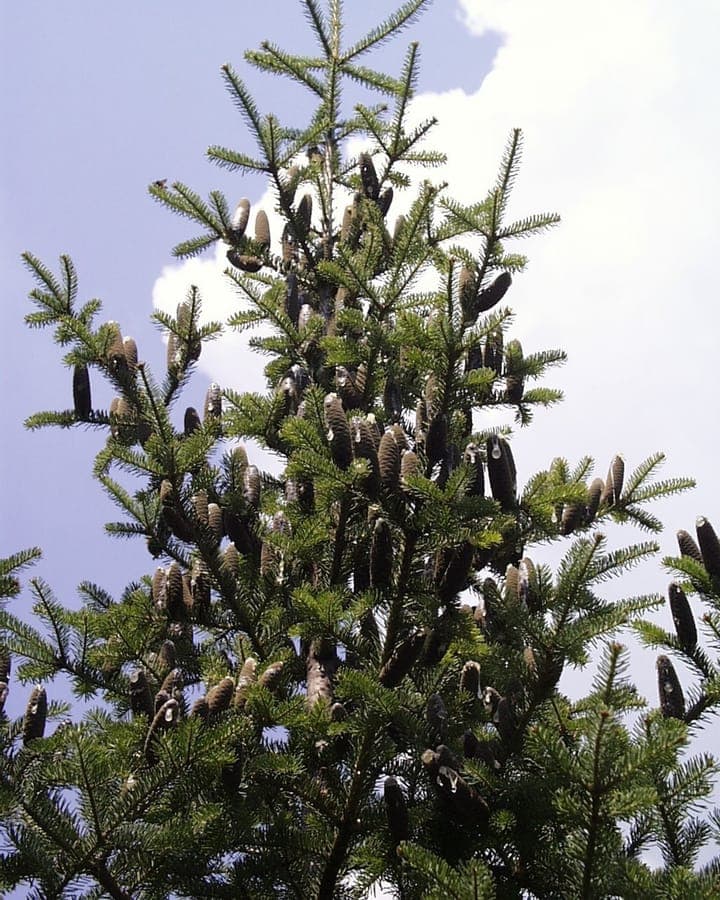
U.S. Fish and Wildlife Service / Public domain, via Wikimedia Commons
Canada Balsam: complete guide
Abies balsamea
Want to see Canada Balsam: complete guide in your garden?
1 minute, no credit card
Overview
The Canada Balsam, scientifically known as Abies balsamea, is a majestic conifer native to North America. This evergreen tree is cherished for its classic pyramidal shape, the delightful fresh, resinous scent of its needles, and its ability to thrive even in cold climates. It's a tree that adds tranquility and structure to any garden, large or small. While its growth is classified as 'slow', a mature specimen can reach impressive heights, making it an excellent choice for those seeking a long-term investment in their landscape. Thanks to its hardiness and relatively straightforward care, the Canada Balsam is a popular choice for both novice and experienced gardeners. On gardenworld.app, you can create a garden design that perfectly integrates the Canada Balsam, taking into account its eventual size and the overall aesthetics of your outdoor space.
Appearance & bloom cycle
The Canada Balsam is an evergreen tree with a distinctive conical to pyramidal growth habit. Its needles are flat, glossy dark green on the upper surface, and feature two prominent white bands on the underside, measuring approximately 1.5 to 2.5 cm in length. They are soft to the touch and arranged spirally, often with a slight upward curve, giving the tree a full, dense appearance. The tree is well-known for the resin blisters on the bark of younger trees, which contain an aromatic, sticky balsam – hence the name 'Canada Balsam'.
What are often referred to as 'flowers' on the Canada Balsam are actually its male and female cones, which appear in spring. The male cones are small and yellowish, often appearing on the undersides of branches in April or May. They produce pollen and are not particularly conspicuous. The female cones are far more decorative. They emerge on the upper parts of the tree, often purplish in color before ripening to a brownish hue. These cones stand upright on the branches, unlike the pendulous cones of many other conifers, and are about 5-10 cm long. As the seeds mature, the cone scales fall off, leaving only the central axis. This process typically occurs in the autumn. The yellow color mentioned for 'flower color' refers to these small, inconspicuous male pollen cones that appear in spring.
Ideal location: sun, shade, or partial
For the Canada Balsam, a bright location is essential. With a light requirement of 7 out of 10, this tree thrives best in full sun to light partial shade. Full sun, which translates to at least 6 hours of direct sunlight per day, promotes the densest growth and the most intense green color of its needles. While it tolerates some shade, too much shade can lead to more open, less compact growth and reduced vitality. Choose a spot where the tree has ample room to develop, both in height and width, as it can grow into a large specimen. Avoid extremely windy locations, especially in winter, as this can lead to needle desiccation, although the tree is generally robust.
Soil & underground requirements
The Canada Balsam prefers acidic soil, with a pH range of 4 to 6. This is crucial for its health and growth. The soil must be well-draining but also retain sufficient moisture. Heavy clay soils that hold water are unsuitable, as this can lead to root rot. Sandy loams with a high organic content are ideal. When planting and annually thereafter, incorporate compost or well-rotted leaf mold to improve soil structure and maintain acidity. Good drainage is vital; if in doubt, creating a raised bed or adding coarse sand and grit to the planting hole can help. Always test your soil's pH with a kit before planting and adjust it if necessary with peat moss or sulfur to lower the acidity.
Watering: when and how much
As a young tree, the Canada Balsam needs regular watering, especially during dry periods in its first growing season. The soil should be consistently moist but never waterlogged. Water deeply to encourage roots to grow deeper. A good rule of thumb is to allow the top 5-10 cm of soil to dry out before watering again. For mature trees, water requirements are lower; they are reasonably drought-tolerant but still benefit from supplementary watering during prolonged dry spells, especially in summer. Always check soil moisture before watering. Mulch around the base of the tree with a 5-10 cm layer of organic material (such as wood chips or pine needles) to retain moisture, regulate soil temperature, and suppress weed growth. Ensure the mulch does not directly touch the trunk to prevent issues like fungal diseases and pests.
Free design
Want to see Canada Balsam: complete guide in your garden? Make a free design now.
Pruning: when and how
The Canada Balsam generally requires little pruning to maintain its natural form. Pruning is primarily focused on removing dead, damaged, or diseased branches, which can be done at any time of year. For shape maintenance or to encourage density, light pruning can be performed in late winter or early spring, before new growth begins. However, avoid pruning the central leader (the main trunk) unless there are competing leaders. When pruning side branches, it's important to cut back to a lateral branch or to the trunk, and never into old wood where there are no green needles, as conifers often do not resprout from old wood. Always use sharp, clean pruning tools to make clean cuts and minimize the spread of diseases.
Maintenance calendar
- January - February (Winter): Check for snow or ice accumulation that could damage branches. Gently tap heavy snow off branches. Any dead or damaged branches can be removed now.
- March - April (Early Spring): Perform a soil test if needed to check pH. Incorporate organic matter like compost around the base of the tree to enrich the soil and maintain acidity. Light shaping pruning can occur now.
- May - June (Spring): This is the period of new growth. Check for pests or diseases. Ensure adequate watering, especially if dry. Male and female cones will appear.
- July - August (Summer): Provide extra water during dry spells. Monitor for heat or drought stress. Ensure the mulch layer is still intact to retain moisture.
- September - October (Autumn): Cones ripen and disintegrate. Check the soil and replenish the mulch layer. This is a good time to acidify the soil if necessary with elemental sulfur.
- November - December (Late Autumn/Early Winter): Provide a final deep watering before the ground freezes, especially for young trees. If necessary, protect young trees from harsh winter winds with a burlap screen.
Winter hardiness & protection
The Canada Balsam is an exceptionally cold-hardy tree, suitable for USDA Zones 3 to 5. This means it can withstand temperatures as low as -40°C, making it very well-suited for most UK, Irish, and North American climates. Young trees, however, can benefit from some protection during their first few winters to help them establish. A thick layer of mulch around the base helps to insulate the roots. In areas with very severe winds, a windbreak made of burlap or special winter fabric can be useful to prevent needle desiccation. Also, ensure the tree receives adequate water before winter sets in, so the roots are well-hydrated before the ground freezes. Generally, additional protection for mature specimens is rarely needed. You can find hardy Canada Balsams at reputable garden centres.
Companion plants & combinations
The Canada Balsam can form a magnificent focal point in a landscape garden. Combine it with other acid-loving plants that thrive in similar conditions. Consider rhododendrons, azaleas, hydrangeas, and blueberry bushes, all of which benefit from acidic soil. Groundcovers such as Gaultheria procumbens (wintergreen) or Vaccinium vitis-idaea (lingonberry) can cover the ground around the fir and help retain moisture. For a woodland feel, consider adding ferns, such as the Ostrich Fern (Matteuccia struthiopteris), or shade-loving hostas to the underplanting. For contrast in texture and color, consider planting other conifers with different needle colors or growth forms, such as dwarf spruces or dwarf cedars. The structure and deep green color of the Canada Balsam provide an excellent backdrop for flowering shrubs and perennials.
Closing paragraph
The Canada Balsam is a tree that, with proper care, can add beauty and structure to your garden for decades. Its robust nature, aromatic needles, and elegant form make it a valuable asset to any landscape. By following the guidelines for location, soil, watering, and pruning, you will ensure this magnificent conifer thrives. Whether you are establishing a new garden or enhancing an existing one, the Canada Balsam offers timeless charm. Visit gardenworld.app for more inspiration and to plan your garden projects, from the initial design phase to the final plant selection.
Want to see Canada Balsam: complete guide in your garden? Make a free design now.
Upload a photo, pick a style, and get a photorealistic design with plant list in under a minute.
No credit card required


Similar plants
Abies delavayi: complete guide
Abies delavayi
Delavayi fir is an elegant, medium-sized coniferous tree from the Pinaceae family with dark green needles. This Asian evergreen is perfect for alpine gardens and large landscapes.
Taiwan fir: complete guide
Abies kawakamii
Discover the magnificent Taiwan fir, a rare evergreen conifer from Taiwan's mountain regions. Learn growth requirements, care tips, and why this beautiful tree is perfect for collectors of unique garden specimens.
Farges fir: complete guide
Abies fargesii
Discover the majestic Farges fir, an impressive conifer from China's mountains with elegant foliage and columnar form. Ideal for large gardens.