
Crusier / CC BY-SA 3.0, via Wikimedia Commons
Christmastree (Abies alba): complete guide
Abies alba
Want to see Christmastree (Abies alba): complete guide in your garden?
1 minute, no credit card
Overview
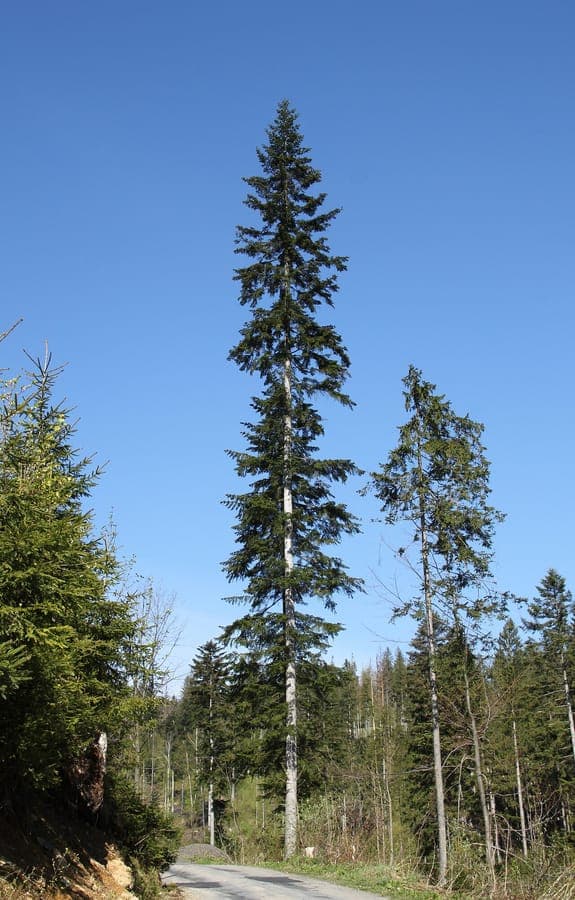
The Christmastree, botanically known as Abies alba, is a majestic conifer that leaves a stately impression, especially in older gardens and parks. With its distinctive pyramidal shape and the characteristic silvery underside of its needles, it's a tree that provides structure and green splendor throughout the year. This native European fir can grow to a considerable height and width, making it particularly suitable for larger gardens where it has ample space to reach its full potential.
Planting an Abies alba is a long-term investment. It requires thoughtful placement and specific soil conditions to thrive optimally. At gardenworld.app, you can create a garden design that perfectly suits the needs of a tree like the Christmastree, ensuring it becomes a showpiece in your garden without overshadowing other plants.
Appearance & bloom cycle
Abies alba is an evergreen conifer with a characteristic conical to pyramidal crown that becomes broader and denser with age. The needles are flat, glossy dark green on the upper side, and have two prominent silvery-white bands on the underside, which gives the tree its 'silver' name. They are typically 1.5 to 3 cm long and arranged spirally on the branches. When the needles fall, a small, round scar remains on the twig, a distinguishing feature of the Abies family.
The blooming cycle is rather inconspicuous. In spring, usually in April or May, small, yellowish-green male flowers and reddish female flowers appear on the branches. However, these are not of significant ornamental value. The true eye-catchers are the cones. These stand upright on the branches, in contrast to the hanging cones of the Picea (spruce). They are cylindrical in shape, about 10 to 20 cm long, and have a greenish-brown color that later turns purplish. When ripe, usually in autumn, the cone scales fall off while the central axis remains on the tree, creating a unique visual.
The bark of young trees is smooth and gray, but in older specimens, it becomes deeply furrowed and darker in color. The lifespan of a Christmastree can extend for hundreds of years, further emphasizing its majestic character.
Ideal location: sun, shade, or partial shade
The Christmastree prefers a location in partial shade to shade, especially when the tree is young. Full sun is tolerated, provided the soil is sufficiently moist and the tree is well-established. In an overly sunny and dry environment, growth can stagnate, and the needles may scorch. A spot where the tree is protected from strong, drying winds is also advisable, especially in the first few years after planting. Consider a sheltered location at the edge of a woodland area, or among other larger trees that provide some shade. Keep in mind that this tree eventually grows very large, so give it plenty of space, at least 8-10 meters of clear space around the trunk, to develop fully.
Soil & underground requirements
Abies alba has specific soil requirements. It thrives best in deep, moist, well-drained, and nutrient-rich soil. A slightly acidic to neutral pH value (pH 5.5 - 7.0) is ideal. Clay soil or heavy, compacted soil is less suitable, as this can lead to waterlogging and root rot. Sandy soil, if enriched with sufficient organic matter such as compost or leaf mold, can also be suitable, but extra attention to watering is crucial in such cases. The soil must absolutely not dry out, but also not be constantly waterlogged. Ensure good drainage, possibly by adding a drainage layer when planting. It is advisable to perform a soil analysis before planting to determine the pH and nutrients in the soil and adjust them if necessary. Local garden centres can often provide advice on soil amendments.
Watering: when and how much
Regular and sufficient watering is essential, especially in the first few years after planting and during dry periods. The Christmastree is not fond of drought. Ensure the soil remains consistently slightly moist, but avoid waterlogged conditions. Young trees need deep watering weekly, or even more frequently in hot weather. This doesn't mean just a little splash of water, but slow and deep watering so it reaches the deeper roots. A rule of thumb is to provide 10-20 liters of water per week per meter of tree height, divided over several watering sessions. For mature trees, water requirements are less critical as their deep root system can access groundwater more effectively. However, during prolonged dry spells, especially in summer, supplemental watering is still recommended. Check the soil moisture by sticking a finger 5-10 cm deep into the ground. If it feels dry, it's time to water.
Free design
Want to see Christmastree (Abies alba): complete guide in your garden? Make a free design now.
Pruning: when and how
The Christmastree generally requires little pruning. It naturally develops a beautiful, conical crown. Pruning is usually limited to removing dead, damaged, or diseased branches. This is best done in late winter or early spring, before new growth begins. Avoid pruning the leader (the central top shoot) unless you want to limit its height, but this will affect the tree's natural shape. If pruning is necessary to correct the shape, do so sparingly and remove only small branches. Large pruning wounds can make the tree vulnerable to diseases and pests. Always use clean and sharp pruning tools to prevent infections. It's important to note that Abies alba, like most conifers, does not respond well to pruning into old wood without green foliage. This can lead to bare spots that will not recover.
Maintenance calendar
- January - February (Winter): Check for snow load on branches. Gently remove excess snow if necessary to prevent breakage. Perform light formative pruning to remove dead branches if needed.
- March (Early Spring): Begin preparing the planting site for new plantings. Soil improvement if necessary. Plant new Abies alba specimens.
- April - May (Spring): Check for new shoots and any pests. Give young trees extra water during dry spells. Fertilize if necessary with a specialized conifer fertilizer, according to package instructions. This is also the period of flowering.
- June - August (Summer): Critical period for watering, especially for young trees and during dry periods. Ensure the soil does not dry out. Check for diseases and pests such as spider mites or aphids. Mulching around the base of the tree can help retain moisture and suppress weeds.
- September - October (Autumn): Cones ripen and disintegrate. This is a good time to enrich the soil around the tree with a layer of compost or leaf mold. Planting is still possible, allowing the tree to root before winter. Ensure adequate watering when planting.
- November - December (Late Autumn/Early Winter): Ensure sufficient water before the ground freezes. Protect young trees, if necessary, from severe frost with fleece cloth or a layer of mulch around the base of the trunk.
Winter hardiness & protection
The Christmastree is very winter hardy and can tolerate temperatures down to -25°C to -30°C (USDA Zone 4-6). Mature specimens rarely require additional winter protection in Western Europe. Young trees, especially in their first year after planting, can benefit from some protection against severe frost and drying winter winds. A layer of mulch, such as wood chips or leaves, around the base of the trunk, about 10-15 cm thick, helps insulate the roots and stabilize soil temperature. In very open, windy locations, a windbreak made of burlap or fleece cloth can be useful for young plantings. Also, ensure the tree has received sufficient water before winter begins, so the needles do not dry out during frosty periods.
Companion plants & combinations
Due to its imposing stature and dark green color, the Christmastree makes an excellent solitary specimen, but it can also be effectively combined with other plants that prefer similar soil and light conditions. Consider underplanting with shade-loving shrubs and perennials. Rhododendrons and azaleas are good partners, provided the soil is sufficiently acidic and there is no competition for water and nutrients. Ferns, hostas, and shade-loving grasses such as Carex species also do well under a Christmastree. For a more woodland feel, you might consider blueberries (Vaccinium myrtillus) or heather (Calluna vulgaris) at the edges of the shaded zone. For a contrast in texture, shrubs with large leaves, such as Hydrangea quercifolia (oakleaf hydrangea), make a nice addition. Always ensure that the chosen companion plants do not have aggressive root growth that could compete with the fir.
Closing paragraph
The Christmastree is a tree of character and grandeur, and with the right care, it can be an impressive addition to your garden for decades. Its evergreen nature and stately appearance make it a timeless choice for larger gardens and landscapes. It requires patience and a bit of knowledge of its specific needs, but the reward is a beautiful, robust conifer. For detailed plant information and inspiration for your garden design, you can always visit gardenworld.app, where you will find tools to plan and realize your garden to perfection.
Want to see Christmastree (Abies alba): complete guide in your garden? Make a free design now.
Upload a photo, pick a style, and get a photorealistic design with plant list in under a minute.
No credit card required


Similar plants
Abies delavayi: complete guide
Abies delavayi
Delavayi fir is an elegant, medium-sized coniferous tree from the Pinaceae family with dark green needles. This Asian evergreen is perfect for alpine gardens and large landscapes.
Taiwan fir: complete guide
Abies kawakamii
Discover the magnificent Taiwan fir, a rare evergreen conifer from Taiwan's mountain regions. Learn growth requirements, care tips, and why this beautiful tree is perfect for collectors of unique garden specimens.
Farges fir: complete guide
Abies fargesii
Discover the majestic Farges fir, an impressive conifer from China's mountains with elegant foliage and columnar form. Ideal for large gardens.