
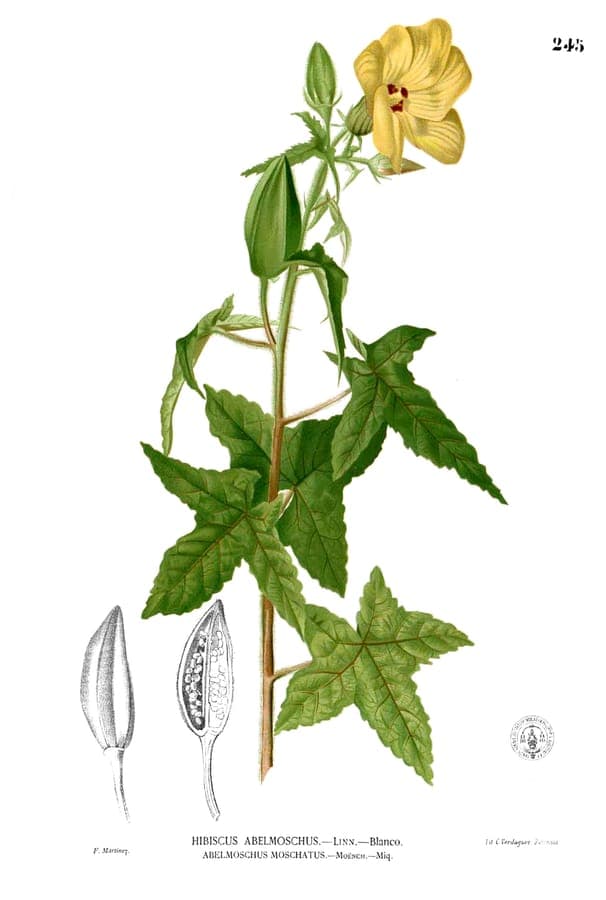
Francisco Manuel Blanco (O.S.A.) / Public domain, via Wikimedia Commons
Musk Okra: complete guide
Abelmoschus moschatus
Want to see Musk Okra: complete guide in your garden?
1 minute, no credit card
Overview
Musk Okra, scientifically known as Abelmoschus moschatus, is a captivating plant belonging to the Malvaceae family, which also includes hibiscus and cotton. This plant, sometimes referred to as the musk mallow, is cherished for its attractive flowers and the distinctive musky fragrance emitted by its seeds. Native to India, it is valued in both ornamental and utilitarian gardens across the globe. It can be grown as an annual or a short-lived perennial, depending on the climate, and offers a delightful addition to any garden with its delicate blooms and interesting foliage.
Planning a garden with such distinctive plants sometimes requires a deeper understanding of their specific needs. At gardenworld.app, you can create a garden design that perfectly accommodates Abelmoschus moschatus and your unique garden conditions, ensuring this exotic beauty flourishes. This includes advice on optimal placement and suitable companion plants.
Appearance & bloom cycle
Abelmoschus moschatus is a medium-sized plant, typically reaching heights of 60 to 150 cm with a similar spread. Its stems are upright and often slightly hairy. The leaves are deeply lobed, palmate, and have a somewhat rough texture, often growing up to 15 cm wide with a vibrant green hue. However, the true stars of the show are its flowers. These are large, funnel-shaped, and emerge from the leaf axils. They are usually creamy white to pale yellow, often featuring a striking dark purple or reddish-brown center, creating a beautiful contrast. Each flower is ephemeral, opening for only a single day, typically in the morning, and closing by evening. Fortunately, the plant produces a profusion of blooms throughout its flowering season, which spans from late spring to autumn (approximately May to October in temperate climates). Following the bloom, elongated, hairy seed pods develop, resembling small okra pods, hence the common name 'Musk Okra'. These pods contain the seeds that release the characteristic musky scent.
Ideal location: sun, shade, or partial
For optimal growth and abundant flowering, Abelmoschus moschatus requires a location that receives ample sunlight. A minimum of six to eight hours of direct sunlight per day is essential. Full sun exposure not only promotes robust growth but also encourages maximum flower production and the development of its fragrant seeds. While the plant can tolerate light afternoon shade in the hottest climates, this may result in fewer blooms and a less compact growth habit. Avoid deep shade, as it will hinder growth and weaken the plant significantly.
Soil & underground requirements
Musk Okra is not overly fussy but thrives best in well-draining, fertile soil. An ideal pH range is between 6.0 and 7.5 (slightly acidic to slightly alkaline). Heavy clay soils that retain excessive moisture should be avoided, as they can lead to root rot. To improve soil drainage and fertility, it is advisable to incorporate organic matter, such as compost or well-rotted manure, into the soil before planting. Proper soil preparation is key to a healthy plant. Ensure planting distances of approximately 45-60 cm to allow for good air circulation, which helps prevent fungal diseases.
Watering: when and how much
Regular watering is crucial, especially during dry spells and throughout the flowering period. The soil should be kept consistently moist but never waterlogged. Check the soil moisture by inserting your finger about 2-3 cm deep into the earth; if it feels dry, it's time to water. Water deeply, ensuring the moisture reaches the root zone. Avoid overhead watering in full sun, as this can lead to leaf scorch or the development of fungal issues. Less frequent watering is needed during cooler periods or cloudy weather. Applying mulch around the base of the plant can help retain soil moisture and suppress weed growth.
Free design
Want to see Musk Okra: complete guide in your garden? Make a free design now.
Pruning: when and how
Abelmoschus moschatus generally requires minimal pruning, but some maintenance can benefit the plant. The most important task is deadheading, which involves removing spent flowers. This encourages the plant to produce more blooms rather than expending energy on seed formation, unless you intend to harvest the seeds. Snip off faded flowers just above a leaf node or a lateral branch. If the plant becomes leggy or 'spindly', you can pinch back the tips to encourage a bushier growth habit. This can be done during the summer months. Any diseased or damaged branches should be removed immediately to maintain the plant's overall health. Always use sharp, clean pruning shears to minimize damage.
Maintenance calendar
- March - April: Sow seeds indoors, 6-8 weeks before the last expected frost. Provide adequate warmth and light.
- May - June: Transplant outdoors after the last frost, once the soil has warmed up. Begin feeding with a balanced fertilizer.
- June - October: Water regularly, especially during dry periods. Start deadheading to prolong flowering. Pinch back tips for bushier growth if needed. Monitor for pests and diseases.
- November: The plant will typically die back with the first hard frost. Collect seeds if desired. Clear away plant debris to prevent disease.
Winter hardiness & protection
Abelmoschus moschatus is a frost-sensitive plant and is typically grown as an annual in temperate climates. It is not winter hardy and will not survive the first severe frost. Its USDA hardiness zone is generally above zone 9. In colder zones (such as USDA zones 7 or 8), the plant will likely die back in autumn and can be regrown from seed the following year. There is no specific winter protection that will enable an outdoor Abelmoschus moschatus to survive in a cold climate. The best approach is to grow new plants from seed each year, or to harvest seeds from existing plants for sowing the next season. Seeds are often available at specialist nurseries or garden centres.
Companion plants & combinations
Musk Okra pairs beautifully with plants that share similar requirements for sun and well-draining soil. Consider other summer-flowering plants that offer a contrast in color or texture. Good companions include:
- Zinnias: Provide a wide array of colors and forms and attract pollinators.
- Cosmos: Delicate-looking flowers that create an airy feel.
- Marigolds (Tagetes): Can sometimes help deter certain pests and add cheerful colors.
- Salvias: Many Salvia species enjoy full sun and also attract pollinators.
- Yellow and orange flowering plants: Create a warm and vibrant color scheme with the creamy blooms of the Musk Okra. Position Abelmoschus moschatus in the middle or back of a border, depending on the height of surrounding plants, to allow its flowers to stand out. The texture of its leaves also adds an interesting element to the garden composition.
Closing paragraph
With its unique musky fragrance, attractive blooms, and relatively simple care, Abelmoschus moschatus is a valuable addition to any sunny garden. Whether you are looking for a plant for its aesthetic appeal, its fragrant seeds, or simply want to try something different, Musk Okra is sure to impress. Remember, for further inspiration and professional garden advice, you can always turn to gardenworld.app, where you can translate your gardening wishes into a beautiful and functional design. Enjoy cultivating this special plant and the beauty it brings!
Want to see Musk Okra: complete guide in your garden? Make a free design now.
Upload a photo, pick a style, and get a photorealistic design with plant list in under a minute.
No credit card required


Similar plants
Crimean linden: complete guide
Tilia × euchlora
Crimean linden is an elegant, fast-growing shade tree ideal for large gardens. Discover cultivars, spacing, maintenance tips and winter hardiness.
California flannelbush: complete guide
Fremontodendron californicum
Everything about California flannelbush (Fremontodendron californicum): sunny placement, drainage, pruning and care for this spectacular yellow-flowering shrub.
Hairy rose mallow: complete guide
Hibiscus moscheutos subsp. lasiocarpos
Full growing guide for hairy rose mallow (Hibiscus moscheutos subsp. lasiocarpos): location, soil, watering, winter hardiness and garden design tips.