
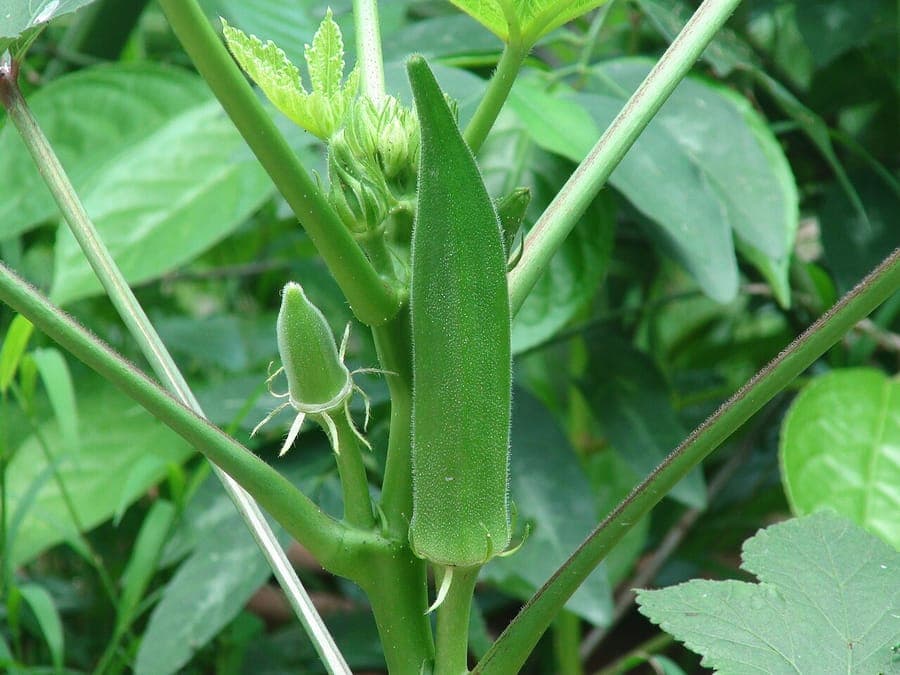
Earth100 / CC BY-SA 3.0, via Wikimedia Commons
Okra: complete guide
Abelmoschus esculentus
Want to see Okra: complete guide in your garden?
1 minute, no credit card
Okra: A Versatile Tropical Fruit Vegetable
Okra, or Abelmoschus esculentus, is a fascinating fruit vegetable that originated in Africa but is now globally appreciated for its unique taste and texture. Belonging to the mallow family (Malvaceae), this heat-loving annual can produce an abundant harvest under the right conditions. The edible parts are the immature seed pods, often described as 'fingers', which have a slightly sweet, grassy flavour and a characteristic mucilaginous texture when cooked – a trait that can be reduced by certain cooking methods. Okra is not only culinarily interesting but also an attractive plant with beautiful flowers resembling those of hibiscus.
At gardenworld.app, you can create a garden design that perfectly suits your needs, including the integration of edible plants like okra. Adding okra to your vegetable patch is an excellent way to introduce variety and enjoy fresh, home-grown produce. Although it is a tropical plant, with proper care and attention, it can be successfully grown in temperate climates, possibly under glass. It requires patience and the right conditions, but the reward of harvesting your own okra is well worth the effort.
Appearance & Bloom Cycle
The okra plant is an impressive annual that, depending on the cultivar and growing conditions, can reach a height of 1 to 2 meters. Its stems are robust and often hairy. The leaves are large, palmately lobed, and somewhat resemble fig leaves, with a rough texture. The flowers are the most striking feature: they are large (5-10 cm in diameter), creamy to pale yellow with a reddish-purple or dark brown eye in the center, strongly resembling hibiscus flowers, which is unsurprising given their family ties. Each flower blooms for only one day, typically in the morning, after which it wilts and makes way for the development of the pod.
Flowering usually begins 45 to 60 days after sowing and can continue until the first frost, depending on heat and light. After the flower is pollinated, the characteristic green, ribbed pod quickly forms. These pods grow rapidly and must be harvested young, typically when they are 5 to 10 cm long. Older pods become fibrous and tough and are no longer suitable for consumption. The continuous production of flowers and pods makes okra a very productive plant throughout the summer months.
Ideal Location: Sun, Shade, or Partial
Okra is a pronounced sun-lover. For optimal growth and fruit set, the plant needs a minimum of 6 to 8 hours of direct sunlight per day. A location in full sun is therefore essential. Too little sunlight results in leggy plants, fewer flowers, and a significantly lower yield. In temperate climates, it is advisable to choose the sunniest and most sheltered spot possible, for example, against a south-facing wall or in a greenhouse or polytunnel. This extra warmth helps the plant mimic the necessary tropical conditions. Partial shade is absolutely not ideal and will severely limit the harvest. Shady spots are completely unsuitable.
Protection from strong winds is also important, as the plants, with their large leaves and fruits, can become top-heavy. A sheltered location prevents stem damage and ensures more stable growth. When choosing a location, also consider the height the plant can reach so that it does not shade out other, smaller crops.
Soil & Underground Requirements
Okra thrives best in fertile, well-draining soil with a pH value between 6.0 and 7.0. Heavy, clayey soils that retain water are unsuitable, as they lead to root rot and growth problems. A sandy loam soil, rich in organic matter, is ideal. Before planting, it is advisable to thoroughly prepare the soil by incorporating compost or well-rotted manure into the top 20-30 cm. This improves both the structure and fertility of the soil.
Good drainage is crucial, and if your soil is naturally heavy, you might consider growing in raised beds to improve drainage. Okra has a reasonably deep root system, so ensure the soil is loose enough for the roots to spread. A mulch layer of organic material around the base of the plants helps to keep the soil temperature stable, retain moisture, and suppress weed growth, all of which contribute to healthy growth.
Watering: When and How Much
Consistent watering is essential for okra, especially during dry periods and when the plants are flowering and setting fruit. The soil should be consistently moist but never waterlogged. Overwatering can lead to root rot and fungal diseases, while underwatering causes stress, resulting in fewer flowers and smaller, fibrous pods.
In the ground, depending on the weather, this usually means watering thoroughly 2 to 3 times a week. Ensure the water penetrates deeply to the root zone. For young plants, it is important to keep the soil around the seedlings moist to ensure a good start. As the plants grow larger and bear fruit, their water needs may increase. Check soil moisture regularly by sticking a finger a few centimeters deep into the soil. If it feels dry, it's time to water. Preferably water at the base of the plant to prevent foliar diseases.
Free design
Want to see Okra: complete guide in your garden? Make a free design now.
Pruning: When and How
Okra generally requires little pruning, but a few interventions can improve the plant's productivity and health. The most important is regular harvesting of the pods. By picking the pods young (every 1-2 days), you encourage the plant to produce more flowers and thus more fruit. If pods remain on the plant and ripen, the plant stops producing new flowers, as its reproductive cycle is considered complete.
Additionally, if the plant becomes very dense, you can occasionally remove some lower leaves. This improves air circulation around the plant, which reduces the risk of fungal diseases, and can also direct the plant's energy towards fruit set. Also, remove any side shoots that compete with the main stem, especially if you desire more compact growth. This is usually done when the plant is about 60 cm tall. Always use a sharp, clean knife or shears to minimize damage to the plant.
Maintenance Calendar
March-April (Indoors/Greenhouse): Sow seeds indoors in a warm place (minimum 20°C). Use seed starting mix. Soak seeds in warm water for 24 hours to speed up germination. May (Indoors/Greenhouse): Transplant seedlings to individual pots once they have 2-3 true leaves. Ensure ample light. Late May-June (Outdoors): Plant seedlings out into the garden or large pots once all danger of frost has passed and night temperatures consistently stay above 12-15°C. Hardening off is essential. Spacing: 30-45 cm within rows, 60-90 cm between rows. June-September: Check daily or every other day for ripe pods. Harvest pods when they are 5-10 cm long and still tender. Remove any lower, yellowed leaves. Ensure consistent watering and weekly fertilization with a potassium-rich fertilizer. October: The first frost will kill the plants. Harvest the last pods before the frost. Clear away plant debris. You can allow some pods to ripen on the plant for seed saving for next year.
Winter Hardiness & Protection
Okra is a tropical annual plant and is absolutely not winter-hardy. It is extremely sensitive to frost; even light frost will kill the plant. In temperate climates, such as the UK, okra is therefore grown as an annual crop and does not survive the winter outdoors. The USDA hardiness zones for okra are 9-11, indicating that it can only survive as a perennial in frost-free areas.
To successfully grow okra in cooler climates, it is crucial to plant out only after the last frost and to protect them from early autumn frosts. Growing in a greenhouse, polytunnel, or under fleece can extend the growing season and increase the harvest. For an early start, indoor pre-sowing is indispensable. There is no method to overwinter okra plants outdoors in countries with a cold season.
Companion Plants & Combinations
Okra can be successfully combined with various other vegetables and herbs in the vegetable garden. Good companion plants include:
- Cucumbers: These two have similar needs for sun and moisture, and okra's large leaves can help keep the soil around cucumbers cool and moist.
- Peas and beans: As legumes, they fix nitrogen in the soil, which benefits okra's fertility.
- Corn: Corn's tall stalks can protect okra from wind and provide light shade, which can be beneficial in extremely hot climates, though full sun is preferred in cooler climates.
- Radishes: These fast growers can be harvested before okra plants reach their full size.
- Malabar spinach: Can help cover the soil and suppress weeds.
- Various herbs: Basil, mint, and rosemary can help deter pests and attract beneficial insects.
- Flowers: Marigolds (Tagetes) are known for their repellent effect against nematodes and other pests, and cosmos attract pollinators.
Avoid proximity to plants that compete for nutrients or are susceptible to the same pests, although there are few specific 'bad' neighbors for okra. The most important thing is to provide adequate space and ensure good air circulation.
Enjoy Your Homegrown Okra
Growing okra is a rewarding experience that adds an exotic touch to your vegetable garden. With proper preparation and care, from choosing the sunniest spot to consistently harvesting the pods, you can enjoy a bountiful yield of this unique fruit vegetable. Whether you want to stew, fry, or add the pods to gumbo, they taste best fresh from your own garden. Seeds and young okra plants are available at garden centres, especially in spring.
Remember that gardenworld.app can help you visualize and plan your edible garden, allowing you to make the most of every square meter. With okra in your garden, you are not only a step closer to self-sufficiency but also adding a touch of tropical beauty to your outdoor space. Happy growing!
Want to see Okra: complete guide in your garden? Make a free design now.
Upload a photo, pick a style, and get a photorealistic design with plant list in under a minute.
No credit card required


Similar plants
Crimean linden: complete guide
Tilia × euchlora
Crimean linden is an elegant, fast-growing shade tree ideal for large gardens. Discover cultivars, spacing, maintenance tips and winter hardiness.
California flannelbush: complete guide
Fremontodendron californicum
Everything about California flannelbush (Fremontodendron californicum): sunny placement, drainage, pruning and care for this spectacular yellow-flowering shrub.
Hairy rose mallow: complete guide
Hibiscus moscheutos subsp. lasiocarpos
Full growing guide for hairy rose mallow (Hibiscus moscheutos subsp. lasiocarpos): location, soil, watering, winter hardiness and garden design tips.